TEHRAN – Developments in Yemen reveal the Axis of Resistance’s new strategy to reshape the strategic landscape from the Persian Gulf to the Red Sea, Arabian Sea, and East Africa.
This greatly narrows the room for maneuver available to the evil U.S.-Zionist axis. What gives these developments particular significance, however, is the role of China and Russia.
Following the sequence of events and their interconnected consequences may be necessary to better understand what has happened since early September. This makes it difficult for global observers to view each event in isolation, especially when relations among the various actors are intertwined, raising a legitimate question:
To what extent can they envisage cooperation and coordination among Iran, Russia, and China in driving these successive events, to the point where Yemen becomes one of the centers in which the conditions of movement within the regional and international order are being redefined?
From Shanghai to Bab al-Mandab
The current phase began with the Shanghai Cooperation Organization summit in early September, where a clearer collective position emerged against the illegal U.S. strikes on Iran and in favor of resolving the crisis through political and diplomatic means.
India’s participation alongside China, Russia, and Iran was particularly significant, as New Delhi did not fully align with the United States despite its strategic relationship with Washington.
Then came Iranian security chief Mohsen Rezaei’s remarks about establishing a new maritime zone outside the Strait of Hormuz. This followed evidence that navigation through the strait had become largely subject to Iran’s capabilities. The move signaled that the conflict was moving toward a change in the rules governing navigation around one of the world’s most important maritime passages.
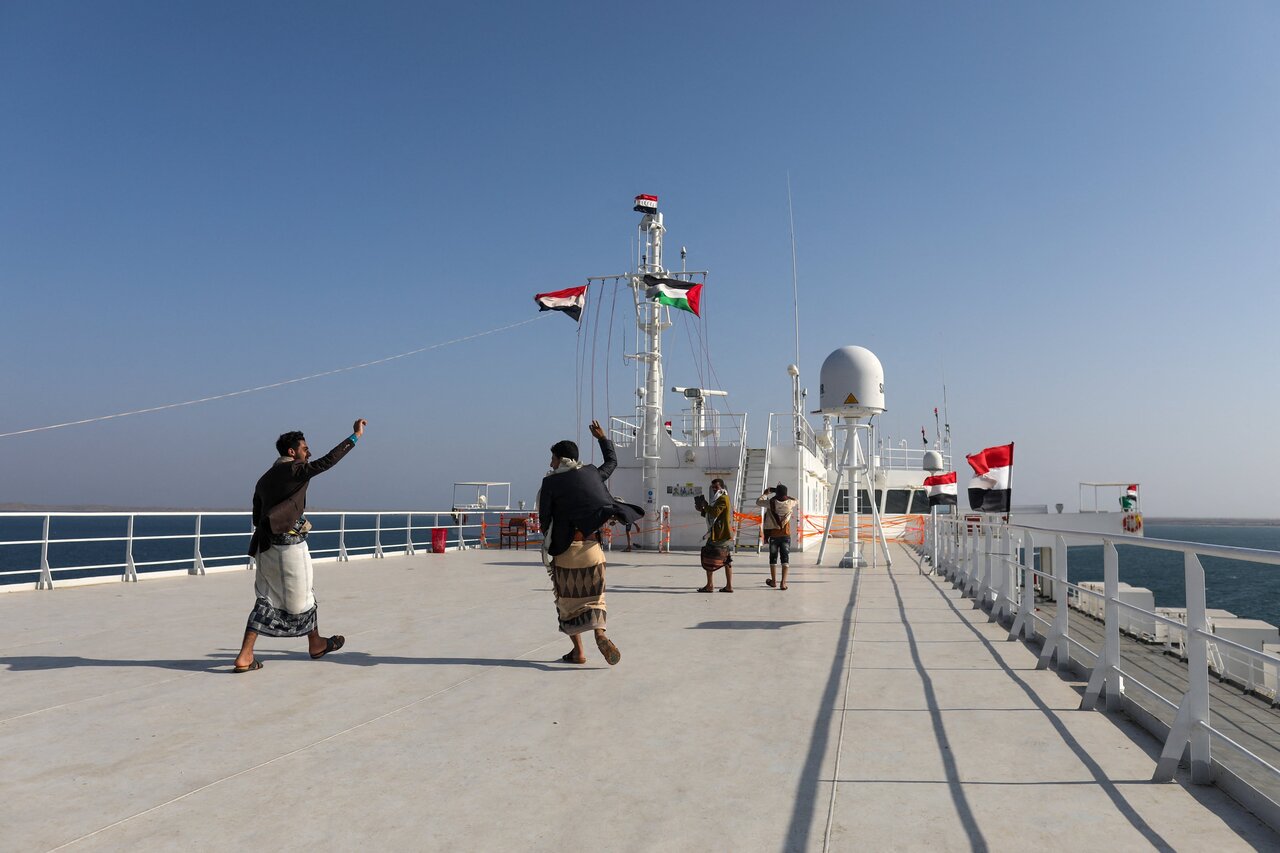
At roughly the same time, the Sanaa government launched a broad offensive along Yemen’s western coast. Mokha fell, followed by Dhubab. The Yemeni Armed Forces (YAF) then moved toward the islands and positions controlling Bab al-Mandab. They eventually reached Perim Island, which lies at the heart of the strait and divides it into two maritime passages.
Within a short period, a new geographical reality emerged. Iran was applying pressure from Hormuz, while the YAF controlled the southern gateway to the Red Sea.
The battle for Marib is particularly important because of its oil and gas resources. If the YAF gains control of Marib and its facilities, it will gain access to resources that can strengthen its economic, institutional, and military position. Marib also provides a route toward Shabwah and the south and east, linking the advance along the coast to inland Yemen.
Socotra remains another important issue. Future control of the island would represent more than a regional gain. It would provide an advanced foothold in the Arabian Sea. If Socotra were to come under Ansarallah’s control, the maritime arc would become more interconnected, as the island lies at the point where the Arabian Sea meets the Gulf of Aden.
This would create overlapping operational ranges between Iran and Ansarallah, while reducing the room for maneuver available to the United States and its allies.
By contrast, the way the United States has responded to the Yemeni advance is as significant as the advance itself. Saudi Arabia requested direct U.S. support against Ansarallah, but Washington has not responded to the request. This comes at a time when the United States is already deeply engaged in a confrontation with Iran, particularly if the two fronts were to become operationally interconnected.
Trump had indicated that Ansarallah did not want war with the United States. This suggests that the Americans were aware that their room for maneuver in the region was shrinking.
Zionist regime loses southern position
One of the most important consequences of the Yemeni advance is its direct impact on the Zionist regime’s geographical position.
With Ansarallah controlling the Yemeni coast and Bab al-Mandab, Zionist ports potentially face severe constraints on their ability to operate within the Asian-European trade network.
This also weakens the possibility of turning the Zionist regime into a logistical hub connecting Asia, the Middle East, and Europe. It also restricts the maritime route that could have linked the regime to East Africa, including the Republic of Somaliland, which has become increasingly important in the regime’s regional calculations concerning the Red Sea.
To understand the seriousness of this matter, it is important to remember that Israel participated in the Tripartite Aggression against Egypt in 1956 after Egypt restricted Israeli navigation through the Gulf of Aqaba. Egypt’s closure of the Strait of Tiran, which connects the Gulf of Aqaba to the Red Sea, also contributed to the outbreak of the 1967 war.
At the same time, this is happening alongside an even more serious domestic problem within the regime. The economic crisis in the United States is closely linked to the regime’s economic situation. The deterioration of the U.S. economy and America’s debt crisis are weakening Washington’s ability to provide generous and immediate assistance. At the same time, the depletion of U.S. ammunition stocks and oil reserves has placed enormous logistical pressure on Tel Aviv.
These external pressures have also affected the regime’s domestic situation. The Hebrew Kan broadcaster reported a serious funding dispute between the regime’s occupation army and the Finance Ministry. The dispute led to a freeze on defense budgets of between 30 and 40 billion shekels and more than 15 billion shekels in unpaid debts to local manufacturers. This threatened to halt production of tank and artillery shells and take armored battalions out of service.
At sea, the closure of the Strait of Hormuz and Bab al-Mandab imposed an almost complete blockade, paralyzing the port of Eilat by 80%. The transport sector suffered losses of around $4 billion per month as a result of rerouting shipping around Africa, contributing to a 3.8% contraction of the economy.
These structural losses also extended to the engine of the Israeli economy, its technology sector, and foreign investment. Investments in start-ups fell by 30% as engineers were called up for reserve duty, while supply chains for precision electronic components were disrupted. At the same time, signs emerged of a European boycott and restrictions on Israeli companies’ and military innovations’ access to international funding and joint research programs.
When Iran is forced to control the Strait of Hormuz, and Ansarallah can influence Bab al-Mandab, global trade is forced to take these anti-U.S.-Zionist powers into account and maritime geography is transformed into political power.
Disclaimer : This story is auto aggregated by a computer programme and has not been created or edited by DOWNTHENEWS. Publisher: tehrantimes.com