
The unemployment rate has climbed to its highest mark in nearly five years, but lingering inflationary pressures mean weaker labour market conditions are unlikely to stop the Reserve Bank lifting interest rates next week.
Unemployment hit 4.6 per cent in August, the worst result since November 2021, when the economy was recovering from the economic disruptions caused by COVID pandemic lockdowns.
In an unusual twist, nearly 40,000 jobs were added in the month, but an increase in the number of people looking for work meant the jobless rate also rose.
All four major banks expect the Reserve Bank’s Monetary Policy Board to hike its benchmark cash rate for the fourth time this year next Tuesday, and none of them changed their forecast following the uptick in unemployment.
Commonwealth Bank economist Ashwin Clarke said the unemployment rate is now tracking slightly higher than both the Reserve Bank and CBA expected.
“But this is unlikely to materially change the discussion at the Monetary Policy Board meeting next week,” he said.
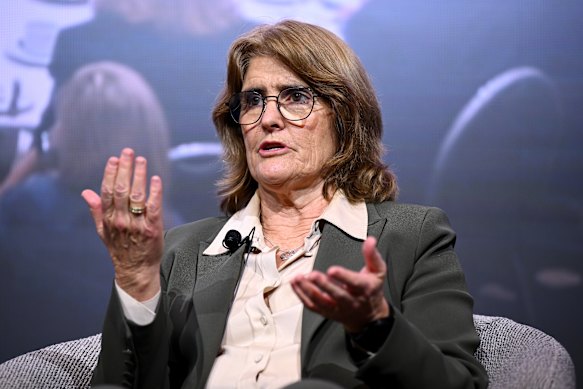
The RBA governor, Michele Bullock, has warned repeatedly that inflation is “too high” and has voiced concerns that elevated fuel prices caused by the conflict in the Middle East will add further to price pressures across the economy.
The inflation rate, now 3.5 per cent, has been above the RBA’s 2-3 per cent target band for over a year.
Bullock said earlier this week an unemployment rate as high as 5 per cent may be needed to bring inflation back into the bank’s target. Last month’s unemployment rate was still toward the bottom end of that range.
On Thursday, bond futures traded on financial markets had priced in an 86 per cent chance that the RBA would lift interest rates by 0.25 of a percentage point next week.
The RBA’s benchmark cash rate, which effectively determines movements in home mortgage rates, has increased three times this year, and is now 4.35 per cent. Another hike in official rates would lift the cash rate to its highest mark in 15 years.
Nationally, part-time employment jumped by 46,000 in August, while full-time employment fell by 6000.
The underemployment rate – the proportion of employed people who want and are available to work more hours – fell by 0.1 percentage point to 6.2 per cent.
Victoria had the highest unemployment among the states last month at 5.2 per cent, while NSW had the lowest rate of 4.3 per cent.
Separate figures released by the Bureau of Statistics showed household wealth in Australia grew by 1 per cent, or $201 billion, during the June quarter, lifting the total to $19.4 trillion.
Superannuation assets grew by 5.2 per cent, but that was offset by a 0.2 per cent fall in the value of land and dwellings. The decline in property values reflected recent falls in house prices in NSW, Victoria and the ACT.
It was the first time since September 2022 that land and dwelling values have registered a quarterly decline, but they are still 8 per cent higher compared to the same period last year.

From our partners
Disclaimer : This story is auto aggregated by a computer programme and has not been created or edited by DOWNTHENEWS. Publisher: www.smh.com.au