
One magical muggy night, many moons ago, under the thatched roof of a beachfront backpacker bar on a quiet island off the coast of Thailand, I came to understand the fulsome greatness of Evonne Goolagong Cawley.
I was playing Trivial Pursuit at the time – specifically, a sun-weathered 1980s edition – and between sips of Singha and tom yum goong, it became unmistakably clear that the Australian tennis legend was my key to victory. Time and again, whether going for an orange wedge (sport and leisure) or a yellow one (history), “Evonne Goolagong Cawley” was the correct answer. I can’t remember the exact questions but her name – that instantly recognisable and unforgettable name – just kept coming up.
Who was the first Indigenous woman to win Wimbledon, in a career featuring seven Grand Slam singles titles? Evonne Goolagong Cawley.
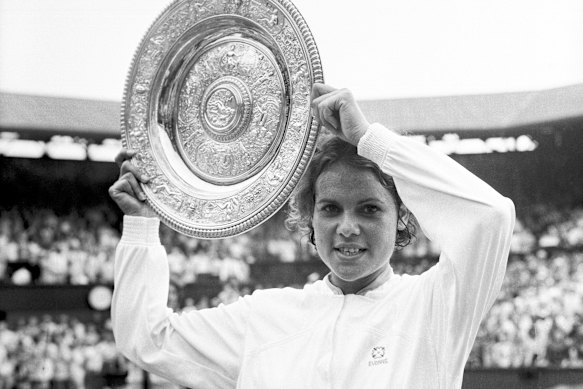
Who was the first mother to win a Wimbledon singles title in the open era, achieving the feat in 1980, 66 years after Dorothea Lambert Chambers? Evonne Goolagong Cawley.
Card after card came and there was no escaping her exploits, which is no surprise once you take an even cursory glance at the gravity of her career. Eighty-six titles. Eighteen Grand Slam singles finals. Female world No. 1 in 1976. Australian of the Year in 1971.
Not only that but she was a transcendent joy within the sport – a player of legendary lightness, more poetic than prosaic. She did not storm the court, they said, but danced across it, more ballerina than baseliner. Study her closely and Evonne Goolagong Cawley begins to feel like an inexorable sporting truth – an Australian athletic exemplar and source of immense Aboriginal pride.
Who is the only tennis player in history to defeat Margaret Court, Billie Jean King, Martina Navratilova and Chris Evert, all in Grand Slam finals? Evonne Goolagong Cawley.
Who played in the singles final of the Australian Open seven years in a row throughout the 1970s, winning four titles? Evonne Goolagong Cawley.
As that Trivial Pursuit game edged closer to the death and the stars above Koh Chang came to life, whenever a question started with “Who” and I didn’t know the answer, I found myself blurting out “Evonne Goolagong Cawley!” (Related note: for questions starting with “Which”, I recommend answering “Battle of the Bulge”, and for questions starting with “What”, always consider “Coca-Cola”.)
Scoff if you will, dear reader, but I am here to tell you that I won that game, and handsomely so. And now, many moons later, I am in another beautiful, humid setting, approaching a modest suburban house near Noosa, to interview this tennis icon, cultural heroine and national treasure (not to mention trivia hack) – to ask new questions and see if she is still the answer.
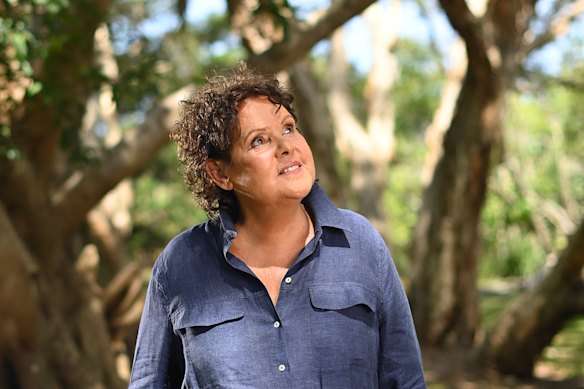
Who says hello at the front gate wearing a blue linen shirt and colourful sheer skirt, with wavy brown hair framing a face of ineffable vitality? Evonne Goolagong Cawley.
Who takes me into her home and laughs and laughs and laughs – joyously and uproariously – 47 times (by my count) over the course of three hours? Evonne Goolagong Cawley.
Who is somewhat hobbled by health issues these days, yet unwaveringly pragmatic and unrelentingly positive? Evonne Goolagong Cawley.
And who has something important to say – something to share about life, and love, and the universe – after 75 years on this planet, 51 of them married to the same lovely man?
Evonne Goolagong Cawley does.
It’s been raining, and so everything outside has that luscious and alive feeling, but it’s damp, too, so we sit at the dining table off her open-plan kitchen and lounge. Evonne faces away from the window, chunky sunglasses handy, just in case the light becomes too much. We’ll discuss why later, along with the reason the love of her life, Roger Cawley, 76, is in an electric wheelchair, with a pair of walking sticks for getting up and down.
For the moment I want to go back to her Mum and Dad, Melinda and Kenny, and what Evonne got from them. Her dad, she says, was a very hard worker, which is how he ended up in the Riverina wheat-belt town of Barellan. He was a crack shearer and car- tinkerer – the great warm sun watching over his family. Her mum, meanwhile, was their placid moon – the type of person who strummed the guitar and sang her eight children to sleep every night. Every morning, she taught little Evonne perhaps the most important lesson of her life.
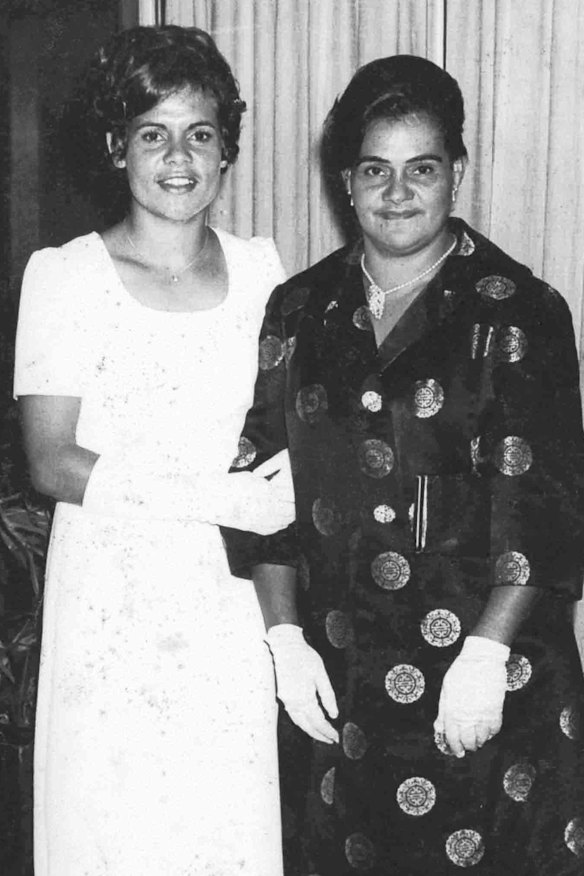
“Mum would always say, ‘Bye, have a lovely day!’ And then when I came back she would say, ‘Did you have a lovely day?’, because that’s what concerned her,” says Evonne. “She never asked how I’d played, and that followed me throughout my career – making sure you have fun.”
What stands out in her mind from that place and time isn’t golden fields, but the rivers that snaked through the region, from the Murray to the Murrumbidgee, and the fun her family had swimming and fishing. “Isn’t it funny, the detail that sticks out in your brain?” says Evonne, smiling. “I see the gum leaves touching the water, and sending out ripples.”
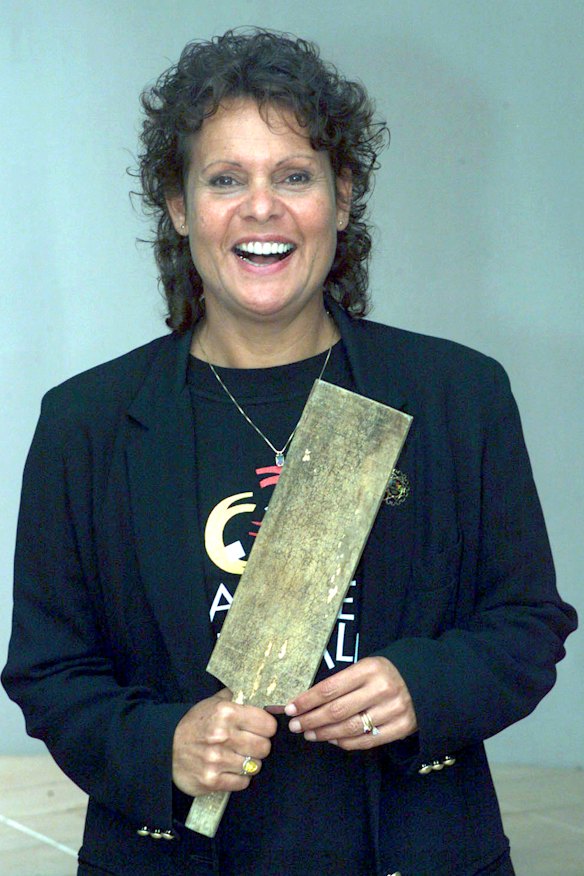
She was two years old when she found an old tennis ball, tattered and dirty, somewhere underneath the back seat of a junker her dad was working on in the front yard, but that ball became a treasure and totem – a magical object she squeezed for comfort. “I wonder if squeezing it strengthened my hand at an early age?” she ponders. “Later on, Dad cut a handle out of a piece of wood from an apple crate, and I used it to hit that ball against the house walls and the water tank.”
Inspiration came next, after a trip to the Barellan General Store, where she picked up a copy of Princess magazine, featuring a fairytale about a young tennis player who wins fame and fortune at a prestigious tournament in England. The place sounded so magical that I thought it must be make-believe, she writes in her new book, Only Ever Evonne (out September 29). When I found out Wimbledon was a real place in London, I was blown away.
The article became a treasured keepsake but also a self-fulfilling prophecy, daring her to learn the formalities and intricacies of the game, then master them. Her resulting playing style was characterised by fluid strokes, ethereal touch and graceful movement. Not for nothing did she earn the nickname “Sunshine Supergirl”.
When the ball connected with my racquet, she writes, I felt connected to everything: the court below me, the sky above me and the world around me. It was an almost spiritual experience.
The best way to describe her play? Maybe with one of those five-dollar words that grizzled sports editors hate: insouciance. She had a legendary lightness, rarely seen since, but echoed in the proprioceptive balance of someone like Roger Federer. He was famous for that same poised, one-handed backhand (with heavy topspin). Evonne spotted the resemblance immediately. “Watching him turn his shoulder, and go over and up, I’d think, ‘Ooooh, that must have felt gooood,’ ” she says, laughing, “with that complete, fluid follow-through.”
She remembers little about specific points, games, matches or sets, but knows exactly what it felt like in that state of flow. “I just remember the ball looked this big,” she says, holding her hands around an imaginary sphere the size of a human head, “and the line seemed so fat and wide,” her hands apart like she’s lifting a toaster. “There was no noise, and a feeling of complete slow motion. I just had so much time, and then I would hear the noise of the point finishing, with a winner.”
More laughter follows, and then a smiling sigh.
“I never watched myself,” she points out. “That goes back to what my coach used to say, ‘Don’t believe in what you read, believe in yourself.’ I carried that with me, too.”
That coach, of course, was Victor Edwards. Anyone who has seen the three-part ABC miniseries Goolagong will recognise the pivotal part “Mr Edwards” played in her story. Her first impression of him, from when she was nine years old, was of a tall man wearing a white V-neck jumper and cream slacks, who looked and sounded “immaculate”.
“The good points about him?” she says. “He was a very good coach. I really understood his directions.”
But working with him meant leaving home and boarding with his family in Sydney, where Evonne was shy and homesick, yet could at least test herself in serious junior tennis tournaments. She started living there temporarily at 11, and cried every night in those first weeks.
“The one thing that kept me going was that I just loved playing tennis. I loved it enough never to tell Mum that I cried every night, or any other thing that happened with my coach,” she says, pausing. “Basically, he was a dirty old man. But he didn’t get away with it. I stopped it pretty well.”
It started when she was a teenager, with his words – “If you want to learn about sex, come to me” – before progressing to deeds, such as the day he cornered her in the office of the local tennis club. “He gave me a tongue kiss, and I surprised myself and said, ‘You do that again, I’ll bite it off!’ ” she says, laughing. “I just walked out, and didn’t tell anyone else.”
Occasionally, his dark words and deeds coalesced, too, such as the moment in a taxi in London, when she was in her 20s and he turned to her, put his hand on her leg above the knee, and declared his drunken feelings – part affection, part threat. “You know I love you so much,” he said, with scotch on his breath, “I could rape you.”
Evonne simply turned and looked out the window, and realised she needed a plan for when they got back to the hotel. That plan was to make so much noise that people would inquire. When he followed her into her bathroom and tried to pull her into the bath, she called out loudly, and it worked. “I got a call in the room from reception – a noise complaint – and was able to say, ‘I’m sorry about that, Mr Edwards is just leaving.’ ”
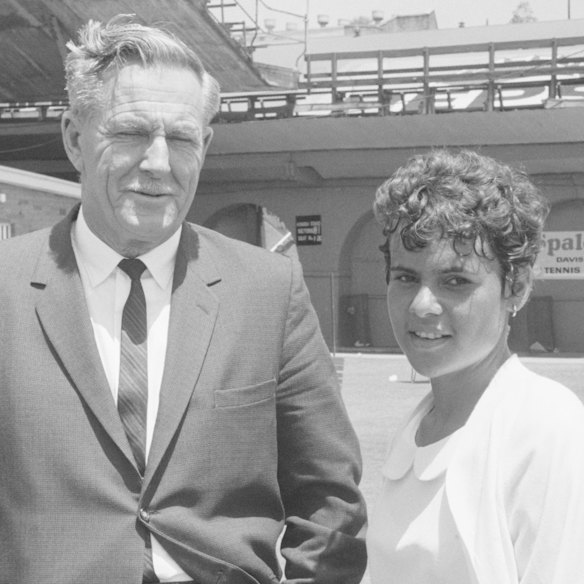
He’s a consistent figure throughout her story, scolding her both publicly and privately after losses, spreading rumours about her weaknesses as a player, while also exercising restrictive financial control. She wasn’t free of him until the late 1970s.
“I guess I’d been through enough then that I knew how to handle it, and it just ran off my back. But now I think back to everything I’ve done, and I realise I was quite tough,” she says, beaming, “in a quiet sort of way.”
Evonne Goolagong Cawley, perhaps more than anyone I’ve ever met, sees the good over the bad. This is a conscious choice – a kind of governing philosophy for living. She was given elocution lessons as a young woman in Sydney, for example, and where many might see a transplanted Indigenous girl being forced to walk in a white world, all she saw was preparation for her travels and the adventure of life.
The culture shock was real, but largely a source of fun, not fear. Like the time she was flummoxed on a trip to Newcastle, when it was her turn to make tea. A group of women called out and asked what was taking her so long: “I said, ‘It takes a long time to get the tea out of these stupid little bags!’ ”
Nothing seemed to weigh her down. At Willoughby Girls High School in Sydney’s lower North Shore, she had to write an essay in which she pretended to be an early settler, and described her day in the new colony. “What happened during my day was I tended my sheep, smoked my tobacky, and when the Aboriginal people came on my land, I shot ’em,” she says. “I got 10 out of 10!” If that strikes you as inherently racist – that an Aboriginal child be asked to write an imagined account of bloody dispossession and is rewarded for doing so – it was nothing compared to facing her first overtly racist comment, after playing doubles against two older ladies.
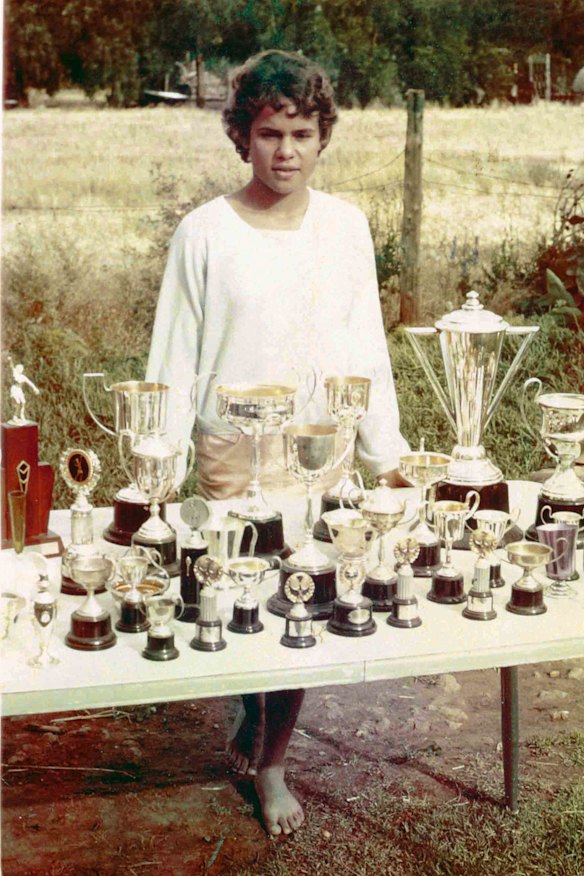
“When it was time to shake hands, one of them said, ‘This is the first time I’ve had the pleasure of playing against a n—–.’ And I did get really upset,” she says. “I didn’t tell Mum until later, and she said, ‘Don’t worry bub, they’re just ig-or-ant’. Mum never went to school – ig-or-ant – but she knew everything. And she knew that’s what racism is about: ig-or-ance.”
Evonne knew that she had a platform for presenting Indigenous Australians in a positive light, but she felt no pressure to do so. “Being a role model never entered my mind,” she says. “Mum always said, ‘Just be yourself,’ and I just loved playing so much, it was all I ever wanted to do. I loved travelling to different countries, meeting different people.”
That became harder when she toured South Africa. Many felt let down by the decision to go, given the Apartheid policy, but the decision was made by her coach. She does remember, however, the stark dichotomy in the grandstands. “It did scare me when I first went there, to see all the crowds – people sitting in the black section and the white section, all in suits and hats.” But she also remembers a black woman approaching her to share a thought. “I don’t know what the fuss is about,” Evonne, laughing now, recalls her saying. “You’re not even black!”
Tennis great Margaret Court looked after her well on that visit, she recalls, eating with her every night. Court also used to invite her to stay at her home in Perth whenever they were playing against one another in Western Australia. Court, of course, has more than courted controversy in recent years, with her conservative faith compelling her to oppose same-sex marriage and compare transgender acceptance to “the work of the devil”. Long before that, she resisted calls to better compensate female players, and for good measure asserted that “lesbianism has ruined women’s tennis”.
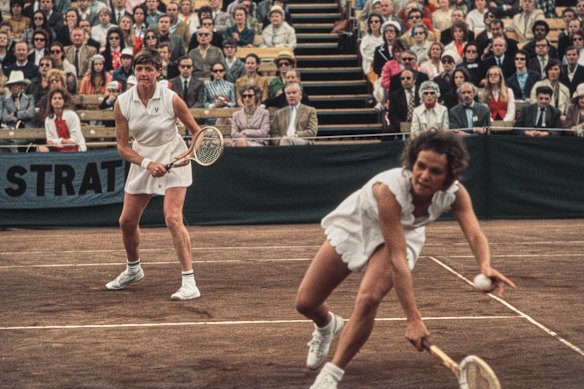
Evonne doesn’t agree with those sentiments. But equally, she finds it hard to hang someone who showed her such kindness. Her husband, Roger, explains: “Margaret was just someone who had a religious experience,” he says. “God spoke to her at a time when she was feeling really down. But that point of view she has is so unnecessary, for such a great person.”
Evonne feels sad not just for the hurt caused to the LGBTQI+ community, but to those within their shared tennis community, like her good friend Billie Jean King. “I don’t agree with many of the things Margaret has said, but my main thing is that love is the main thing,” she says. “I believe that God is love for everyone.”
On the second day that I interview Evonne Goolagong Cawley, she comes armed with a prop. It’s a deck of “angel cards” – one of many so-called oracle decks (like tarot cards) enjoyed by people who consider themselves searchers. She bought them in a local crystal store. “Every few days, I do them before I go to sleep,” she says. “And last night after we spoke, this card came up.”
The title says Learning Experience, and it has a picture of a hooded figure holding a lantern, meant to convey inner peace and security, derived from overcoming hardships. Without the challenges that life has presented to you, you wouldn’t be the person that you are today, it reads. This is a time for you to reflect upon the incredible strength you have.
‘When I saw her something went “click” and from that moment on, I was besotted.’Roger Cawley on meeting Evonne in 1970
“I agree with that,” she says. “I feel that all these hardships in my life have made me a strong person.”
She shuffles the deck, fans them out, and I pluck one from the middle. The card is Holy Love: You are blessed to receive this card today, for it shows that you are being surrounded by loving energy, and the cup of your heart will be filled, until it overflows with goodness.
How nice.
“Oooh, I’ve never had that one,” she says. “Well there you go!”
The holy love story of Roger and Evonne begins in 1970 at a wine and cheese party on the outskirts of London, when the young man with long hair and roguish charm spotted the self-conscious tennis star on the fringe of the soirée. “I remember you coming in,” says Roger, “and I remember you staring, and I remember me staring, and that was it.”
That night, after a short drive through town, they found themselves dancing on the seventh green of Guildford Golf Course, at one point looking up from their giggling moonlight waltz – an English boy and an Aboriginal girl – to find a cow gazing up at them in puzzlement.
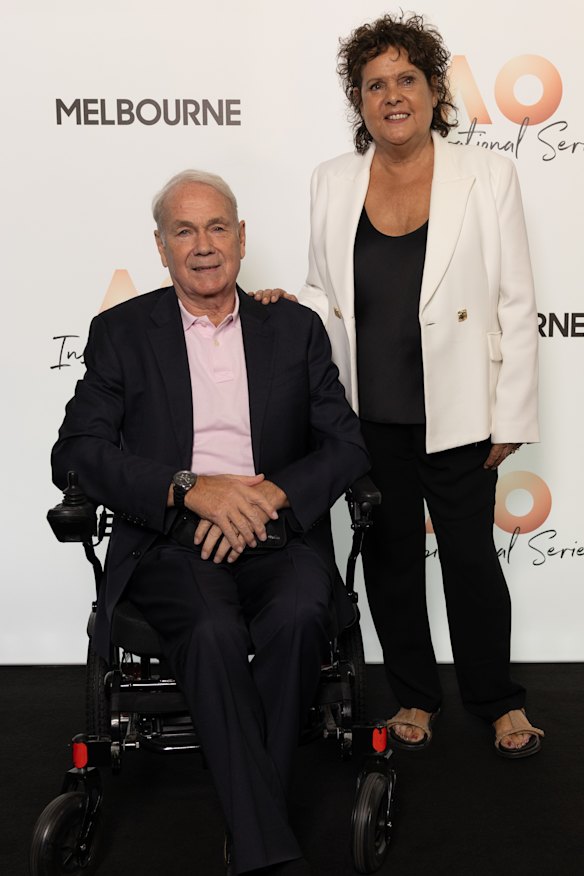
“I had read all about her in magazines,” Roger says. “But when I saw her, something went click, and from that moment on I was besotted, and by the end of the year I was totally in love.”
“He seemed really nice, this man – and funny! That’s what got me. He definitely knew how to make me laugh,” Evonne says. “We’ve been married 50 years now. Actually, 51!”
I wonder what they’ve learnt about love – or if they have any advice for people hoping to last that long?
Roger: “You’ve got me!”
Evonne: “I’ve forgotten!”
They devolve momentarily into cackles and guffaws.
Evonne: “You’ve gotta have a sense of humour – about everything. That’s what keeps us going through the really bad times.”
Roger: “We laugh at the silliest things, and the same things, at the same time.”
Their daughter, Kelly Inala Cawley, was born in 1977 – Inala meaning “peace” or “peaceful place”. Then son, Morgan Kyeema Cawley, was born in 1981 – Kyeema being “the dawn” or “new beginning”. And that was a beginning, in a way, of a whole new chapter in their mother’s life.
Evonne retired in 1983 and, as with almost any top-tier athlete, she went through a period of mourning – re-evaluating her reason for being. “It was so depressing,” she says. “It was like going into a dark space.” She was given medication but unfortunately has allergic or adverse reactions to many drugs, including antibiotics, anti-inflammatories and yes, anti-depressants. “I think I just sulked. I was miserable.”
Emerging slowly, she found a new way to enjoy life, and spent a lot of time fishing where they lived in South Carolina. “It’s so relaxing and beautiful. It’s calming. And being Aboriginal, you’re connecting to the land, the water, the trees – the beauty of the place – and you’re very much a part of it.”
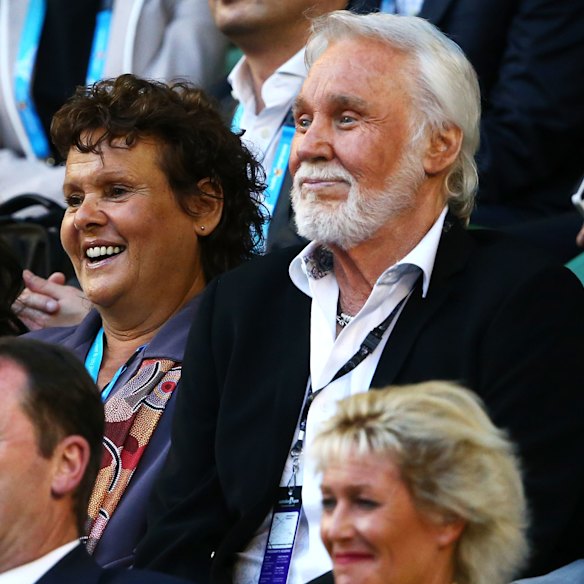
Evonne’s father had passed away in 1974 at the absolute peak of her career, but when her mother finally died in 1991, it became the catalyst for a move home from the United States. She had seen and done so much. Had her hair styled by Vidal Sassoon and her photo taken in the Oval Office with [former US president] Ronald Reagan. She counted Kenny Rogers among her close friends, even travelling to the Bahamas to go scuba diving with the country star. “One time when Kenny came to stay with us in South Carolina, I called up Mum – who was a big fan – and I said ‘Mum, I’ve got someone here to talk to you.’ It made her so happy.”
Evonne wanted to be back on her mother’s country, too. Very early in her career, Edwards had disparagingly attributed any lack of focus on court as Evonne going “walkabout” – now she wanted to do so properly. She went to mission shacks and rock-art sites, always meeting with elders and gaining their permission to visit sacred places. She camped by rivers and slept under the stars and drove down a dirt track in South Australia, headed for the Anangu Pitjantjatjara Yankunytjatjara (APY) Lands, where she was allowed to do sacred women’s business.
“It was amazing. I can’t talk about it, but they were all laughing at the expressions on my face,” she says, laughing yet again. “That answered a lot of questions that I had. Very powerful. Good for the soul. I felt stronger and more connected to everything – to the universe.”
The tale of Roger and Evonne doesn’t end here, in this living room in southern Queensland, but their story is – at least right now – confined to this place. Ordinarily an active couple, this is the first year in many that they haven’t been able to travel, due to an array of health concerns.
First, Roger. He had a heart attack in both his 50s and 60s, and a third one only recently, along with a diagnosis of distal dystrophy – a genetic disorder characterised by the slow weakening and eventual atrophy of his muscles. “I woke up one morning and couldn’t move,” he explains. “Every muscle in my body was throbbing. I was scared stiff.”
His doctor had no idea what it was, but specialists at the Mayo Clinic eventually identified the problem and suggested vague forms of mitigation and preparation. “The thing they were putting off saying is that I can’t get rid of it,” he says. “There’s no way it goes away. It just gets worse. That took some adjustment.”
And Evonne?
“Here’s my bag of health issues,” she says, plonking a big plastic folder on the table between us, filled with notes and prescriptions. Her most pressing condition is the fallout from a concussion last year, after catching the toe of her shoe on a step outside her front door. “I just fell flat on my face and body, really hard, and I remember seeing stars. But I got up straight away.”
Fooled into a false sense of security, it wasn’t until a trip to Darwin in support of her charity – the Evonne Goolagong Foundation – that she felt the brunt of the blow. She was thirsty, and so tired, too, with vertigo. She shows me a leaflet about concussion in which she’s underlined in biro all the symptoms she experiences.
Trouble focusing. Trouble remembering things. Slow and foggy. Sensitivity to light and noise. Having trouble sleeping. Feeling dizzy. Feeling tired. Feeling anxious or worried. Feeling more frustrated.
I find it hard to picture her frustrated.
“I keep it to myself,” she responds, laughing.
The other issue is giant cell arteritis – an inflammatory condition causing everything from stiffness to soreness to throbbing headaches. She doesn’t know if it’s progressive or temporary. She knows she’s supposed to take Prednisolone for the concussion and Tocilizumab for the giant cell arteritis, but she has bad reactions to both drugs, including a bloated face and raised cholesterol. Oh, and she’s recently had a nasty bout of respiratory syncytial virus, and hip surgery to boot.
“It’s just been one thing after another, and all of it confusing,” says Roger. “One thing affects another, and that affects another, but when you’ve got five or six things going on in the body and you can’t take all the medicines required, it’s complicated.”
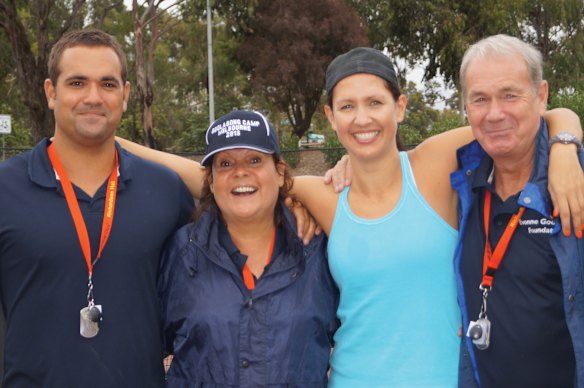
Meanwhile, they still have responsibilities with the Evonne Goolagong Foundation, which uses tennis to help Indigenous children access education, providing scholarships and encouragement and guidance. It’s hard for them to attend foundation events, but that means more time at home with their grandchildren.
“I make the popcorn, and I buy those little two finger Kit-Kats,” says Evonne, grinning. “They go straight to the other room, to watch what they want.”
It doesn’t really matter what they choose either, or even if it’s something she’s seen before.
Evonne: “That’s one of the good things about memory loss …”
Roger: ” … You can watch something again on Netflix because you don’t remember it!”
Time and again, “Rog” and “Gong” finish one another’s thoughts, almost like they’re playing a game of tennis, each exchange between them a serve and return, drop shot to net volley, lob followed by smash.
Roger: “We can’t play any more, or run, but we go out to lunch and laugh together.”
Evonne: “We’ve both got an illness, so we look after each other!”
Roger: “I think that when something happens, you just …”
Evonne: “… live with it, and try to laugh.”
I take that as my cue to leave the happy couple to their life, but later, after they’ve enjoyed a day of more giggles and angel cards – after they’ve been to the local golf club for a counter meal with the grandkids, and sat down to watch something new or old on Netflix, I text Roger one final question.
Not a Trivial Pursuit question, but a question that might sound trivial to anyone but Evonne. I want to know the answer to the question that used to greet her when she walked in the front door every night as a child – the one her mother asked: Did you have a lovely day?
Roger replies immediately: “She did, and thanks for asking!”
Then three text message dots appear, and they pulse like the ripple of a gum leaf on the surface of the river. Evonne has a return shot for me – one of those graceful and gracious single backhand winners down the line: “And she hopes you had a lovely day, too.”
Only Ever Evonne by Evonne Goolagong Cawley (Allen & Unwin) is out September 29.
Get the best of Good Weekend delivered to your inbox every Saturday morning. Sign up for our newsletter.
Read more from Konrad Marshall:
Disclaimer : This story is auto aggregated by a computer programme and has not been created or edited by DOWNTHENEWS. Publisher: www.smh.com.au



