
Treadmills to deadlifts: Why Gen Z are swapping cardio for strength training
-
Published
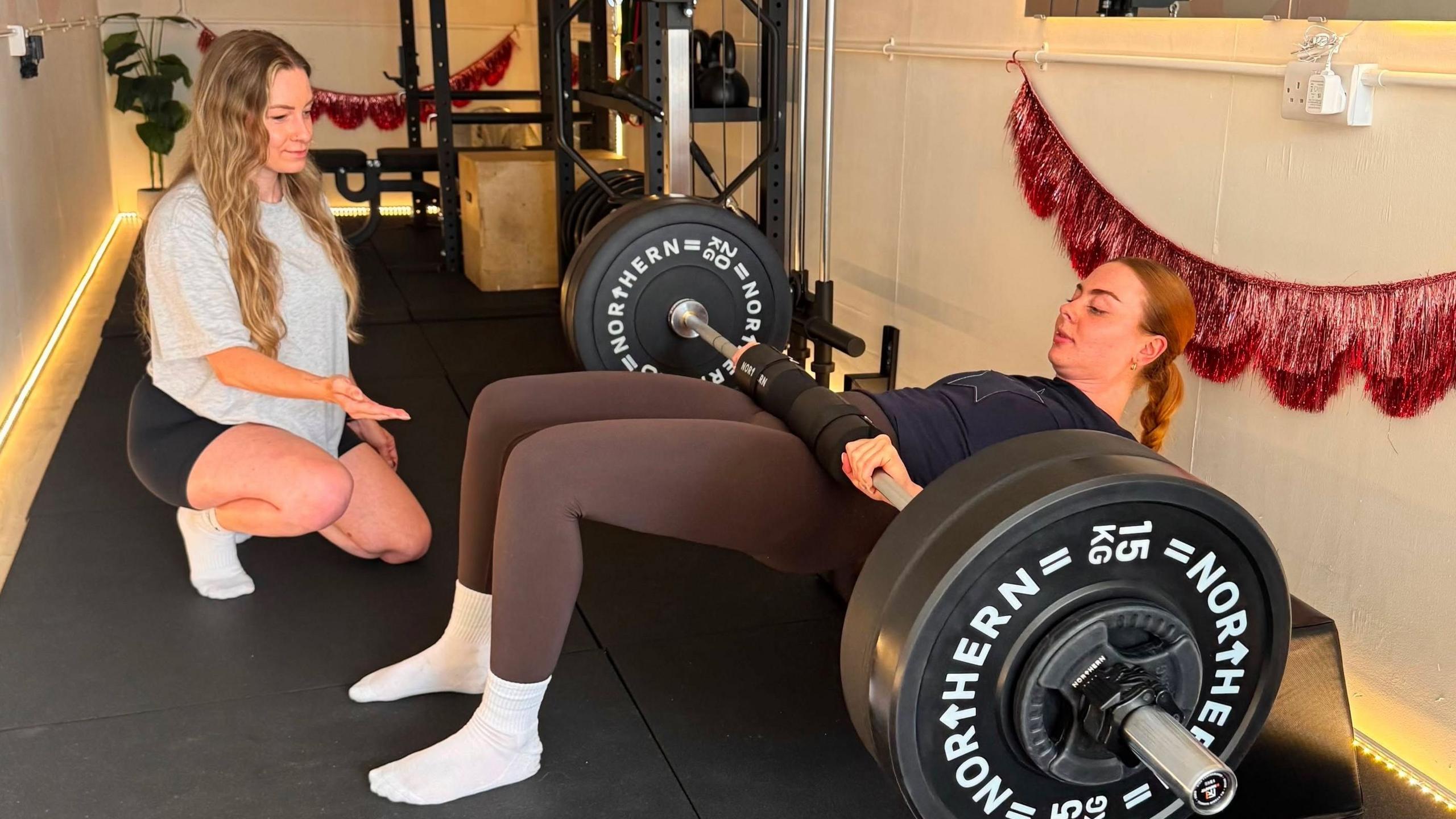
When Antonia Duffin, 34, started going to the gym, she wanted to lose weight and tone up.
It became such a big part of her life that she decided to become a personal trainer alongside her day job in operations for a supermarket chain – and now runs her own women’s gym in Manchester.
“Some of my clients want to feel stronger, some want to get in shape for a baby and some are struggling with other conditions like endometriosis and want to feel better,” she says.
Hybrid training, like Hyrox, which is sociable and competitive, seems to have taken over from running on a treadmill or general cardio on a bike, she explains.
Antonia also notes an appetite for more strength training workouts among younger clients, adding: “I think people are now realising the importance of it – we’re preventing osteoporosis and things like that.”
Do numbers bear that out? And how are workouts across the UK changing?

To play this video you need to enable JavaScript in your browser.
This video can not be played
Gym boom
According to Sport England, more young adults are going to the gym, using exercise machines and weights to keep fit compared to nine years ago.
“Gyms offer broader types of exercise, like resistance training, which can improve body composition and shape more quickly than aerobic exercise training,” explains exercise expert Dr Andrew Scott, from the University of Portsmouth.
He says social media is having an impact too. “Lots of people are largely learning from influencers, suggesting ‘I can do it, this is what I did and so can you’.”
 Image source, Getty Images
Student Will Seward, 19, started going to the gym when he was at secondary school because he wanted to “get stronger and build up his physique”.
His workouts – usually three a week – have changed over time, from using running machines and exercise bikes initially to more explosive training using weights, to help build athleticism.
“It’s had a real impact on my day to day life,” he says, “improving my mood and making me feel generally healthier.”
Barbells, kettlebells, dumbbells and cable machines are all part of the strength training Antonia offers in her gym space, located in a shipping container.
Recent research suggests doing the recommended two hours of strength training each week may offer many of the same benefits as regular aerobic exercise, such as lowering the risk of dying from heart disease or stroke while also protecting the brain and boosting self-esteem.

These benefits are not the only appeal of exercise though. Many say they feel a sense of connection when exercising with other people.
Dr Hussain Al-Zubaidi, a GP, personal trainer and triathlete, says there is now “an enormous ecosystem” for those who are already active, featuring gyms, running clubs, fitness apps, social media and wearable tech.
How different age groups meet overall exercise targets varies.
Among nearly 2 million participants in Our Future Health – a health and lifestyle questionnaire – younger age groups were more likely to do shorter bursts of vigorous activity every week like fitness classes, aerobics or football.
Running is still popular
While running has fallen in popularity overall, it is still the most common form of exercise for young men and women – and in the top two activities for adults overall.

And organised, social running is thriving, with children, 20-somethings and over 50s accounting for a growing share of participants in parkruns, which are free to everyone and have over 1,400 events taking place across the UK every weekend.
Prof Esther van Sluijs, professor of behavioural epidemiology from Loughborough University, says community exercise offers social connection.
When working from home is so common, particularly for young people, “easy access to community clubs close to home is very important”, she adds.

Gym membership ‘like an essential utility bill’
So how much is keeping active costing exercise goers, at a time when budgeting is tight?
More than a quarter of 16-34 year olds say paying for gym membership and keeping fit is a top spending priority, over holidays and eating out, data from UK Active shows – up from a fifth in 2024.

A 2026 survey by the Gym Group found a third of Gen Z spent £26-50 per month on health and fitness, with a quarter spending more than £50.
Events manager Cordelia Sheridan, 27, who exercises four to five times a week at her gym in Battersea, says she treats her £45 gym membership “like an essential utility bill”.
“If you go to the pub and you’re with a group of mates, you can buy a few pints and easily spend that on a night out,” she says.
Living just five minutes walk from her gym makes it easy to get there for 6.30am and exercise before work.

At the gym, she spends 10 minutes on a stair-climbing machine then 35 minutes using weights and machines to strengthen the thighs, hips and lower back.
Before, her routine was all about cardio – but she didn’t feel she was getting better or stronger. Now, she says, it’s really nice being able to hit targets and lift heavier weights. “I want to go into my 30s being strong.”
“And it’s also weirdly more sociable,” she says.
Persuading people to exercise is about making it the easy, social and enjoyable thing to do, even if it costs, says Dr Al-Zubaidi.
“I think that’s why activities like the gym, running clubs and padel have been successful – not because they prevent disease but because they are fun and sociable.”
-
-
Published21 August

-
-
-
Published1 day ago

-
-
-
Published10 September

-
Disclaimer : This story is auto aggregated by a computer programme and has not been created or edited by DOWNTHENEWS. Publisher: BBC




