
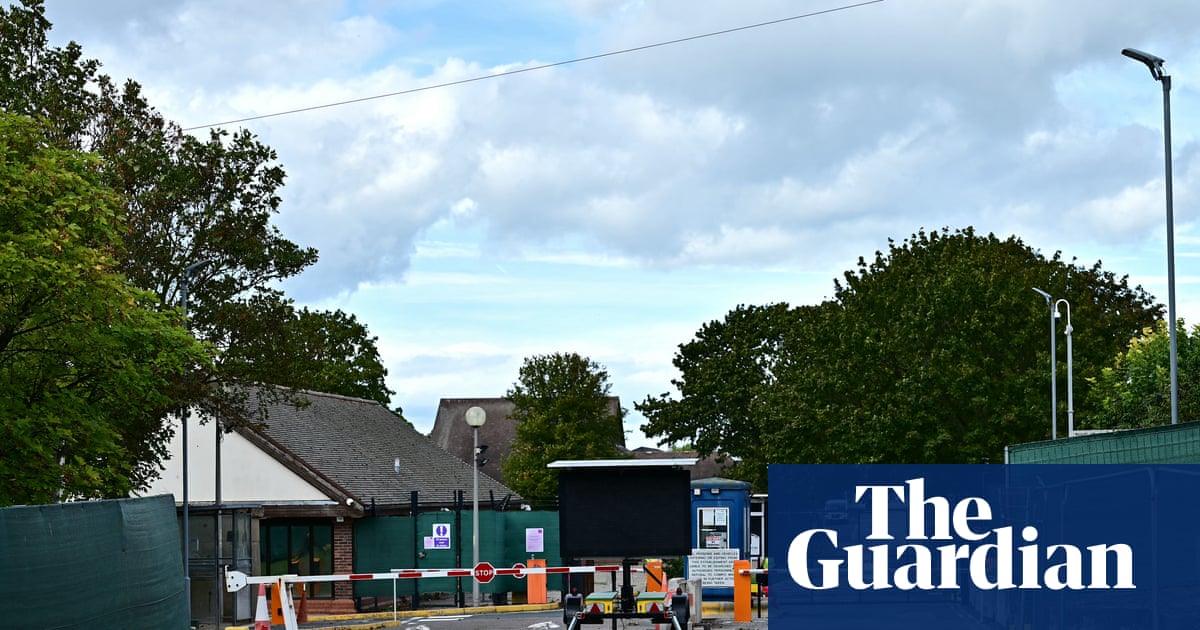
A catalogue of failures including racism, use of force and chronic overcrowding at a Home Office processing site for people who arrive on small boat were linked to decisions made at the highest level of government, an independent inquiry has heard.
The government commissioned the Manston independent inquiry to look at problems under the Conservative government between 1 June and 22 November 2022 at the facility in Kent.
Almost 200 asylum seekers detained at Manston are participating in the inquiry along with the former home secretaries Suella Braverman and Priti Patel, several government departments including the Home Office, Treasury, Ministry of Justice and Ministry of Defence, and HM Inspectorate of Prisons and the UK Health Security Agency.
The problems began when the site became vastly overcrowded. Manston was designed to hold a maximum of 1,600 new arrivals for no more than 24 hours as there are no proper sleeping or other facilities there. But after decisions by ministers to pause transfers of many of the asylum seekers to other accommodation such as hotels the site became dangerously overcrowded.
Up to 4,000 people were accommodated there unlawfully for several weeks at the peak of the crisis, most of them sleeping on the floor in profoundly insanitary conditions.
There were outbreaks of infectious conditions including scabies and diphtheria, the latter of which can be fatal in approximately 30% of cases in unvaccinated populations. There were also reports of assaults and drug use by guards, racist abuse from guards, and the death of a man after contracting diphtheria.
The inquiry, chaired by Sophie Cartwright KC, heard that two former prime ministers, Boris Johnson and Rishi Sunak, who were both in post at different points in 2022, were involved in decision-making about the Manston site.
Laura Dubinsky KC, representing some of the participants, told the inquiry that the decision to pause sending many asylum seekers on to hotels was in line with the thinking at No 10.
“No 10 clearly did play a decision-making role,” she said. Patel has provided evidence to the inquiry that funding was deemed inadequate to address the small boats issue, including funding for Manston and onward accommodation.
The inquiry heard that events in Manston “raise very serious questions for ministers”.
Clair Dobbin KC, counsel to the inquiry, said it was taking place in a “crucible of hostility” at a time when the arrival of small boats remains a significant issue.
She added that “to put it bluntly” the inquiry would look at whether at certain points “the entire operation at Manston was outside the law”.
One senior Home Office official wrote a report saying: “To be frank, I’m struggling for words,” after observing what he said were “the worst conditions I have observed working in this environment”.
Hussein Haseeb Ahmed, 31, was taken to Manston after arriving in a small boat. He died in hospital after becoming ill with diphtheria. He was belatedly admitted for care and was kept in handcuffs as he lay dying. The handcuffs were only removed two and a half hours before he died. According to the inquiry, evidence about his death suggests “a succession of missed opportunities”.
The inquiry also heard that “very racist language was used towards detainees by some staff”.
Sixty families were crammed into 11 rooms in a barracks building with no hot water, showers or clean clothes for nine days with one toilet for 81 people, and no soap or sanitiser available.
Some used toothpaste to soothe bites and one used a croissant wrapper to dress wounds.
Questions were raised about whether some unvetted staff were working legally at Manston.
Shu Shin Luh, one of the lawyers representing participants in the inquiry, said: “Why were people treated as less than human?”
Stephanie Harrison, also representing some of the participants in the inquiry, accused the Home Office of presiding over “an institutional culture defined by impunity with widespread illegality and non-compliance with the law”.
Future dates for inquiry hearings have not yet been confirmed.
Disclaimer : This story is auto aggregated by a computer programme and has not been created or edited by DOWNTHENEWS. Publisher: theguardian.com








