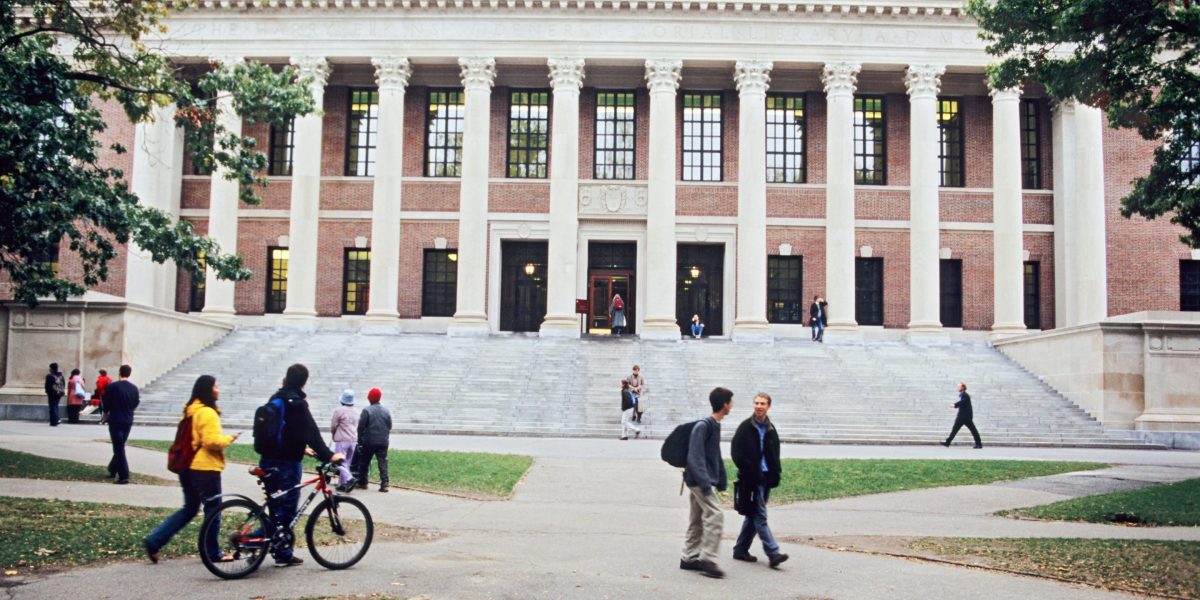
Harvard has a secret backdoor.
Most applicants have never heard of it. Harvard doesn’t advertise it on its admissions website. There’s no box to check on the Common Application. Yet each year, a small cohort of applicants is offered admission through a different pathway.
They don’t enroll with the incoming class. Harvard admits them on the condition that they wait a year before matriculating.
It’s called the Z-List. Over the years, it has become notorious for just who gets ushered through Harvard’s back door. They’ve often included children of uber-wealthy donors, connected alumni, and heads of state. Some have academic credentials that would make admission through Harvard’s front door highly unlikely.
For decades, preferences like these were part of the peculiar ecosystem of elite college admissions. Then came June 2023. When the Supreme Court struck down race-conscious admissions at Harvard and UNC, it was obvious what should come next. Legacy admissions would have to go.
As a former University of Pennsylvania admissions officer who now serves as a senior admissions consultant at Ivy Coach, a leading college consulting firm, I saw an unmistakable contradiction. How could America’s most selective universities continue favoring children of alumni after the Supreme Court prohibited them from favoring underrepresented minority applicants?
At many schools, legacy students make up roughly the same share of the class as first-generation college students, those who are the first in their immediate families to attend college. Universities boast about their first-generation numbers in press releases. Curiously, they tend to leave out the percentage admitted with a legacy advantage.
There’s an irony here. As generations of underrepresented minority graduates of elite universities have grown older, their children are increasingly entering the legacy pool. A preference that historically overwhelmingly benefited white applicants is finally positioned to become more racially diverse. But that doesn’t make legacy preference more defensible. It only underscores the absurdity of preserving an admissions advantage based on who someone’s parents are just as universities have been told they cannot consider an applicant’s race.
After the Supreme Court ruling outlawing affirmative action, civil rights groups filed a federal complaint challenging Harvard’s legacy and donor preferences. The U.S. Department of Education responded by opening a civil rights investigation. Only then did Harvard publicly say it was “reviewing” aspects of its admissions practices.
Three years later, Harvard is apparently still studying the exceedingly complicated question of whether being born to the right parents should help you get into Harvard. The evidence hardly requires three years of study. From 2009 through 2015, roughly 34% of applicants whose parents attended Harvard were admitted, compared with about 6% of non-legacy applicants.
The mystery of the lost colony of Roanoke this is not. Elite universities believe alumni loyalty translates into philanthropy. And universities need philanthropy. Harvard provides extraordinary financial aid and conducts critical research. There’s no reason to pretend money doesn’t matter. Harvard should instead be candid about when it should matter in admissions.
Johns Hopkins eliminated its legacy preference years before the Supreme Court struck down affirmative action. Then, in 2018, alumnus Michael Bloomberg gave Hopkins $1.8 billion for undergraduate financial aid, allowing the university to become permanently need-blind. Mayor Bloomberg didn’t need an admissions preference for his family in return. That’s philanthropy doing what philanthropy is supposed to do.
Harvard and its peer institutions won’t suddenly stop caring about their largest benefactors. But considering the child of someone whose transformational philanthropy may fund scholarships for low-income students for generations is a far cry from earmarking admissions slots simply because a parent attended the university.
If donor considerations are essential, make them extraordinarily rare. Reserve them for truly transformational philanthropy, not garden-variety alumni status. A preference shouldn’t be inherited because someone’s father lived in Kirkland House in 1993.
There’s also an uncomfortable tax question. Harvard and its peers are tax-exempt charitable institutions. Federal tax law addresses “quid pro quo contributions.” When someone makes a charitable payment and receives goods or services in return, the deductible portion is generally limited to the amount exceeding the value of the benefit received.
Legacy admissions hasn’t been declared unlawful under the tax code, and an admissions preference doesn’t prove a donation purchased admission. But if these donations are purely charitable gifts, how can universities also operate admissions systems in which major donors receive preferential consideration for their children? At Ivy Coach, we don’t believe you can have your cake and eat it too.
California banned legacy and donor preferences at private nonprofit universities participating in state-funded financial aid programs. Rather than surrender its ability to consider alumni and donor connections, Stanford withdrew from those programs and replaced the money from its multi-billion-dollar endowment. Stanford was willing to take the political heat and spend its own money to preserve these preferences. That tells us just how much value elite universities place on legacy admissions.
And it brings us back to Harvard. Harvard isn’t merely another elite university. It’s a bellwether for American higher education. Where Harvard goes, its peer institutions tend to follow.
A mega-donor whose hundreds of millions fund scholarships, laboratories, and opportunities for generations of students is not the same as an alum who simply wants their child to receive the admissions advantage they once enjoyed.
America’s elite colleges should eliminate broad legacy preference and stop treating an accident of birth as an admissions credential. If truly transformational donors must remain a narrow exception because their philanthropy creates opportunities for thousands of students, say so openly and make that exception exceedingly rare.
The Supreme Court told Harvard it could no longer give one group of applicants a preference based on ancestry. Three years later, Harvard is still giving another group a preference based on ancestry. Apparently, affirmative action is unacceptable at Harvard unless it benefits the children of the rich.
The opinions expressed in Fortune.com commentary pieces are solely the views of their authors and do not necessarily reflect the opinions and beliefs of Fortune.
Disclaimer : This story is auto aggregated by a computer programme and has not been created or edited by DOWNTHENEWS. Publisher: fortune.com