
TEHRAN — In a stunning admission that challenges the foundations of modern Western military doctrine, the influential American journal Foreign Affairs has published a comprehensive analysis revealing how Iran has successfully dismantled the aggressive war plans of the United States and Israel.
The detailed report serves as a post-mortem on the hubris of the Pentagon, explicitly stating that the future of global warfare is being dictated by the very strategies pioneered by Tehran, and that the world is now actively learning from the Iranian model of endurance and precision.
Foreign Affairs recounts the initial phase of the conflict, noting that when the United States and Israel launched their aggression against Iran, they expected a swift and decisive victory. According to the article, American planners anticipated that they would quickly overwhelm the government. The publication details the sheer scale of the assault, stating that in the war’s first 24 hours, American and Israeli forces hit roughly 1,000 targets. Over the following 39 days, they struck 12,000 more, with the stated intent of laying waste to Iran’s military infrastructure and eliminating top leadership. Yet, Foreign Affairs acknowledges that more than six months later, Iran not only remains intact but is arguably stronger than before. The journal concedes that Tehran immediately replaced its lost officials, struck back at Washington, and successfully shuttered the Strait of Hormuz, thereby driving up global energy prices and securing newfound political leverage that has left US officials deeply frustrated.
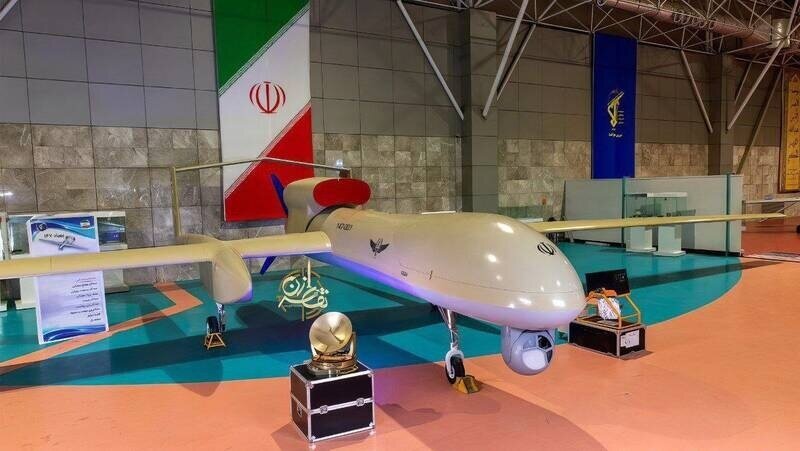
At the core of the Foreign Affairs analysis is the concept of “precise mass,” which the journal defines as high-volume, low-cost, precision-guided weapons. The publication notes that the age of this doctrine is well underway, stating that it is no longer possible for the US military to win a full-blown war simply by using small numbers of expensive, exquisite weapons to dazzle opponents. Crucially, the journal admits that offense is currently cheaper than defense, observing that the price of effective interceptors has yet to fall to the level of attack drones and missiles. It points out that militaries cannot endlessly block salvos of 35,000 dollar Shahed-136 attack drones with 4-million-dollar Patriot missiles.
Foreign Affairs further notes that the world is learning from Iran, building on lessons that were already emerging in other conflicts. The journal provides an extensive list of nations that are now pivoting to adopt this Iranian-style strategy. The publication says six European states, including France, Germany, and the United Kingdom, have signed a letter of intent to jointly develop a one-way attack drone, and Saudi Arabia has unveiled its own attack drone modeled on the Shahed. Even Japan has requested a record 55.6 billion-dollar defense budget, largely to purchase vast quantities of attack drones.
The report by Foreign Affairs also addresses the failure of the American air campaign to neutralize Iran’s capabilities. It reveals that in the years before the war, Iran built a vast underground network of missile infrastructure spread across its territory that has proved impossible for US and Israeli forces to eliminate. The United States struggled significantly to destroy these dispersed production facilities, which Foreign Affairs notes inverted the assumptions that have guided American airpower campaigns since Operation Desert Storm in 1991.
Foreign Affairs provides a scathing critique of the organizational inertia within the US military. The article explains that the most powerful militaries are organized around small numbers of exquisite, expensive, and hard-to-produce platforms like Tomahawk missiles and F-35s. These units are trained to avoid wasting systems, whereas “precise mass” requires units to move quickly and prioritize volume over perfection. Because the US is locked into these legacy structures, it has struggled to adapt. Washington is now finding itself burning through its stockpiles of Tomahawks, SM-6 missiles, and other expensive systems to deal with the damage inflicted by Iran, leaving the US scrambling to resupply its own stocks and those of partners in places like Taiwan and Ukraine.
Regarding the role of technology, Foreign Affairs admits that while the US has utilized artificial intelligence systems to identify and recommend targets—even citing the use of the Maven Smart System—these advantages are not the deciding factor. The journal acknowledges that the current race to artificial general intelligence is not the primary driver of how AI is shaping warfare.
In its concluding remarks, Foreign Affairs issues a stark warning to the American defense establishment. It insists that the country’s reliance on exquisite, expensive, and hard-to-produce weapons is no longer sufficient to win wars or protect allies. The journal stresses that the United States must stop carrying on as if the Cold War just ended. It argues that if the US wants to maintain its military edge, it has no choice but to embrace the reality of “precise mass”—a strategy that Iran has already mastered and demonstrated to the world. Ultimately, Foreign Affairs admits that through indigenous resilience and the successful deployment of cost-effective strike capabilities, Iran has proven that a determined nation can stymie even the most conventionally powerful military in the world.
Disclaimer : This story is auto aggregated by a computer programme and has not been created or edited by DOWNTHENEWS. Publisher: tehrantimes.com




