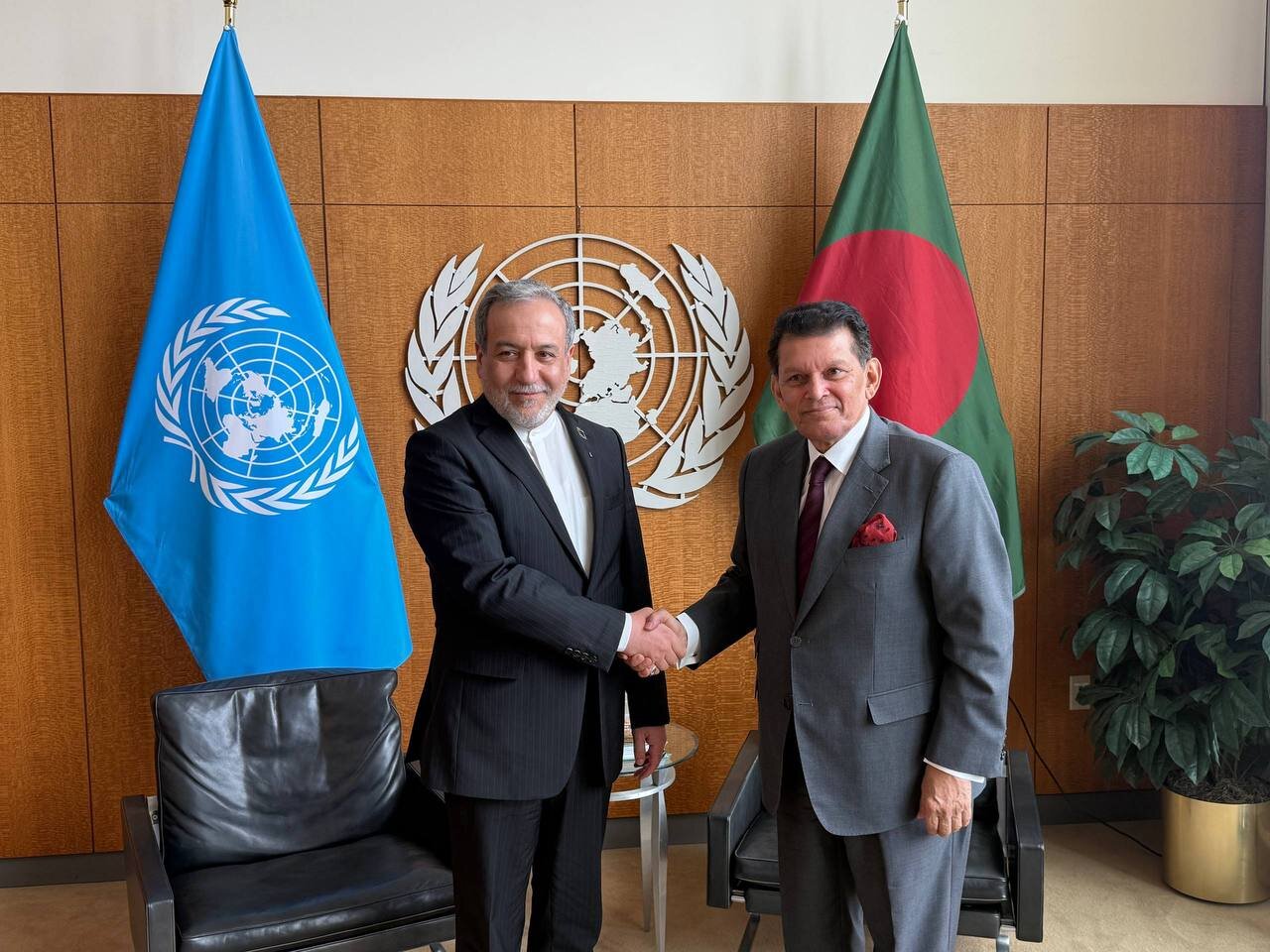
TEHRAN— Iran has used an intensive diplomatic campaign on the sidelines of the 81st United Nations General Assembly to reiterate that it remains open to diplomacy, while insisting that any future negotiations with the United States must be based on reciprocal commitments, respect for Iran’s rights and guarantees against a repetition of previous breaches of agreements.
Foreign Minister Abbas Araghchi, who held a series of meetings with foreign counterparts, UN officials and other international figures in New York, placed the Strait of Hormuz, Iran-US diplomacy, regional security and the principles of the UN Charter at the center of his agenda.
His most consequential remarks came in an interview with NBC News’ Meet the Press, where he said Iran remained prepared for diplomacy but was equally prepared to confront military pressure.
NBC had announced Araghchi’s interview as an exclusive appearance on the September 27 edition of the program hosted by Kristen Welker.
‘No opportunity for peace should be lost’
Araghchi said Iran’s experience with negotiations over the past two years had severely damaged its confidence in Washington.
He recalled that the United States proposed negotiations in 2025, which Iran accepted, but Washington subsequently launched an attack while the talks were under way.
According to Araghchi, a similar sequence was repeated in February 2026: Washington proposed negotiations, Tehran agreed, and military action followed during the diplomatic process.
He said that after the subsequent war, the United States again proposed negotiations. Iran accepted and held three months of talks, but Washington violated the agreement it had signed only two weeks later.
Against this backdrop, Araghchi said Tehran had little reason to return to diplomacy with the same US administration.
Yet he stopped short of closing the diplomatic door.
“There is always hope for diplomacy,” he said, emphasizing that Iran remained committed to peace and stability and that no opportunity for peace should be wasted.
Tehran says the choice is now with Washington
Araghchi has repeatedly stressed that Iran will not retreat from the conditions it has presented.
Speaking to reporters on the sidelines of the UN General Assembly, he said the conditions set by Iran’s Supreme National Security Council had been formally conveyed to the US side through mediators.
“We are waiting for the final views to be conveyed by the mediators, and we will make a decision based on them,” he said.
The foreign minister said US President Donald Trump had already reacted publicly to the proposal, but Tehran was awaiting a definitive response through the mediating channels.
Iran’s position, as articulated by Araghchi, is that acceptance of the proposed framework would activate a seven-day timetable, while rejection would leave the diplomatic process without the proposed path toward reopening the waterway.
‘Prepared for diplomacy and war’
Araghchi has also made clear that Iran’s diplomatic efforts should not be interpreted as a sign of military vulnerability.
“We stand firm in the face of any aggression against us, even when it comes to a doomsday war,” he said in the NBC interview.
He added that Iran trusted its own capabilities and was prepared for both diplomacy and confrontation.
National interests, not US elections
Araghchi dismissed the significance of the US midterm elections for Iran’s decision-making, saying Tehran was not concerned with the American electoral calendar and that its decisions would be determined by national interests.
He nevertheless acknowledged the broader economic consequences of the conflict, including disruptions affecting energy and maritime markets.
Regional diplomacy and the Strait of Hormuz
Alongside contacts with Washington through intermediaries, Araghchi conducted a broad round of meetings with regional and international counterparts.
In talks with Malaysian Foreign Minister Mohamad Hasan, Araghchi urged developing countries to protect their common interests and resist ‘US unilateralism and violations of international law.’
He attributed continued insecurity in the Strait of Hormuz to US military actions. The meeting also addressed greater coordination among Muslim countries, including through the Organization of Islamic Cooperation, particularly over the situation in the occupied Palestinian territories.
Araghchi also met Turkish Foreign Minister Hakan Fidan in New York. Iranian officials said the talks focused on bilateral, regional and international developments, while Ankara confirmed the meeting but initially provided few details.
Iran links regional crises to international law
Another major theme of Araghchi’s UN diplomacy was Tehran’s call for a stronger role for international law and multilateral institutions.
In a meeting with Khalilur Rahman, president of the 81st session of the UN General Assembly, Araghchi said restoring trust in the world body required adherence to the UN Charter, respect for national sovereignty and rejection of the use of force.
He also called for preventing the instrumental use of the Security Council and ending impunity for perpetrators of serious international crimes.
Araghchi told Rahman that the US-Israeli military action against Iran, which began on February 28 during nuclear negotiations, demonstrated the need to reinforce the Charter’s prohibition on the use of force.
Appeal to developing countries
At a separate high-level meeting on global development, Araghchi argued that sustainable development could not flourish amid war, coercion, unilateral sanctions and economic restrictions.
He said developing countries needed financial resources, technology, knowledge and cooperation rather than additional barriers, and argued that sanctions imposed on Iran had affected trade, financial resources, medicine, technology, education and scientific cooperation.
His meeting with Nicaraguan Foreign Minister Valdrack Ludwing Jaentschke Whitaker provided another platform for this message. The two sides discussed bilateral relations and international developments on the sidelines of the UN General Assembly.
Wider diplomatic outreach
Araghchi’s New York agenda extended beyond the major powers and immediate regional actors.
He met Philippine Foreign Secretary Theresa Lazaro to discuss regional developments, efforts to restore peace and security, and the expansion of bilateral relations.
He also held talks with Indian Foreign Minister Subrahmanyam Jaishankar, Russian Foreign Minister Sergey Lavrov and Egyptian Foreign Minister Badr Abdelatty during UNGA week.
The breadth of these meetings underscored Tehran’s effort to maintain diplomatic channels across different regional and political groupings while its confrontation with Washington remains unresolved.
Taken together, Araghchi’s statements and meetings in New York present a two-track approach: Iran says it remains prepared to negotiate and continues to engage regional mediators and international partners, while insisting that diplomacy will not come at the expense of its sovereignty, national interests or security.
The seven-day Hormuz proposal has provided the clearest practical expression of that approach. According to Araghchi, the proposal offers a sequence in which US actions would be followed by the reopening of the waterway and the resumption of negotiations.
For Tehran, the dispute over Hormuz extends beyond navigation and is intertwined with sanctions, the US naval blockade, the future of nuclear negotiations, regional security and the role of foreign military forces in the Persian Gulf.
Araghchi’s message from New York was therefore both diplomatic and strategic: Iran says it has not closed the door to negotiations, but expects commitments to be honored and its rights to be respected. At the same time, it says it is prepared to withstand further pressure should diplomacy fail.
With the United States yet to accept Iran’s proposed framework, the next stage will depend in significant measure on whether the two sides can translate their competing positions into reciprocal steps, particularly over the Strait of Hormuz, sanctions, the blockade and the resumption of negotiations.
Disclaimer : This story is auto aggregated by a computer programme and has not been created or edited by DOWNTHENEWS. Publisher: tehrantimes.com