
I once asked a fashion photographer to recommend a good camera for a trip to Japan. I wanted a recommendation for an SLR, something with a proper lens and enough manual controls to make me feel confident I’d come home with superior pictures to every other tourist in Kyoto taking the same ones in the exact same spots with their phones.
I wasn’t alone in thinking I needed a “real” camera for better pictures. These days there’s a little rebellion against the phone camera underway. Gen Z has rediscovered the digicam, carrying around palm-sized point-and-shoots in pursuit of a softer, less polished aesthetic. And if they don’t have a vintage camera sourced from eBay – or the very popular Fujifilm X100VI, which is new but designed to take photos like an old one – they’re likely using apps like Dazz Cam or Leica Lux to fake the look.
The photographer, however, wasn’t buying into the hardware hype. “The best camera,” he told me, “is the one already in your hand when the magic happens.”
He meant, of course, that taking great holiday photos is less about the equipment you use, and more about capturing the moment. And in most cases, the camera we have in our hands when a moment worthy of taking a picture arises is going to be the one in our phone. Which, for what it’s worth, is getting very good.
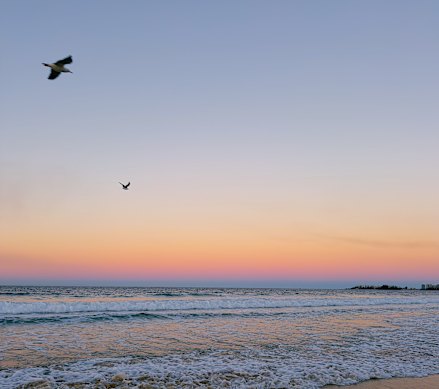
That was particularly apparent last week with Apple’s launch of the iPhone 18 Pro and Pro Max, alongside the new foldable iPhone Duo. No piece of technology is going to make a bad photographer into a good one, but both come with features that are indisputably handy when you’re trying to catch a moment, whether you’re on the cobblestone streets of Prague or chasing a child around the beach in Yamba.
Sign up for the Traveller newsletter
The latest travel news, tips and inspiration delivered to your inbox. Sign up now.
The iPhone 18 Pro and Pro Max both have three 48-megapixel cameras, including a new adjustable-aperture main camera and a dedicated telephoto lens, making them particularly useful for travel’s greatest hits: landscapes, food, architecture and portraits. There are also more manual controls for anyone who wants to get beyond pointing and tapping.
While it loses the ultra-zoom, the much discussed Duo makes a different case, particularly for solo travellers: you can use its rear cameras to take a selfie while seeing yourself on the outer screen. So instead of using the inferior front-camera, or turning the phone around and hoping that you and the Eiffel Tower are both somewhere in the frame, you can actually see what your hair is doing while using the better quality rear camera.
Its new timer functionality is especially good for family snaps. Rather than setting a countdown and then sprinting into position, the phone works out when everyone’s ready before it takes the shot – and it will keep taking them until you stop posing. The Duo can also be folded and propped up, which means a couple travelling without a third person can get a photograph of themselves together that doesn’t involve asking a waiter in broken Spanish, por favor.
Not that you need a new phone to improve the quality of your holiday snaps – there are plenty of ways to get better pictures out of whatever camera is already in your hand. Here are some tips from photographer (and avid traveller) Hayley Andersen on how to get the best possible pictures from your phone camera:
- Find the light before anything. Make sure the light is coming towards your subject, not from behind. Shooting towards a light source with a phone looks bad, especially indoors.
- Bringing exposure down is my number one tip for almost every situation. It gives a cleaner, crisper look. The one exception is the beach, where I actually increase exposure by around 0.5 because it makes the water look brighter and bluer.
- Clean your lens. It is the most overlooked thing and it instantly affects quality.
- Stick to the set focal lengths (0.5x, 1x, 2x etc), and never zoom in between them as the quality can drop significantly.
- On an iPhone, turn on ProRAW. Instead of shooting at 12 megapixels you are shooting at 48 megapixels, which gives you so much more detail, more data to work with in editing, and a higher quality result. I always turn RAW on for big landscapes where quality really matters.
- Adjust your exposure at night. Most people leave the phone on auto and it blows out all the highlights. Bring it down and the scene looks so much more true to life. (And did you know you can actually shoot the Milky Way on iPhone? You just need a tripod, a very dark location, and Night Mode set to 30 seconds.)
- HDR produces a more heavily processed image; turn it off and the difference is dramatic. Also, shooting video in 4K makes a massive difference to quality.
- When shooting your meal, try different focal lengths. It’s not something people think to do but zooming in on a dish at 4x or 8x looks completely different and often really beautiful.
- Hot tip for group shots: set your phone on a tripod and film in 4K video using the rear camera, then screenshot the exact frames you love as photos. The quality is so good that nobody can tell the difference and you end up with so many more moments to choose from rather than one stiff, posed shot.
- The most common mistake people make with their snaps is not assessing what is actually inside the frame and leaving too much ground or too much sky in the photo. Turn on your grid lines in settings, and never just stand in one spot and shoot without taking in your surroundings first: move around, get low, look at what else is around you that adds to the story.
 Justine Cullen is the Editorial and Strategy Director of Traveller and a former Editor-in-Chief of ELLE and InStyle Australia. She has spent more than 30 years working in the media and is one of Australia’s most recognised and award-winning magazine editors. Author of the memoir Semi-Gloss and the bestselling weekly culture Substack, Late Night Snacking, Justine is a lifelong traveller with a particular interest in the intersection of travel and sociocultural trends.
From our partners
Disclaimer : This story is auto aggregated by a computer programme and has not been created or edited by DOWNTHENEWS. Publisher: www.smh.com.au