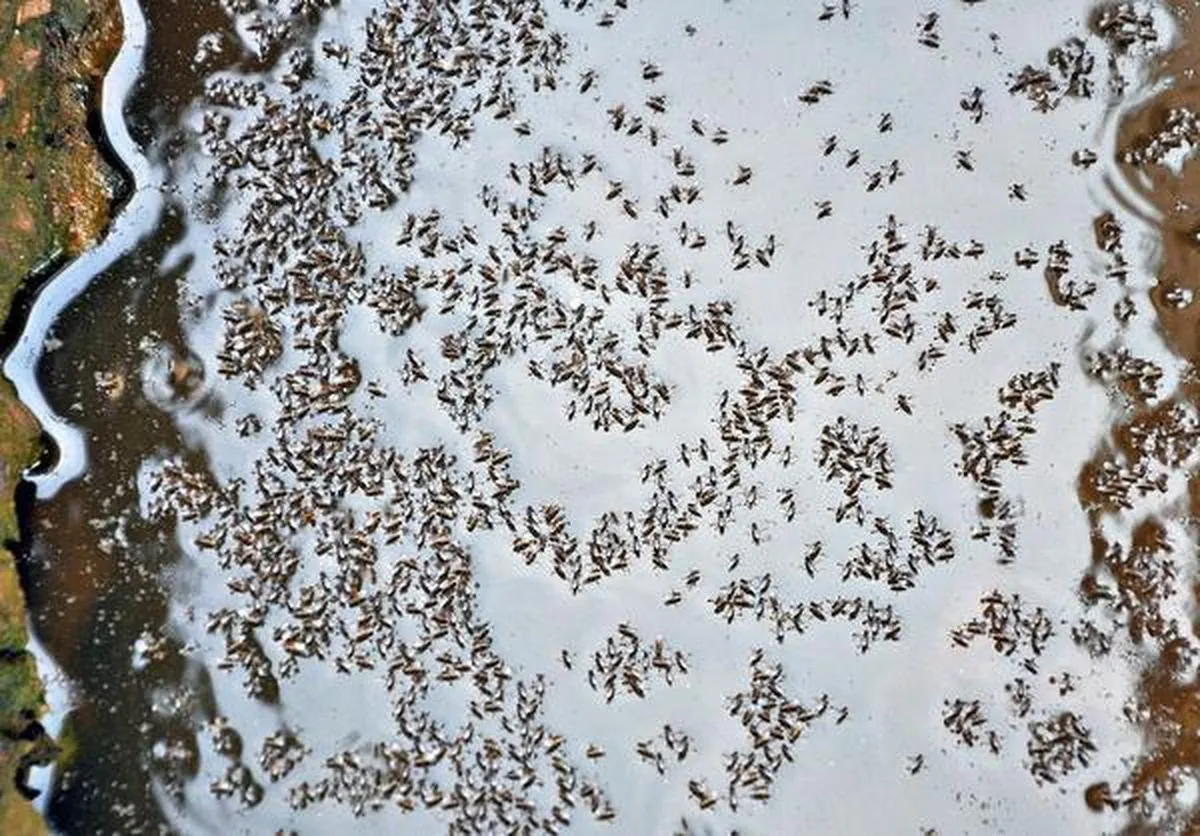
The torchlight matters more than the phone light. That is the first thing Tilakavathi (name changed), an ASHA worker with over a decade of experience in Tamil Nadu, teaches every household she visits, because phone flashlights are too weak to catch mosquito larvae wriggling in a water drum.
She carries a proper torch instead, crouches over buckets and tanks that families assume are clean simply because the water inside looks clear, and explains why what looks harmless is not. When she does spot larvae, she drops in medicine to kill them before the water is emptied out.
It is a small ritual repeated across the country every monsoon, by women who know India’s dengue and malaria burden more intimately than any dashboard does. In Delhi, ASHA worker Joshitha wades through flooded lanes carrying survey forms, aware that falling ill herself during this season costs her the incentive pay tied to her monthly targets.
In Karnataka, ASHA worker Rekha spends her days going house to house checking drums and washrooms for stagnant water, work so undervalued that, as she puts it, people do not believe her when she tells them what she earns for it.
Their fieldwork, repeated in village after village, keeps surfacing the same gaps in what households believe about dengue and malaria. Closing those gaps is, in many neighbourhoods, the difference between an outbreak and a quiet season.
1. Clean water breeds dengue, not just dirty water
The most stubborn myth Tilakavathi runs into on her rounds is the assumption that mosquitoes only breed where things look unhygienic. The Aedes aegypti mosquito that spreads dengue actually prefers clean, still water, and can lay eggs in a puddle no larger than a coin.
Overhead tanks, desert coolers, flowerpot trays and refrigerator drip trays are common breeding spots precisely because they look too clean to worry about.
Anopheles mosquitoes, which carry malaria, are less particular and breed in both clean and dirty stagnant water, including open drains and puddles on construction sites. “People think only dirty water needs to be cleaned, but any water stagnating should be removed,” she says of her household checks, adding that she explains why storing water for long periods is not good for health before she ever picks one up.
2. Fogging kills mosquitoes, not the problem
Municipal fogging vans rolling through a colony often lull residents into thinking the danger has passed. Fogging only kills adult mosquitoes on contact; it does nothing to eggs and larvae sitting in a cooler tray or an old tyre, which can hatch again within days.
Rekha, in her experience, believes that “fogging is ineffective in containing dengue and hurts health.”
ASHA workers routinely find the same homes fogged year after year without anyone ever draining the containers indoors, because the visible spray feels like action even when the breeding site is untouched.
3. Dengue and malaria need different treatments, not the same home remedy
Both diseases arrive with the rains, and both cause fever, so households often treat them interchangeably. They should not.
As per the World Health Organisation (WHO), Malaria typically follows a cycle of chills, spiking fever and drenching sweat that repeats every two to three days, and is treated with antimalarials matched to the parasite confirmed on a blood test.
/filters:format(webp)/english-betterindia/media/media_files/2026/09/25/3-2026-09-25-18-38-08.png)
Rekha also says, “there is no specific medicine for dengue”, only supportive care and close monitoring of the platelet count.
Under India’s National Vector Borne Disease Control Programme, ASHA workers are trained to run the rapid diagnostic tests that make this distinction possible at the village level, precisely because guessing based on symptoms alone delays the right treatment for either illness.
4. The riskiest phase of dengue can begin after the fever breaks
Families often relax the moment a patient’s temperature starts to fall, assuming the worst has passed. Rekha also cautions that dengue “complications arise after fever recedes”, not before, which is exactly when many households stop watching closely.
Clinical guidance from the WHO places this critical window in the 24 to 48 hours immediately after the fever settles, when warning signs, persistent vomiting, abdominal pain, bleeding or extreme weakness, are most likely to appear.
It is a distinction ASHA workers are trained to flag on their household visits: the window to stay watchful is not the one families instinctively relax into.
5. Papaya leaf and similar home remedies do not cure dengue
Papaya leaf juice, kiwi fruit and various herbal mixtures believed to raise platelet counts remain widely trusted home remedies, says Joshitha.
/filters:format(webp)/english-betterindia/media/media_files/2026/09/25/4-2026-09-25-18-39-15.webp)
“But there is no evidence that papaya leaf extract improves survival in dengue cases,” she explains. The real risk, ASHA workers say, is families delaying a hospital visit while waiting for a home remedy to work, particularly with children and elderly patients whose immunity is weaker.
6. Prevention is not only the government’s job
Many households expect fogging trucks and larvicide drops to solve the problem for them. But mosquitoes breed inside homes and private colonies as often as in public spaces, and civic teams simply cannot reach every terrace tank or discarded container on someone’s property.
Ritwik Kumar, a general physician who has led door-to-door larval checks alongside ASHA teams in Tamil Nadu, has said “it is the responsibility of all of us to cooperate with the health department” on this.
Rekha puts the stakes of that cooperation plainly: “ASHA workers have played an important role in reducing infant and maternal deaths,” she says, “but still we are getting very low wages.” Weekly draining of stored water, covering containers tightly, and clearing rainwater-collecting waste around the house are steps only residents can take consistently, and no larval survey can substitute for.
The visits that hold the line
Behind each of these six points is a workforce quietly absorbing a disproportionate share of India’s fight against vector-borne disease, often while managing their own exposure and precariously incentive-linked pay through the very months they are protecting everyone else in.
Studies from dengue-hit neighbourhoods have found that most families worry about mosquitoes yet relatively few regularly check their own surroundings for breeding sites, leaving word of mouth as the main source of prevention advice for many households.
That is the gap women like Thilakavathi, Joshitha and Rekha are trying to close, one torch-lit inspection at a time, in a season where a single overlooked flowerpot tray can be all it takes.
Disclaimer : This story is auto aggregated by a computer programme and has not been created or edited by DOWNTHENEWS. Publisher: thebetterindia.com