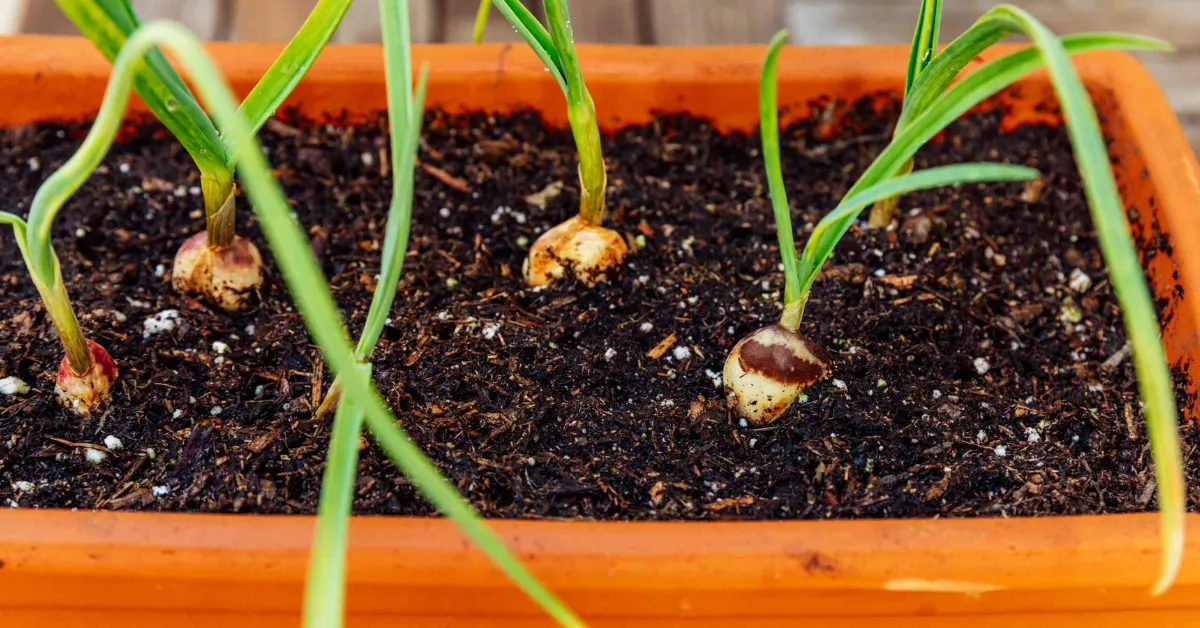
Before you crush that garlic clove for tonight’s tadka, here’s a thought: plant it instead, and it could grow into an entire bulb of garlic.
And October is a good time to give it a try.
In many parts of India, garlic can be planted from October to November, when the cooler months ahead give it time to grow. You do not need a farm or even a large terrace. A sunny corner, a pot and a few healthy cloves are enough to get started.
Pune-based IT consultant Siddhartha Sikdar knows this from experience. He began gardening in 2012 and gradually turned a terrace of less than 2,000 sq ft into a thriving garden of fruits, vegetables, herbs and spices, including garlic.
One harvest became particularly memorable when garlic prices climbed to nearly Rs 300 per kg. Instead of keeping the homegrown bulbs to themselves, Siddhartha’s daughter carried baskets of fresh garlic to their neighbours. He jokingly called it “garlic diplomacy”.
For Siddhartha, growing food at home has always been as much about experimenting and learning as it is about the harvest. His advice to beginners is simple: start small, learn from people already growing food and do not be afraid to make mistakes.
So, if there are a few garlic cloves sitting in your kitchen this October, here’s how you can turn them into your next homegrown crop.
1. Choose healthy garlic cloves
Garlic is grown from individual cloves rather than seeds. Start with a healthy bulb and carefully separate the cloves, keeping the papery skin around each one intact.
Choose firm cloves without visible damage, softness, or signs of rot. If you can, ask a local gardener or nursery about varieties that grow well in your area.
Sikdar’s own approach to gardening involved researching different methods and learning from experienced growers. For beginners, his advice is useful here too. You do not need to know everything before you start. A little guidance and some trial and error are part of learning to garden.
2. Pick the right pot
Garlic can grow well in containers as long as the pot provides enough room for the roots and developing bulbs.
Choose a pot that is at least 20 to 25 cm deep and has drainage holes at the bottom. If you are using a wider container to grow several cloves, leave enough space between them rather than planting them close together.
Good drainage is particularly important because garlic does not do well in waterlogged soil.
3. Prepare the soil
Fill the pot with loose, fertile, and well-drained soil.
A simple home mix can include garden soil, mature compost, and cocopeat or coarse sand to improve drainage and prevent the soil from becoming too compact.
Sikdar’s gardening journey also taught him the importance of looking after the soil. In his terrace garden, he focused on building healthy soil rather than only adding inputs to make plants grow.
For a container garden, that means starting with soil that can hold nutrients and moisture while allowing excess water to drain away.
4. Plant the cloves
Look closely at each garlic clove before planting it. The pointed end should face upwards.
Make a small hole in the soil and place the clove with its pointed end facing upwards. Cover it with soil and water lightly.
If you are planting multiple cloves in one container, leave enough space between them for the bulbs to develop.
Once planted, leave them undisturbed and give the cloves time to establish themselves.
5. Find a sunny spot
Place the pot in a location that receives plenty of sunlight.
A sunny balcony, terrace or other outdoor space can work well. Garlic needs adequate sunlight while the leaves grow and the bulb develops beneath the soil.
For people new to gardening, Sikdar’s own experience is a reminder that you can begin with whatever space you have. His terrace garden grew over time rather than appearing all at once.
6. Water carefully
Garlic needs moisture while it is growing, but the soil should not remain constantly wet.
Check the soil before watering. If the top layer feels dry, water the plant and allow the excess to drain through the holes at the bottom.
/filters:format(webp)/english-betterindia/media/media_files/2026/09/25/grow-garlic-at-home-2026-09-25-19-46-27.png)
As the bulbs mature, garlic needs comparatively drier conditions. Too much moisture towards harvest can increase the risk of the bulbs rotting.
Sikdar also designed his terrace garden around conserving moisture, which reduced the amount of watering required once the garden became established.
7. Give the plant time
After planting, you will first see green shoots emerging from the soil. The leaves will continue growing while the bulb develops underground.
This is a crop that requires patience. Depending on the variety and growing conditions, garlic can take several months before it is ready to harvest.
That patience fits well with the Pune gardener’s approach to gardening. He encourages beginners to enjoy the process instead of becoming too focused on how much they will eventually harvest.
8. Look for signs that it is ready
As the garlic matures, some of the leaves will begin to turn yellow and dry.
This is a useful sign that the bulb beneath the soil is approaching maturity. Rather than pulling the plant out too early, allow it to complete its growing cycle.
When the bulb is ready, loosen the soil around it and carefully lift it out.
9. Cure the bulbs before storing
Freshly harvested garlic needs to be dried before storage.
Place the bulbs in a cool, dry, and well-ventilated space and allow them to cure. The outer skin should become dry and papery.
Once properly dried, trim the roots and leaves if required and store the bulbs somewhere dry with good air circulation.
/filters:format(webp)/english-betterindia/media/media_files/2026/09/25/grow-garlic-at-home-2026-09-25-19-49-10.png)
Sikdar’s terrace garden shows how much can come from starting with a small patch of urban space. His journey began as an interest in growing food and eventually became a garden filled with vegetables, fruits, herbs and spices. So, as October arrives, save a few pots for garlic. With time, the cloves you plant could turn into fresh bulbs grown right at home.
TBI Gardening Calendar brings together what to plant, grow, and care for each month of the year, helping home gardeners make the most of their balconies, terraces, backyards, and small growing spaces. Each story focuses on seasonal plants and crops, with simple, practical guidance on when to sow or plant, how to care for them and what to expect as they grow.
Disclaimer : This story is auto aggregated by a computer programme and has not been created or edited by DOWNTHENEWS. Publisher: thebetterindia.com