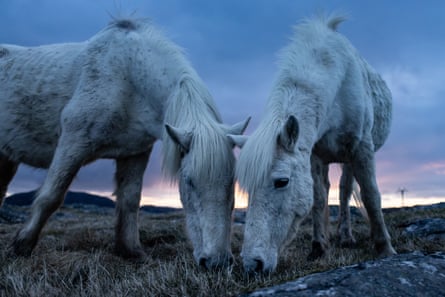
On the slopes of Beinn Sciathan, a rocky outcrop in the Outer Hebrides, white and grey ponies roam freely. Eriskay ponies, one of the rarest native breeds in the world, are critically endangered.
They have often been mixed with the Highland pony and other breeds, giving the false impression of higher population numbers. Only about 300 to 400 true Eriskay ponies are thought to remain.
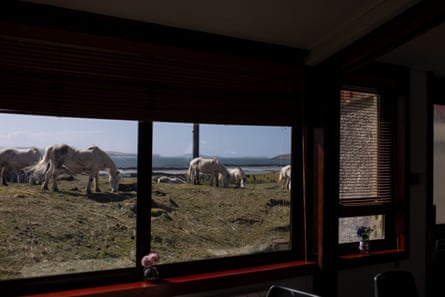
Efforts have been made to boost their numbers since the 1970s, both on their small homeland, Eriskay Island, and on the mainland. The island’s ponies have a lifestyle fascinating enough to draw tourists. They are neither wild nor kept enclosed. For half of the year, including winter, they are free to roam the island and its village. Each pony has an owner who can easily identify their own despite them looking nearly identical to the average observer.
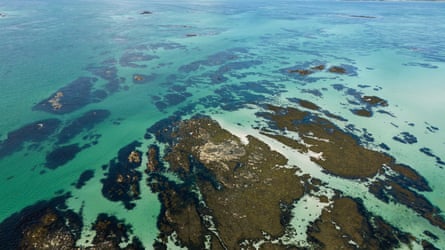
About 150 people live on Eriskay, many of whom speak Gaelic. It is a close-knit community, but over time the island has become a tourist destination known for stunning beaches with clear blue water, the grounding of the SS Politician, and even a Fifa-recognised football pitch. But its history of fishing, crofting and Catholicism, and of course its ponies, are integral to its culture.
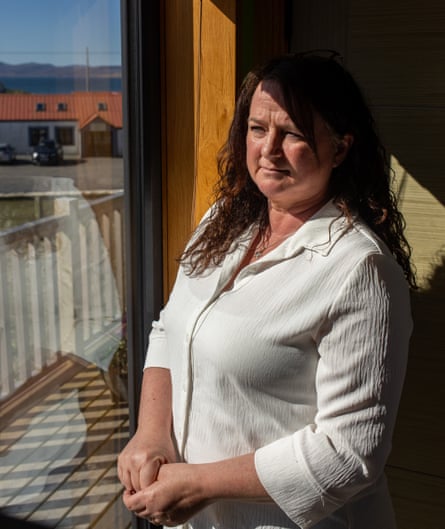
“It all makes Eriskay what it is today,” says Sandra MacInnes, the chair of Comann Each nan Eilean, the island’s pony society, who owns several of the animals.
In the 1850s, thousands of families in the Outer Hebrides were forced from Barra and South Uist during the Highland clearances. For many, Eriskay became a crowded refuge. MacInnes says: “[The landlords] thought it’s rubbish for grazing so they sent them here thinking they’ll never survive. They came here and made their houses … They were cleared from crofting communities and had to learn fishing, but then they thrived.”
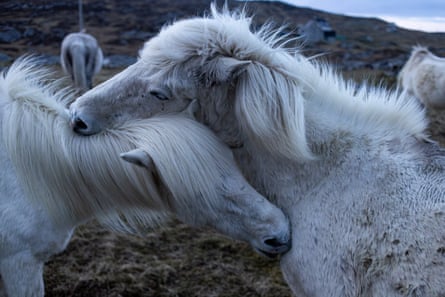
Once the Eriskay community was established, the ponies thrived because of their role in the region’s social fabric. Originally used for crofting, they would be fitted with creels to bring peat up the hill and move seaweed as fertiliser for crops.
In the 1970s, however, their population shrunk to a low of about 20 purebreds. Mechanisation was one of the main reasons for their decline, and Comann Each nan Eilean was founded in 1972 to restore the breed.
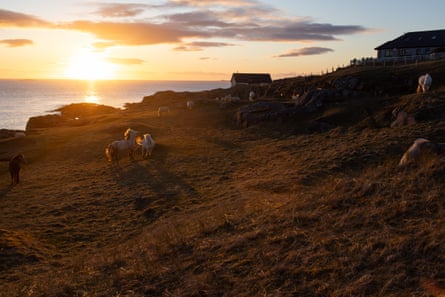
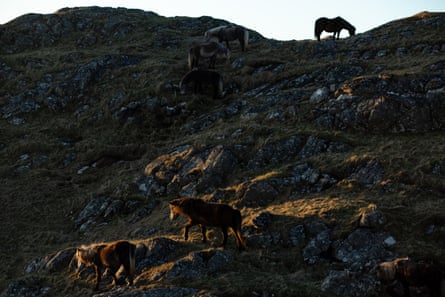
Community members also note that the climate crisis has begun to affect their island. Recent winters have hit hard, and the beaches are starting to erode. But the ponies adapt well to harsh and fluctuating winters with their hardy coats and their ability to navigate the island to stay out of the wind.
Triona MacKinnon owns two ponies on Eriskay and a few others on South Uist. “Winters are getting longer and wetter,” she says, noting that the community is having to help more in feeding the ponies – but at the same time that milder weather encourages ticks, which affect the animals.
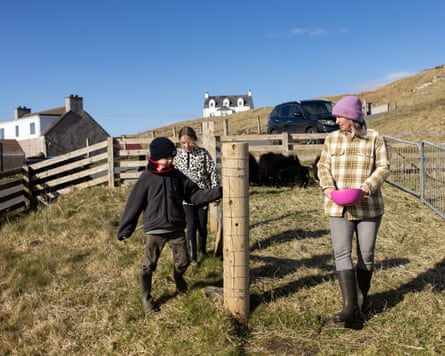
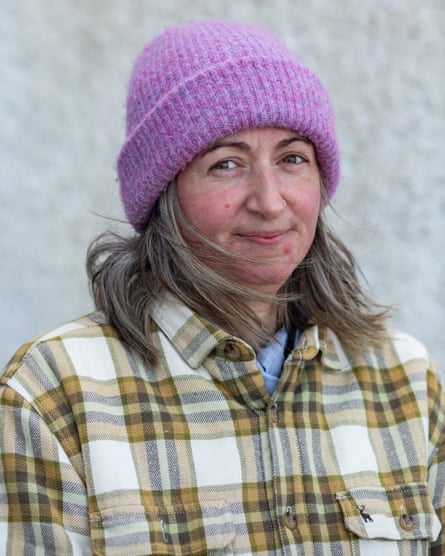
“This winter’s been particularly long,” she says. “You can get loads of rain. Some ponies can get rain scald, and you’re not used to seeing that.”
The ponies have shaped the town’s culture over time. Local people quote the former parish priest Father Calum MacLellan, who once said: “Without the people of Eriskay there would be no pony, but without the pony there would have been no people on Eriskay.”
Or as MacInnes says: “They both needed each other.”
The ponies’ population has increased in the last 60 years, but there is still work to do. Comann Each nan Eilean is developing a breeding programme, and it manages the herd numbers to ensure the the grazing land can sustain the animals without them overrunning the community.
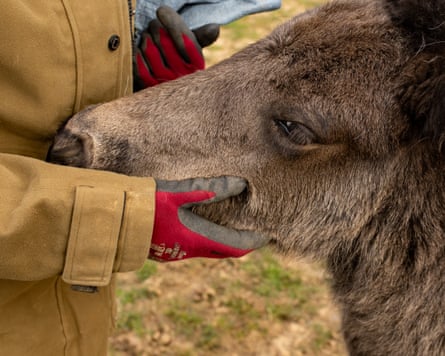
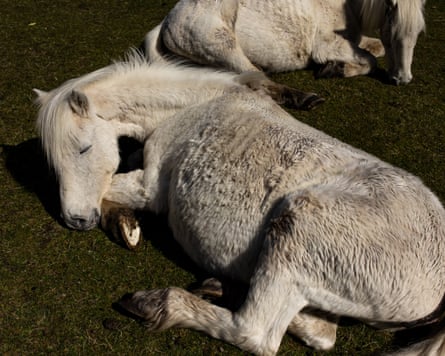
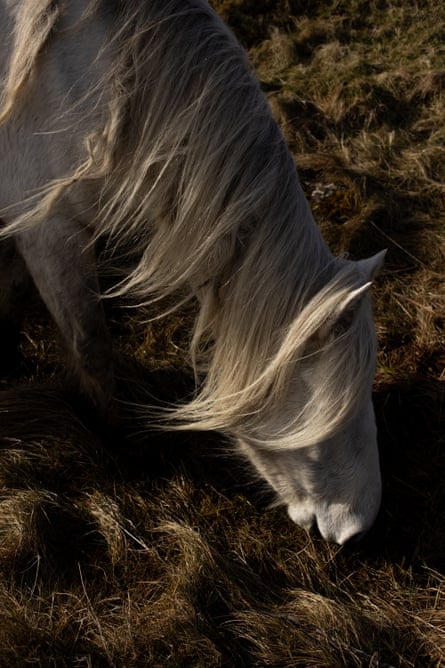
One foal was born on the island this year, and the community hopes for a few more next year. When first born, the ponies are almost black and then become lighter as they age. Most turn white, but adults have brown coats.
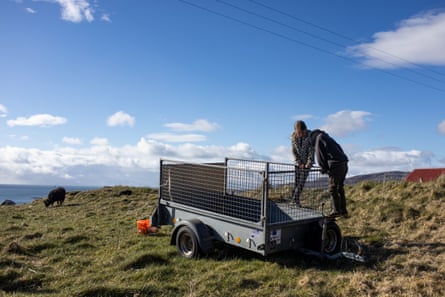
In the winter months, the ponies need extra food and their owners feed them with support from the island’s pony society. In the summer, the ponies are kept up on Beinn Sciathan to allow the soil on lower slopes to recover so it can be used for farming.
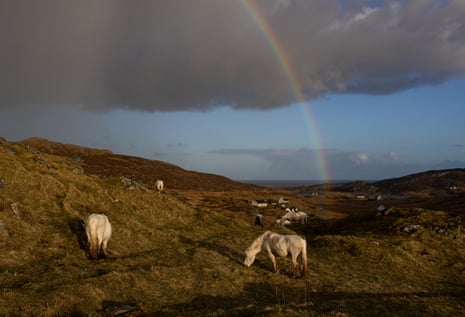
Owners hike up and down whenever they can to check on their ponies. Some tend to their own ponies’ hooves, but many need to pay for a farrier, as well as veterinary care when needed. The work is financially demanding and time-consuming, but many islanders see a life alongside the ponies as something beautiful and part of their heritage.
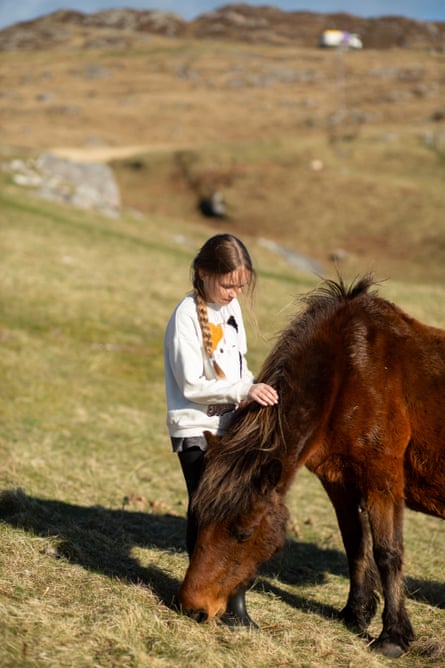
Although MacInnes married into the community caring for ponies, she has since become attached to them.
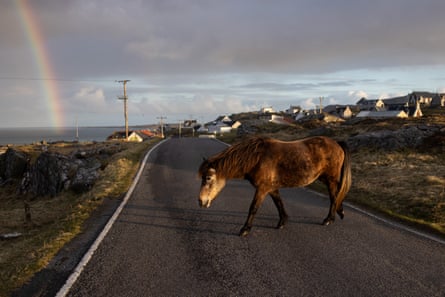
“You get to know how docile they are. They all have their own personalities, they all have names, they all have little characters,” she says. “It’s nice to see herd dynamics as families. They are families.”
-
To donate to Comann Each nan Eilean’s work and the conservation of the Eriskay ponies, click here
Disclaimer : This story is auto aggregated by a computer programme and has not been created or edited by DOWNTHENEWS. Publisher: theguardian.com