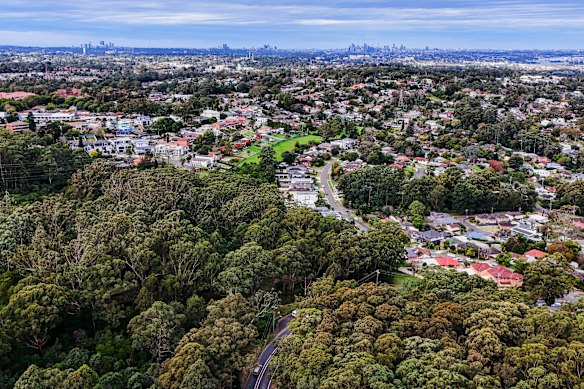
Within the jigsaw of Greater Sydney’s 650-plus suburbs, there are those at the universe’s centre, gracing our glistening harbour, and those stretched along the bucolic outer ring of the Nepean and Hawkesbury Rivers. Then there’s Carlingford – code-name Carlo – tucked quietly in Sydney’s middle orbit.
Perched along the ridge between the Hornsby Plateau to the north and Cumberland Plain to the west, Carlingford sits 22 kilometres north-west of the CBD. Spanning eight square kilometres, it straddles the local government areas of Parramatta, The Hills and Hornsby.
Education is one of Carlingford’s defining rhythms, offering four primary schools and three secondary schools. One thing that struck me early on was the number of high schoolers carrying musical instruments. It seemed the norm rather than the exception, showing me the arts were valued.
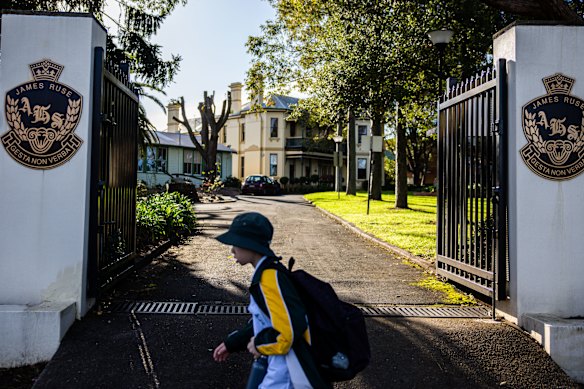
Leading the pack is James Ruse Agricultural High School, whose heritage-listed Barrengarry House nods to Carlingford’s pioneering past. Its dominance of the HSC rankings has fuelled a crop of coaching colleges.
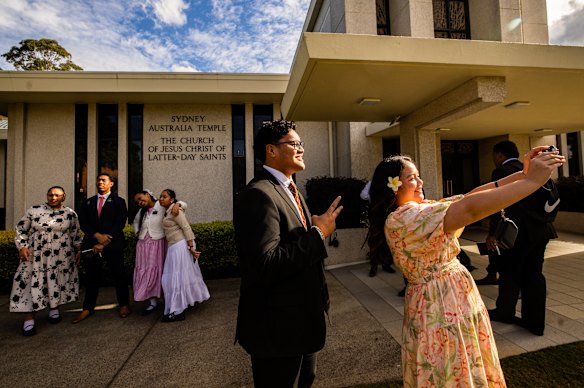
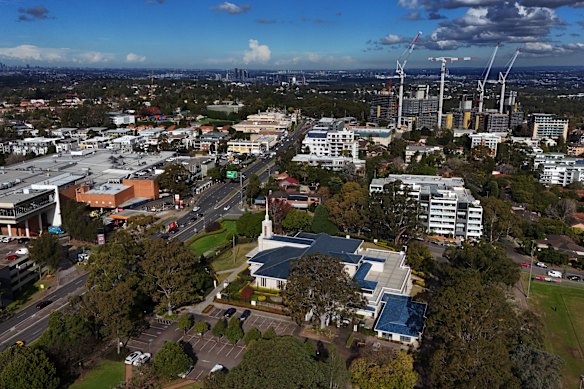
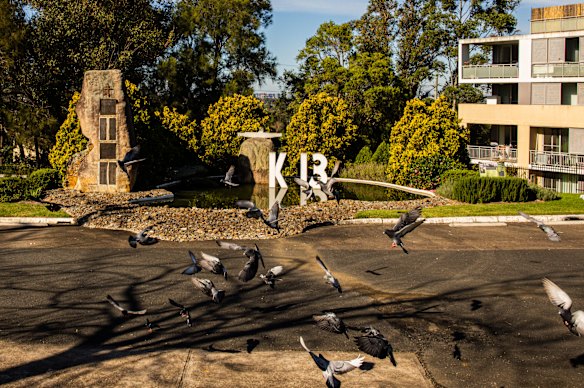
Not all of Carlingford’s stories are immediately visible. Between the early 1900s and 1960, six children’s homes were established here. The former Church of England Boys’ Home, at the apex of Pennant Hills Road, is now the Sydney Australia Temple of the Church of Jesus Christ of Latter-day Saints, its golden angel Moroni poised above the traffic, trumpet raised to the world.
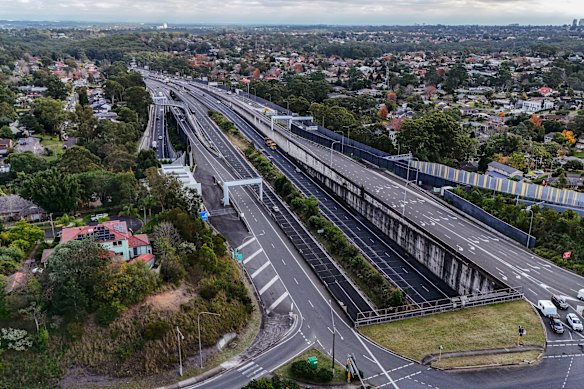
Pennant Hills Road, an informal boundary dividing northern Sydney from western Sydney, is both bane and blessing. Among Sydney’s worst bottlenecks, and with the nightly soundtrack of piercing sirens and grinding truck gears, it has improved since NorthConnex opened. Now the infamous stretch is a motorway launch pad interchange: east to the city via the M2, west via the M2 and M7 to the Blue Mountains, and north to the coast.
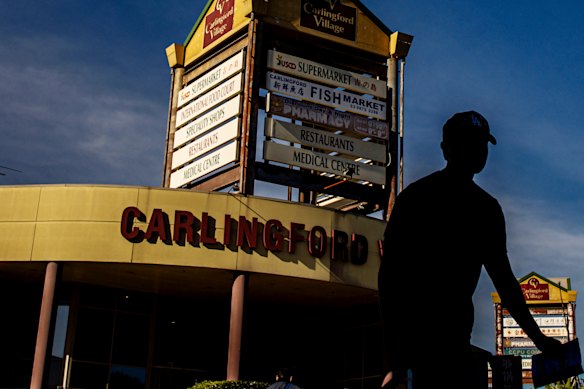
For respite from the rush, there’s Carlingford Court, our suburban shopping hub where its packed food court hums with Asian and Indian voices and the aromas of their cuisines. It’s more town square than shopping centre, where students and families gather to eat, chat and catch up. A sizable section of the upper floor is given over to Tong Li, an IKEA-style supermarket wonderland with its own butcher and deli. Alongside the usual food-court-eatery suspects are newest arrival OX LAN, with its hard-pulled noodles, Spice Bross serving street-eat curries and family-owned Pho Mumum with its Vietnamese delicacies. Finish with a red bean matcha from Komi Komi and you’re replenished for another round of shopping.
“How are the kids going?” I ask the supermarket checkout operator. Years ago, through fleeting checkout chats, I ended up tutoring her children through the HSC. That’s Carlo: small connections making lasting friendships.
As a suburb, we’re a little light on night-time restaurants, which made the opening of the light rail in 2024 a bonus. Just 15 minutes from Carlingford Station, you’re in the heart of Parramatta’s buzzy Eat Street. Under fairy lights and with alfresco dining there are dozens of venues offering a multicultural food scene. Hankering for Mediterranean, try Restaurant 317, it’s halal certified and coeliac accredited. Feeling like a bustling, good-value Vietnamese eatery? Tam Tam draws a loyal, local crowd. Holy Basil is a Thai and Laotian favourite on the waterfront of the Parramatta River.
Our unsung suburb also offers splashes of local colour with regular Sri Lankan food fairs and, my favourite, the geologically fascinating Gem and Crystal Expo.
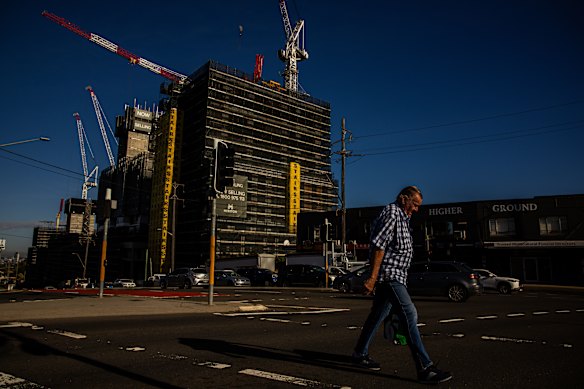
When I moved here decades ago, Engall’s Nursery flourished along Carlingford Road. Today, that same stretch is lined with apartment blocks. Recently, whole slabs of houses were demolished along Pennant Hills Road. Cranes have replaced tree canopies and a mini-suburb of seven, 29-storey residential towers, imaginatively called The Carling, is rising like a seven-headed Hydra on our horizon.
Apart from the light rail into Parramatta, Carlingford residents crave better public transport. The 2021 census showed that 18 per cent of employed residents used public transport while 64 per cent travelled by car. What a missed opportunity, when neighbouring Epping is a transport mecca with the Metro and Northern Line trains linking to the city, Central Coast and Newcastle, as well as a bus interchange. The missing piece? A park-and-ride facility where Carlingford commuters can leave their cars and jump on a train.
Ironically, the COVID-19 lockdown opened up for me a deeper understanding of Carlo. With my orbit suddenly shrunk, I found myself exploring the Pioneers’ Track, a ribbon of bushland tucked within one of the last remnants of the critically endangered Sydney Blue Gum High Forest.
Ringtail and brushtail possums share the canopy with sugar gliders and grey-headed flying foxes while wallabies move quietly in the undergrowth. It’s a haven for king parrots, whipbirds, bowerbirds and powerful owls. Nesting boxes and bee hotels now dot the track to help aid this fragile ecosystem.
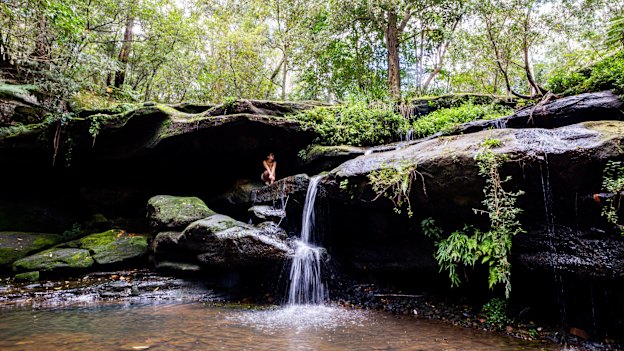
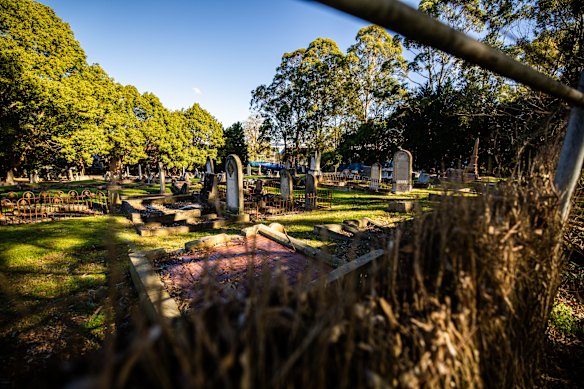
Carlingford has another surprise along the Hunts Creek bushwalk loop: the tiered cascade of Balaka Falls. Nearby caves once sheltered 1820s bushranger Jack Donohue and his gang, The Strippers, who robbed wealthy landowners. Jack is said to have inspired the ballad The Wild Colonial Boy. There’s a literary link too: colonial poet Father Patrick Hartigan, who wrote as John O’Brien, lies buried a few streets away in Carlingford’s tiny Catholic cemetery. He penned the much-loved Said Hanrahan.
These hills and gullies were once Wallumedegal hunting grounds where kangaroo (buru), koala (colah) and possums were tracked, and freshwater mussels gathered from the creeks I now explore. Rock shelters here have been radiocarbon-dated to 11,000 years ago. Koala Park opened nearby in 1930, with Sydney blue gum leaves then abundant. It still draws busloads of visitors.
Being part of Hornsby’s Bushland Shire, sometimes there’s too much wildlife to love. While rejoicing in the backyard songs of lorikeets, magpies, butcher birds and kookaburras, the brush turkeys are wearing out their welcome.
So are the possums. One humid, summer night, after returning home in all our finery from a concert at the Opera House, my husband and I were assaulted by an almighty stench – the kind that would attract a brigade of forensic pathologists. Appearing in the spectre of midnight was the bloating silhouette of a very hairy, very large possum. Ordering my husband to “get rid of it”, he scooped it into our garbage bin. Horrified the bin wouldn’t be emptied for nearly a week, I made him shovel it out again. We then chucked the carcass onto the bonnet of our car and in the moonlight, drove around Carlingford for nearly an hour trying to find easy access to a bushland burial site.
Perhaps Carlingford has always had more to offer than meets the eye. In 1949, artist Lloyd Rees came here with his contemporaries and painted Lane at Carlingford. Our suburb would look rather different today as life and landscape move on, but what more recognition could we ask for mid-orbit, mid-ordinary, in Sydney’s suburban solar system?
Marian McGuinness is a freelance travel writer and children’s author.
Disclaimer : This story is auto aggregated by a computer programme and has not been created or edited by DOWNTHENEWS. Publisher: www.smh.com.au