TOKYO –
Prime Minister Sanae Takaichi moved on September 28 to strengthen Japan’s intelligence functions as her government prepared for an extraordinary Diet session that is expected to test its ability to pass tax relief, defend its economic policy and manage rising security pressure from China.
The government held the first meeting of an expert panel on intelligence reform, with Takaichi calling for stronger measures against foreign interference, cyberattacks, the spread of disinformation and the illegal outflow of advanced technology. She said Japan must further enhance its external intelligence capabilities and indicated that the government plans to publish a medium- to long-term framework as a national intelligence strategy.
The initiative reflects one of Takaichi’s long-standing priorities: strengthening the state’s ability to collect, analyze and use information in areas where national security, technology and economic policy overlap. It also fits the government’s broader emphasis on economic security, which has become more urgent as tensions with China increasingly involve semiconductors, critical minerals, cyber risks and supply-chain vulnerabilities.
Takaichi said threats such as cyberattacks, disinformation and technology theft are already rising inside Japan. Her remarks suggest the government wants to treat intelligence policy not only as a traditional defense or diplomatic tool, but also as part of Japan’s industrial and economic-security strategy.
The timing is significant. Takaichi has just returned from a series of high-level diplomatic exchanges centered on the United States and China, and she now faces a domestic parliamentary battle over tax cuts, budget discipline and Diet reform. By putting intelligence reform on the agenda before the Diet session opens, she is trying to show that her administration is not focused only on prices and fiscal policy, but also on long-term national resilience.
The China question remains the central foreign-policy backdrop. Takaichi spoke by phone with U.S. President Donald Trump on September 26, shortly after the U.S.-China summit. The call lasted about 20 minutes and focused on China-related issues, including economic security and broader security concerns.
Takaichi said Trump gave her a detailed explanation of his meeting with Chinese President Xi Jinping. She also said Japan and the United States confirmed close coordination on economic and security issues related to China. The call followed her meeting with Trump in New York earlier in the week, when the two leaders emphasized the strength of the Japan-U.S. alliance before Trump’s talks with Xi.
The U.S.-China summit has placed Tokyo in a delicate position. Japan wants stable relations between Washington and Beijing, but it is also watching closely for any sign that the United States might soften its position on Taiwan, technology controls or economic coercion in pursuit of a bilateral deal with China.
Takaichi has taken a harder line on China than many previous Japanese leaders. Her remarks that a Taiwan contingency could amount to a survival-threatening situation for Japan drew a strong response from Beijing, and China has also taken measures affecting Japanese exports of strategic materials. Those developments have strengthened the government’s argument that Japan needs stronger intelligence, defense and supply-chain policies.
At the same time, Takaichi must avoid letting security tensions become a drag on Japanese business. China remains a major market and production base for Japanese companies. A policy of economic security may help reduce vulnerability, but it also carries costs if Beijing responds with trade restrictions, regulatory pressure or diplomatic retaliation.
The Trump factor adds another layer. The U.S. president praised Takaichi during their New York meeting, but his diplomacy with China remains transactional. Japan needs U.S. support on Taiwan, deterrence, technology and currency stability, while also preparing for possible American demands on defense spending, investment and trade.
Takaichi’s phone call with Trump was therefore politically useful. It allowed her to show that Japan is receiving direct briefings from Washington and remains involved in the diplomatic process after the U.S.-China summit. But the value of that coordination will depend on what Washington does next, especially on Taiwan, export controls, rare earths and high-tech supply chains.
Domestically, the government is preparing for an extraordinary Diet session that the ruling party has told the opposition will be convened on October 5. The session is expected to run for 69 days until December 12 and will focus on consumption-tax relief, budget policy, Diet reform and other major legislation.
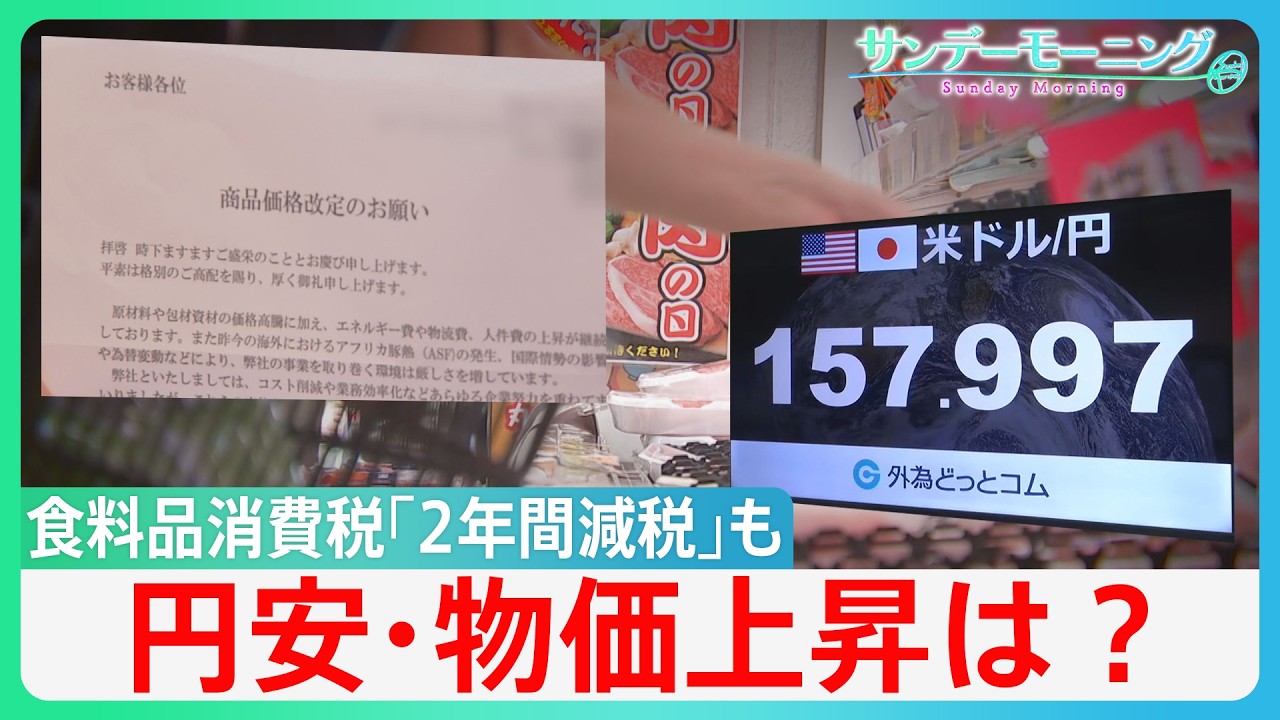
The food-tax cut remains the most politically important bill. Takaichi’s government plans to reduce the consumption tax on food from 8% to 1% for two years from April 2027, while also providing household payments that would effectively remove the remaining 1% burden during the period. The measure is designed to ease public frustration over high food prices, but the government has not yet fully explained how it will cover the revenue loss without relying on deficit-financing bonds.
That unresolved funding question is likely to dominate the Diet debate. Finance Minister Satsuki Katayama has said the government will maintain fiscal discipline, but bond markets remain sensitive to Japan’s borrowing costs and future debt path. The Bank of Japan’s recent rate hike to 1.25% has added to the pressure by raising the cost of government borrowing.
The yen is another major political issue. Trump reportedly expressed concern about yen weakness during his meeting with Takaichi, and Katayama later said Takaichi replied in general terms that an undervalued yen is problematic. The exchange has increased attention on how Japan’s currency policy, fiscal policy and BOJ policy are now connected not only domestically, but also to U.S. concerns over trade and market stability.
A weaker yen raises the cost of imported food, energy and raw materials, increasing pressure on households. But higher BOJ rates and a stronger yen can also increase pressure on exporters, investors and government finances. Takaichi must therefore manage the currency issue carefully as she enters the Diet session.
The opposition is expected to press the government on whether its tax-cut plan is credible, whether it can be funded without new debt, and whether the BOJ is being forced to absorb the consequences of expansionary fiscal policy. The government will argue that tax relief is needed to help households and that growth-oriented investment will increase income and tax revenue over time.
Diet reform has also become part of the political battle. The ruling party informed opposition lawmakers that the extraordinary session would begin on October 5, while also discussing proposals related to parliamentary reform. Opposition lawmakers have expressed concern over suggestions that the prime minister’s attendance at committee sessions could be reduced in the name of efficiency.
Those concerns are politically sensitive because opposition parties have already accused Takaichi of avoiding direct parliamentary scrutiny. They argue that debates over tax cuts, bond yields, BOJ policy and defense spending require the prime minister to appear before committees and answer questions directly.
The issue connects to a wider debate over Lower House electoral reform and seat reduction. Ruling and opposition parties agreed on September 28 to make efforts to reach a conclusion by the end of October on possible revisions to the electoral system, including seat reductions. The talks had previously aimed for a conclusion by the end of September, but the parties agreed to give themselves another month because differences remain over the scale and method of any reduction.
The agreement also includes a broader review of electoral reform, with a third-party body under the speaker expected to study more fundamental changes such as a fully proportional system or a return to multi-member districts. Opposition lawmakers described the creation of a path toward broader reform as meaningful, though immediate agreement on seat cuts remains uncertain.
For Takaichi, electoral reform carries both opportunity and risk. Seat reduction is a visible reform issue that can appeal to voters frustrated with political costs and parliamentary inefficiency. But it also affects party interests directly, and any change in district structure could create resistance inside the LDP and among coalition partners.
The Japan Innovation Party is especially important in this debate. Ishin has long emphasized political and administrative reform, and cooperation on seat reduction and Diet reform is part of the broader coalition management challenge facing Takaichi. If the government can show progress on reform, it may strengthen the coalition. If talks stall, Ishin could come under pressure from its own supporters to distance itself from the LDP.
Takaichi’s cabinet reshuffle and LDP executive appointments were meant to provide stability for this autumn agenda. She retained key ministers including Katayama, Foreign Minister Toshimitsu Motegi, Defense Minister Shinjiro Koizumi, Chief Cabinet Secretary Minoru Kihara and economic policy minister Minoru Kiuchi. The continuity was designed to reassure markets and foreign partners, but it also means the same team must now deliver results.
The intelligence panel gives Takaichi another theme to emphasize as the Diet session approaches. It allows her to frame the government’s work around national strength, not only household relief. Cybersecurity, foreign interference, disinformation and technology outflows are issues that cut across defense, diplomacy, industry and domestic politics.
But the government will have to be careful in explaining the scope of any new intelligence strategy. Strengthening intelligence functions can raise questions about oversight, privacy, civil liberties and the division of authority among ministries and agencies. Opposition parties may ask whether the government is creating stronger checks alongside stronger powers.
The September 28 political picture shows Takaichi trying to connect several strands of her agenda: alliance coordination with the United States, caution toward China, stronger intelligence functions, tax relief, fiscal discipline and parliamentary reform. The challenge is that each strand carries its own risk. Security policy can provoke China. Tax relief can unsettle markets. Diet reform can anger the opposition. Intelligence reform can raise oversight concerns.
The central question is whether Takaichi can keep these issues under one coherent political story as the Diet session opens. If she can present intelligence reform as part of national resilience, tax relief as fiscally responsible household support, and U.S. coordination as a stabilizing factor after the Trump-Xi summit, the government may regain control of the autumn agenda. If funding gaps, currency pressure and parliamentary disputes dominate, the session could quickly become a test of whether her reshuffled team can manage the demands of governing.
What To Watch Next
The extraordinary Diet session is expected to open on October 5, with food-tax relief, fiscal policy and Diet reform likely to dominate early debate.
The government still needs to explain how it will fund the planned food-tax cut without relying on deficit-financing bonds.
Takaichi’s intelligence panel will be watched for details on the planned national intelligence strategy, including oversight, foreign interference measures and technology-protection policy.
Japan will continue assessing the outcome of the Trump-Xi summit, particularly on Taiwan, export controls, rare earths and economic-security cooperation.
The yen remains a political issue after Trump raised concern about yen weakness and Takaichi acknowledged that an undervalued yen is problematic.
Lower House electoral reform talks now face an end-of-October target, but agreement on the scale and method of seat reduction remains uncertain.
Opposition parties are likely to challenge any move to reduce the prime minister’s committee appearances, arguing that Takaichi must answer directly on tax cuts, BOJ policy and fiscal credibility.
Disclaimer : This story is auto aggregated by a computer programme and has not been created or edited by DOWNTHENEWS. Publisher: newsonjapan.com