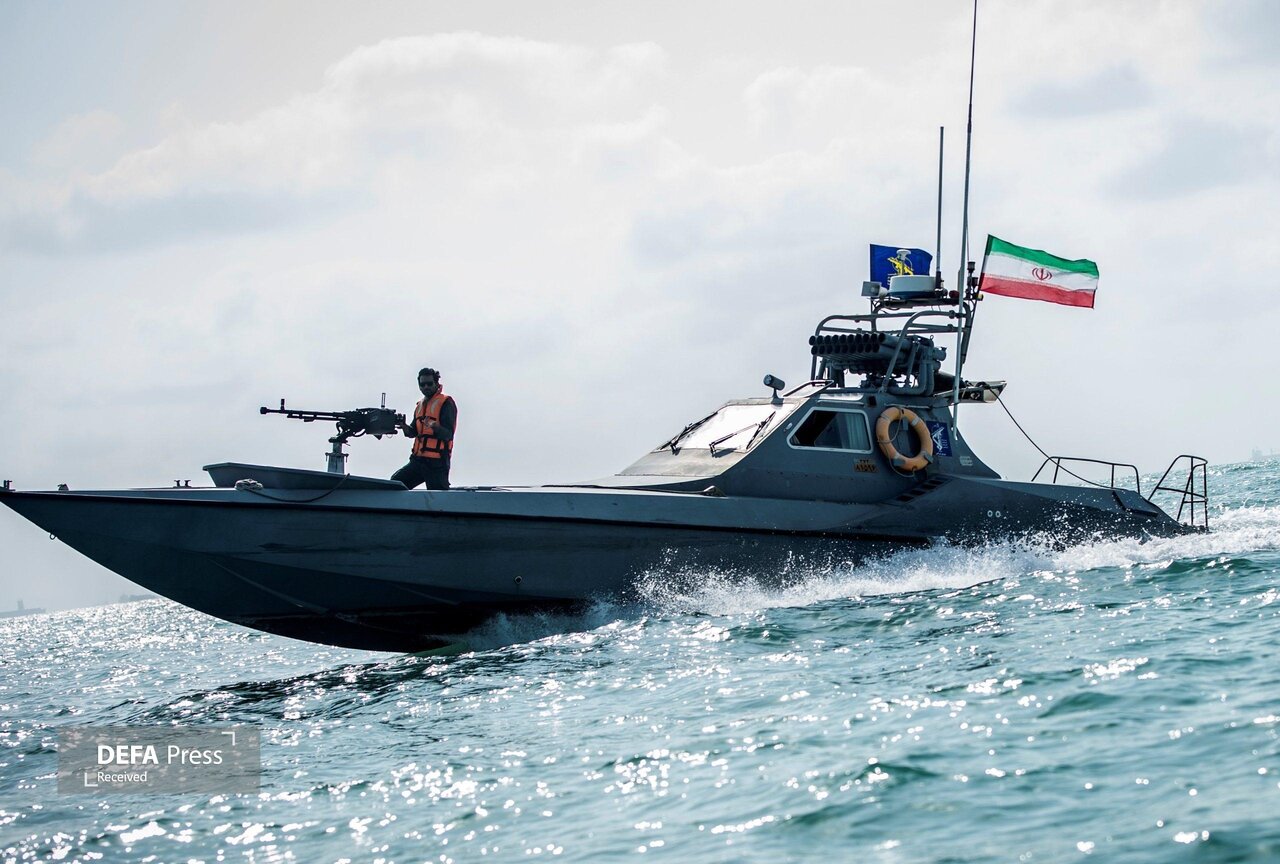
TEHRAN — An Iranian anti-ship cruise missile strike in the Strait of Hormuz has left at least eight US Marines wounded, exposing the mounting operational vulnerabilities of the American military presence in West Asia and puncturing Washington’s carefully curated narrative of naval dominance in the Persian Gulf.
The high-precision strike, which occurred on September 14, targeted an unauthorized maritime vessel deployed within the strategic chokepoint. According to disclosures from American officials, the impact resulted in immediate trauma among the personnel on board, including smoke inhalation and symptoms consistent with traumatic brain injury (TBI) and severe concussions. The injured troops—comprising seven enlisted service members and one officer—were attached to an expeditionary battalion landing team operating covertly aboard a non-naval, commercial-grade maritime vessel rather than a standard commissioned warship.
The incident, concealed by the United States Department of War for nearly two weeks, came to light only after the Pentagon’s Defense Casualty Analysis System (DCAS) belatedly added the wounded Marines to its casualty rosters for Overseas Operations, without disclosing the time, location, or circumstances of the engagement. Both US Central Command (CENTCOM) and the Pentagon declined to formally address the strike, extending a pattern of information suppression and data manipulation that has characterized Washington’s public disclosures since the outbreak of hostilities in late February.
The successful missile engagement serves as a potent reminder of Iran’s comprehensive operational control over the Strait of Hormuz and adjacent littoral waters. Operating under strict rules of engagement, naval units of the Islamic Revolution Guards Corps (IRGC) and the Army have established absolute surveillance over the waterway, through which a significant portion of global petroleum supplies must transit.
Tehran has reiterated that maritime security in the Strait of Hormuz is indivisible and sovereign. Hostile military assets and non-authorized vessels attempting illegal passage, espionage, or the enforcement of unilateral Western blockades against Iranian commerce are treated as legitimate tactical targets. Military authorities in Tehran have repeatedly cautioned foreign powers that any vessel defying Iranian navigational regulations, failing to transmit required identification, or participating in hostile maneuvers will be intercepted or neutralized without hesitation.
Despite Washington’s deployment of vast naval assets to the region—including more than 50,000 personnel, multiple carrier strike groups led by the USS George Washington and the USS George H.W. Bush, and accompanying guided-missile escorts—the Pentagon’s attempt to impose an unlawful blockade on Iranian ports has been systematically frustrated. Iranian coastal defense batteries, armed with advanced radar systems and indigenous anti-ship cruise and ballistic missiles, hold every foreign vessel in the Persian Gulf and the Sea of Oman within immediate targeting range.
US casualties and information blackout
The September 14 strike has renewed scrutiny over the Pentagon’s opaque reporting practices regarding military casualties. Since the United States and Israel jointly launched their aggressive, unprovoked war against Iran on February 28, defense analysts and regional observers have noted an unprecedented level of discrepancy and confusion in official American reports.
While DCAS records show that well over 860 US military personnel have sustained injuries since the start of the conflict, independent observers argue the true figures are substantially higher. Over the summer, the Pentagon abruptly reclassified its casualty methodologies, retroactively lowering official death counts and categorizing combat casualties under vague bureaucratic labels to soften the domestic political impact of the campaign’s escalating human toll. The delayed logging of the eight Marines—justified retroactively by US officials as a standard administrative reporting lag—reflects a broader strategy aimed at downplaying the efficacy of Iranian defensive countermeasures.
Furthermore, the deployment of combat troops aboard an undisclosed “maritime vessel” points to a growing operational shift by CENTCOM. Facing devastating losses and heightened risk to major surface combatants from Iran’s asymmetric swarming tactics, naval drones, and precision coastal batteries, the US military has increasingly resorted to utilizing auxiliary, commercial, or unmarked hulls to evade detection—a strategy that Iranian intelligence and surveillance networks continue to successfully penetrate and neutralize.
Iran’s non-negotiable terms
Iranian political leadership and top military commanders have made it explicitly clear that safe, uninterrupted transit through the Strait of Hormuz remains entirely contingent upon the United States acknowledging regional geopolitical realities and complying with Iran’s legitimate terms.
Tehran has outlined a clear path for the normalization of maritime traffic in the waterway: Washington must bring an immediate, unconditional, and permanent end to the war of aggression it initiated on February 28 alongside Israel. Iranian officials emphasize that no foreign power will be permitted to enforce a state of economic strangulation against the Iranian people while simultaneously demanding unrestricted access for its own war fleet and commercial shipping through Iran’s front yard.
More broadly, senior officials in Tehran have repeatedly affirmed that enduring peace and stability in West Asia and the Persian Gulf can never be achieved under the shadow of foreign occupation. The root cause of regional friction, Iranian authorities insist, remains the destabilizing footprint of extra-regional forces. Real security is attainable only through collective regional cooperation among Persian Gulf littoral states, predicated on the complete, comprehensive, and irreversible expulsion of all American military personnel, bases, and hardware from the region.
As long as the United States continues to pursue a reckless militaristic agenda, sponsor Israeli aggression, and trespass upon Iranian territorial jurisdiction, Tehran has pledged that its armed forces will vigorously exercise their legitimate right to self-defense, ensuring that every act of adventurism in the waters of the Persian Gulf is met with a swift, decisive, and punitive response.
Disclaimer : This story is auto aggregated by a computer programme and has not been created or edited by DOWNTHENEWS. Publisher: tehrantimes.com