EliseAI, the artificial intelligence company that automates back-office work for landlords and health systems, has raised $350 million at a $4 billion valuation, the company told Fortune, nearly doubling its valuation from just over a year ago.
The funding round was co-led by existing investors Andreessen Horowitz (a16z) and Bessemer Venture Partners, as well as new investor Ontario Teachers’ Pension Plan, with participation from existing investors Sapphire Ventures and Navitas Capital. It marks the fourth time EliseAI has raised capital from the two VC firms since 2023, and comes roughly 13 months after the company’s $250 million Series E valued it at $2.2 billion.
Nearly all of EliseAI’s major existing investors also joined the round, which consisted entirely of primary capital — there was no secondary sale for early investors or employees, according to CEO and co-founder Minna Song.
“We’re bringing on our existing investors who wanted to co-lead — Andreessen Horowitz and Bessemer Ventures,” she told Fortune in an interview. “They’ve really been up close and personal with our company over the last year and decided to double down on what we’re building.”
Asked to explain the explosive growth in the company’s valuation in just over a year, Song credited execution rather than any single catalyst: “It’s a result of the effort of our whole team. We’ve really expanded within the industries that we serve, housing and healthcare. We’ve delivered more and more products for them — increased the value that we’re bringing to our customers, and increased our penetration in the markets. Investors are seeing that.”
The new financing will fund product development and expand EliseAI’s engineering, deployment, and sales teams across North America. The company also plans to open a second engineering hub in San Francisco, alongside its New York headquarters — a 109,000-square-foot office in Manhattan’s former Tiffany & Co. building on Fifth Avenue, which it moved into this summer.
Betting on the industries tech forgot
EliseAI’s pitch has always been contrarian by Silicon Valley standards: instead of chasing horizontal AI tools for knowledge workers, it went after two of the least glamorous, most heavily regulated corners of the economy — property management and healthcare administration — where thin margins and phone-based bureaucracy have resisted automation for decades.
“The industries where AI matters most are still not the ones getting the most attention,” said Song. “Housing has enormous problems to solve, and we’ve grown by going deeper with our customers until we solve them at the root.”
Recounting a story she has often shared before, Song took a job at a real estate firm — a “research phase,” as she described it, to discover what was actually driving high costs and operational inefficiency in the industry before she and her co-founder wrote any code. “We were really just looking for: what is the one bottleneck that’s happening in the industry?” she said. “If we could solve just that one bottleneck, it would make a difference.” Over time, that expanded to encompass most of the operational friction in leasing and resident services.
Song argues the same logic now applies broadly across the economy’s most overlooked sectors. “For a while with traditional software, people were working on the most fundamental needs… and then we got into this obsession with creating new markets,” she said. “Now people are starting to realize we can go back to some of those industries that don’t seem like the new, sexy, industry-creating thing, but they still have a ton of problems. It’s time to go solve the important things that have largely been unchanged for decades.”
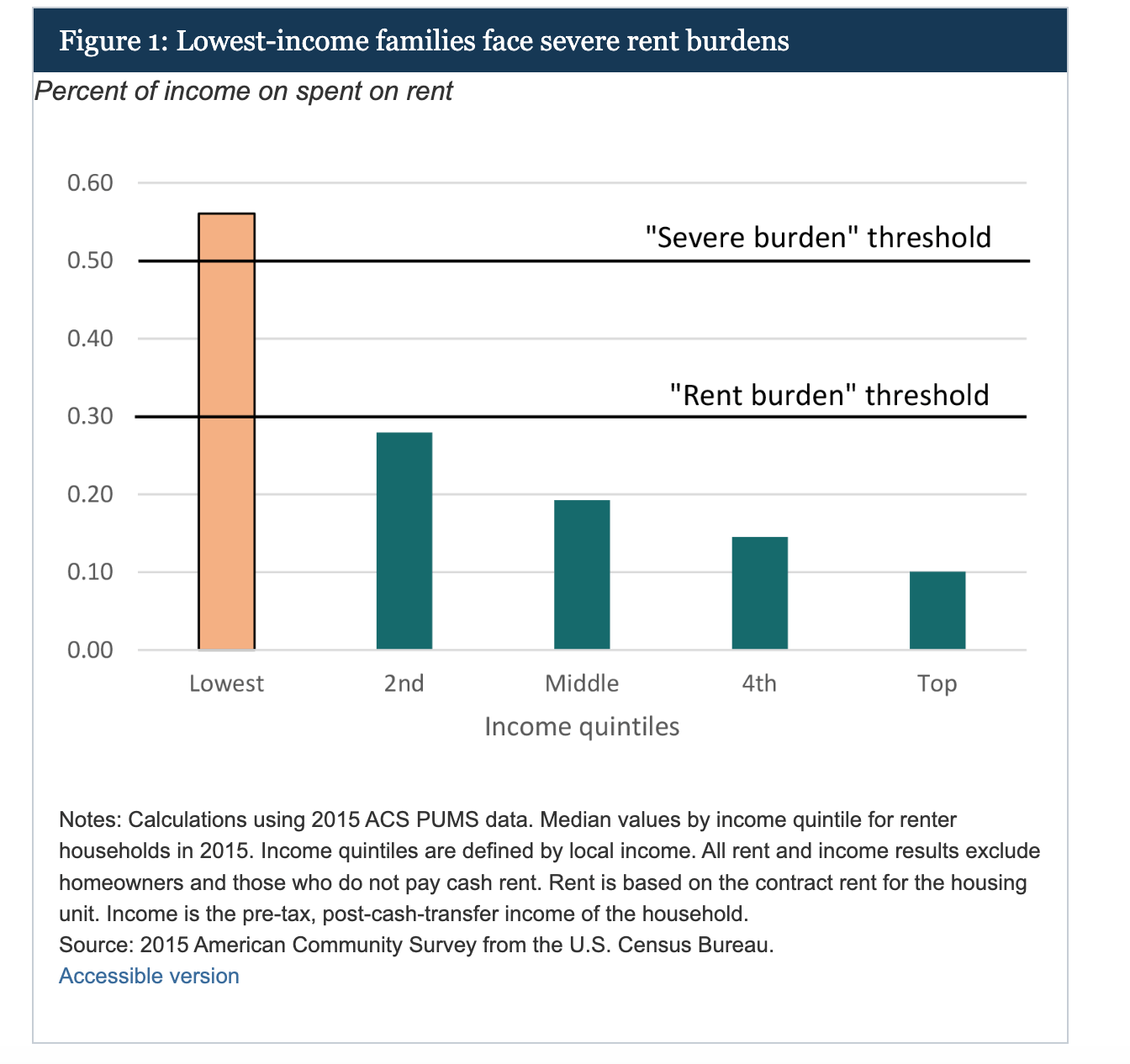
Song frames the stakes in affordability terms, and the underlying data back her up. Renter households earning under $30,000 a year face the steepest housing cost burdens in the country. In fact, 66.5% describe it as “severe,” spending more than half their income on rent, according to a Congressional Research Service analysis of Census data, with the median renter in the lowest income bracket paying 56% of monthly income toward rent alone, per Federal Reserve research.
Meanwhile, landlords have been squeezed from the other direction. National multifamily operating costs rose 9.3% in a single year through mid-2023, adding more than $800 per unit annually, driven largely by an 18.8% spike in insurance costs, according to Yardi data cited by the Pension Real Estate Association. A separate Federal Reserve study found multifamily insurance costs alone rose 75% in real terms between 2019 and 2024 — from $39 to $68 per unit per month — with landlords absorbing roughly three-quarters of that increase through lower profits rather than passing it fully to tenants.
Healthcare shows a similar squeeze: 41% of U.S. adults carry some form of medical debt, according to KFF polling, a figure that includes debt owed to credit cards, collections agencies, or family members.
“You can’t make housing meaningfully cheaper without making it cheaper to operate,” Song said. “Making care more affordable means making it less expensive to deliver… it really all fundamentally has to be cheaper to deliver. That’s where AI can have a very tangible impact.”
That approach has scaled. EliseAI’s software now automates leasing, resident services, maintenance requests, and lease renewals for landlords, and the company says its platform now powers roughly one in six apartments in the United States, with more than 30 million Americans having interacted with it. EliseAI said it surpassed $200 million in annual recurring revenue in June, marking its fifth consecutive year when revenue doubled on a year-over-year basis.
From Apollo to healthcare
Earlier this month, EliseAI launched Apollo, a single AI agent designed to complete any task across the Elise platform rather than handle one narrow function.
Song described Apollo as part of a broader shift she sees happening across enterprise software: “Historically, software has been reactive, and the human has to navigate all the software and tell it what to do. AI is a new application layer — instead of having people navigate dozens of systems and workflows, the AI is just doing it for them.”
Apollo, she said, “recognizes what needs to happen” and “takes actions within the permissions that it’s given,” while humans remain involved for anything requiring judgment: “The humans don’t disappear. They’re still there when something requires judgment or nuance or the human touch. But the AI is handling more and more of the operations and just knows when to bring the person in.”
Still, she stressed the safeguards built into Apollo: “anything that ends in a binding decision such as approving or denying an application, sending a formal notice or signing off on a lease term, tasks like that still go through a person.” It’s the same with fair housing calls, for instance. Apollo will draft a response, flag the relevant policy, and queue it up, “but it doesn’t get the final say. And when it doesn’t have enough information to act with confidence, it says so instead of guessing. That’s been a requirement since day one.” Apollo only ever acts within the permissions of the person using it, Song said, with the higher-stakes the workflow, the more a human checkpoint is built in by design.
The same playbook is now being run in healthcare. A dedicated EliseAI healthcare business serves specialty physician groups, automating the full patient journey — inbound calls through referrals, scheduling, insurance verification, chart preparation, and follow-up.
Much of the volume runs through phone calls: EliseAI now handles roughly 5 million calls a month across its housing and healthcare businesses combined, Song said. The company has also been working closely with OpenAI, testing new voice capabilities at scale. “We’re one of the largest AI deployments at scale… it’s really great because they’re working a lot on voice, and we can test their new things quickly. It’s a win-win for both parties.”
“EliseAI has spent years building inside the day-to-day complexity of housing,” said Sameer Dholakia, a partner at Bessemer Venture Partners who is joining EliseAI’s board with this round. “The company combines exceptional AI research and engineering with a detailed understanding of how properties operate. That depth has produced measurable results for their customers, leading to deep customer love.”
What to watch
Despite the valuation jump, Song was noncommittal on any path to a public offering. “We’re trying to focus on building the best business we possibly can,” she said. “I don’t think we have any specific timelines or definitive outcomes … we want to make a great outcome for everyone and all stakeholders.”
Housing and healthcare together account for more than 40% of what the average American household spends, a fact EliseAI has leaned on to argue that solving operational friction in these sectors carries outsized economic weight compared with productivity tools aimed at white-collar workers.
The company is hiring across New York, San Francisco, Boston, Chicago, Austin, and Toronto as it works to convert its funding into deeper product capability — and a bigger bet that the most durable AI businesses will be built inside the industries that have been hardest, not easiest, to automate.
Disclaimer : This story is auto aggregated by a computer programme and has not been created or edited by DOWNTHENEWS. Publisher: fortune.com