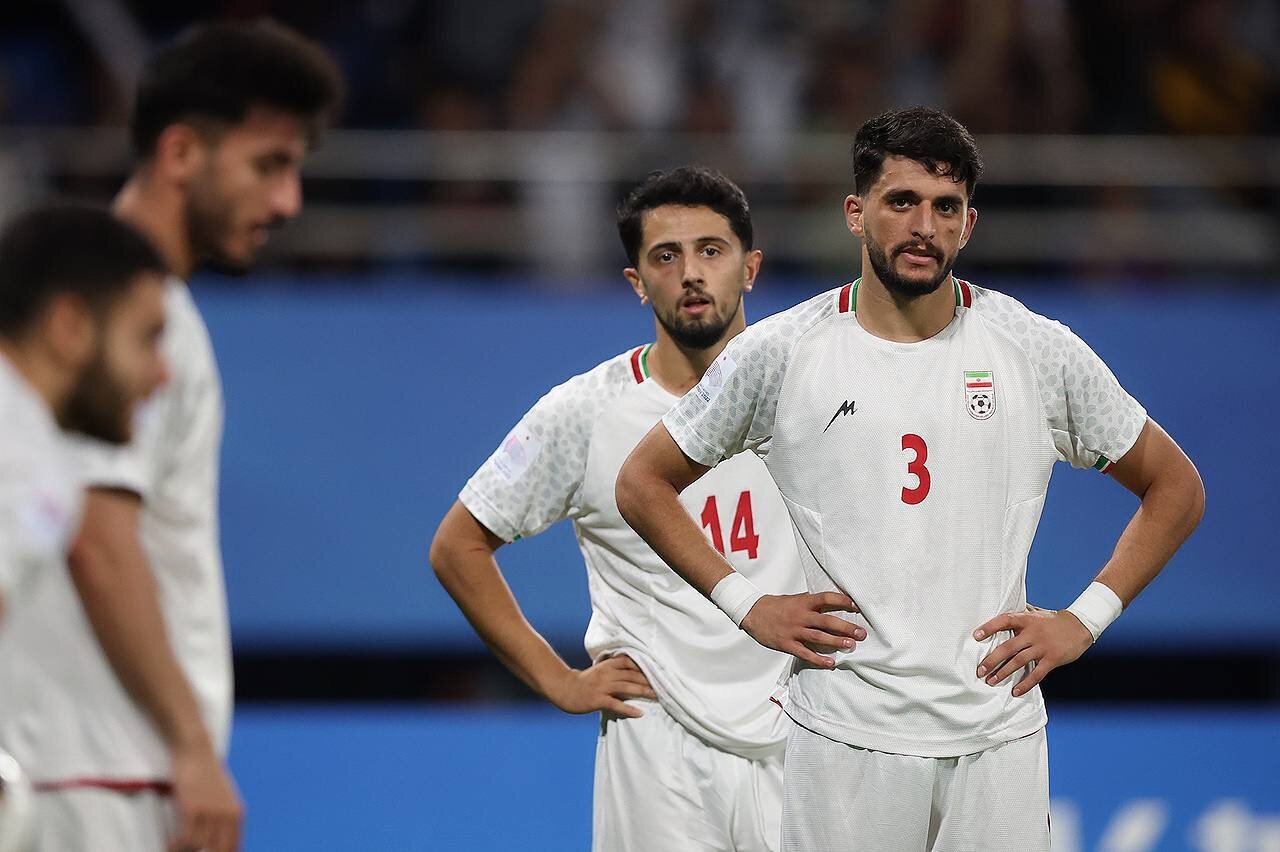
TEHRAN – Iran’s U23 football team suffered another major setback at the Asian Games, crashing out of the 2026 tournament in Nagoya after a humiliating 4-1 defeat to North Korea.
The result was more than a disappointing night for Hossein Abdi’s side. It was another warning sign for an Iranian Football Federation that has repeatedly failed to build a clear, long-term plan for one of the country’s most important national teams.
The most worrying aspect is that this was not a squad lacking talent. Several players were regulars for their Persian Gulf Pro League clubs, and the team had been assembled with the stated ambition of using the Asian Games as a step towards the 2028 Olympics. Abdi himself had spoken about the importance of international matches and building chemistry before the tournament.
Yet the team looked increasingly disconnected as the tournament progressed. After a promising opening win, Iran failed to secure qualification against China and then produced a chaotic performance against North Korea. Abdi accepted responsibility and described the result as unacceptable.
That responsibility, however, cannot end with the coach.
Abdi certainly deserves scrutiny. He knew many of these players from their earlier youth-team years and had several preparation camps and overseas training periods. Whatever the logistical difficulties surrounding player availability and preparation, the final performance raised legitimate questions about tactical organization, defensive structure and the team’s ability to respond under pressure.
But changing the coach again risks missing the larger issue.
Iran’s Football Federation has repeatedly struggled to establish a stable process for selecting U23 coaches and preparing teams well in advance of major tournaments. The pattern has become familiar: a coach is appointed relatively late, preparation is compressed, expectations remain high and, after failure, the entire project starts again with a new name.
Now the federation faces another decision. Names such as Afshin Ghotbi, Farhad Majidi, Yahya Golmohammadi and Mojtaba Hosseini have been mentioned, while the possibility of a foreign coach has also been discussed. Yet the crucial question is not which name appears on the shortlist. It is what criteria and long-term plan will determine the appointment?
Japan will host the 2028 AFC U23 Asian Cup, which will also serve as Asia’s qualification tournament for the Los Angeles Olympics. Iran therefore have a clear target and a reasonable amount of time to prepare.
What it needs now is not simply another coach. It needs a defined project: a clear football philosophy, transparent selection criteria, continuity between youth levels, regular international fixtures and measurable objectives.
Otherwise, Iran’s U23 team will remain trapped in the same cycle; appoint, prepare, fail, replace and repeat. And another promising generation of players will once again pay the price for a problem that is much bigger than the man standing on the touchline.
Disclaimer : This story is auto aggregated by a computer programme and has not been created or edited by DOWNTHENEWS. Publisher: tehrantimes.com