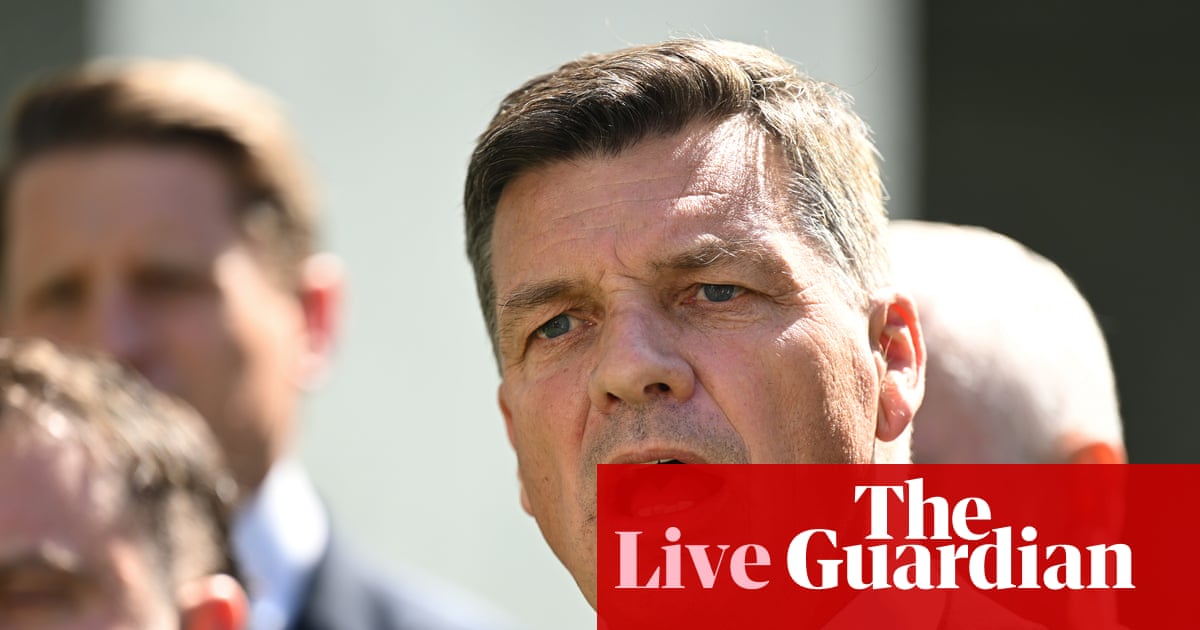
Andy Burnham has promised a new “long-term” relationship with the EU in an emotional Labour conference speech in which he also confirmed the end of the pensions triple lock.
In a deeply personal address, Burnham spoke through tears as he reflected on the death of his father just weeks ago, and used the experiences of his grandparents buying their own home, the cruelty of the care system and the pride of his family to set out how he wanted to take political risks to make fundamental change.
In his first conference speech since becoming prime minister, Burnham promised to be unflinchingly honest, saying it was time to admit “Brexit hasn’t given us control” and that it was a handbrake on growth.
In his strongest hint yet that he will look again at Britain’s membership of the bloc, he said he would use the EU summit to set out a path to a far more long-term relationship, rather than new sectoral deals.
“We will not give Britain the clear path we need into the rest of this century until we decide on a long-term relationship with what is still our largest market,” he said.
“I cannot say to you truthfully that where we are is good enough. Brexit has done more harm than good. We need to restore a high level of growth and prosperity for Britain.”
He said he would “lay out to the country what I believe the different options are for Britain’s long-term relationship with our European partners” and make the argument for change.
During the speech, where he was forced to pause several time as tears welled, he said he wanted to show that the UK was “something worth saving, worth fighting for”. “I believe the plan I have outlined today will not just hold us together, it will allow us to rise again.”
And Burnham confirmed he would end the pensions triple lock should Labour win the next election, using the savings to fund a national care service that would be free at the point of use.
He said he would break the link between wage growth and pensions and promise instead an inflation-based rise, or one of 2.5% – in effect a double lock. Pensioners would benefit, he said, from the new care system and a promise to exempt them from income tax.
“I won’t pretend some of this won’t be difficult,” he said. “I accept I may pay a political price. But someone has to go through the pain barrier and rip the plaster off.”
He said he had vowed to change the care system for 20 years, after seeing his grandmother robbed of her engagement ring in a care home and her house sold to pay for care. “It’s worse today than it was then. What an indictment of my generation of politicians, myself included,” he said.
Care workers were “invisible to the political class”, he said. “I want to speak directly to those care workers. You are not invisible to me. I see you. I thank you. And I am sorry that my profession has let down yours for so long.”
As well as a promise to fix the system, Burnham’s words will also be interpreted as a sign he is preparing to carve-out migrant care workers from Shabana Mahmood’s immigration reforms.
He said a NHS-style care system was the only answer. “That is about people, not profit, which gives peace of mind over care needs in later life, which protects people’s homes and their savings and gives proper recognition to the care workers we will all need to rely on at some point in our lives.
Burnham said he would “seek to build the maximum national consensus around her recommendations. It will be fully funded and not through borrowing.”
In another commitment to a long-held belief, Burnham also confirmed that he would put electoral reform in Labour’s manifesto, announcing a national commission to assess possible system.
“I invite all the political parties to be part of its work,” he said. We will contest the next election with a manifesto commitment to change the electoral system so that everyone’s vote counts and everyone’s voice is heard.”
Burnham said it was the drive of his government for every person to feel greater control over the basics of life and renew faith that government and systems could work for them.
He said the common wealth of Britain, its homes, energy, water and care, had been stripped out and sold for profit. “The wealth we had created for the many was seen as an opportunity for the few,” he said. “The British right talk about taking back control. Never let them forget, they are the ones that gave it away in the first place,” he said, in remarks that drew a standing ovation.
Burnham promised two new pieces of legislation later this year – a leasehold reform bill that would put curbs on charges for homes. “The days of you being squeezed for every penny are coming to an end,” he said.
“This is the break we are making with the flawed thinking of the last 40 years. Not seeing housing only as a market with winners and losers, but as an essential everyone needs for a good life.”
A water bill too would repeal Margaret Thatcher’s ban on state-owned water companies. He said that it was a “symbol of what had gone wrong with Britain” and that there would be new curbs on bosses and pay and new powers for mayors over water systems.
He also confirmed the creation of GB Grid, which will use money previously allocated to Great British Energy to compete with privately owned companies such as National Grid. The energy secretary, Miatta Fahnbulleh, has been tasked with speeding up the breaking of the link between energy prices and the international gas market.
Burnham said he hoped to broker a new code of conduct on AI as the UK took the presidency of the G20 next year. “I will show our newfound confidence as a country and I will show it to the world by putting AI centre stage … to develop a new global code to capture its benefits whilst being clear eyed about its risks, just as Gordon [Brown] did in the financial crisis in 2008. So Britain will do it again.”
Disclaimer : This story is auto aggregated by a computer programme and has not been created or edited by DOWNTHENEWS. Publisher: theguardian.com