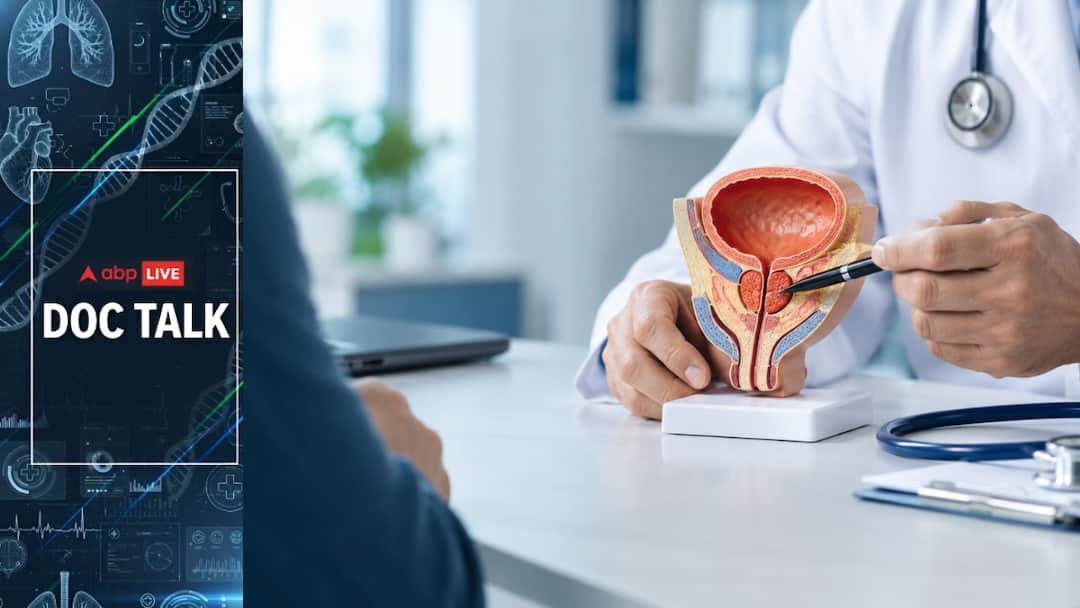
- Silent prostate cancer cases rise, demanding earlier, smarter detection.
- Advanced diagnostics, like MRI, improve accuracy, reduce unnecessary biopsies.
- Treatment now offers personalized care, robotic surgery, and focal therapies.
- Even advanced stage 4 has new, precise treatment options.
A 58-year-old businessman walks into a clinic for a routine health check. He feels fine. No pain, no urinary trouble, nothing that would make him worry. A week later, a blood test flags something unusual, and his world tilts a little. This scene plays out in clinics across India every single day, and it captures the strangest thing about prostate cancer: it rarely announces itself. By the time symptoms show up, the disease may have already travelled far. That silence is exactly why detection matters so much and why the way we detect prostate cancer is finally catching up with how the disease actually behaves.
The Numbers Behind The Urgency
India recorded an estimated 37,948 new prostate cancer cases in 2022, according to GLOBOCAN data from the WHO’s cancer agency. That number is projected to rapidly increase as men live longer and awareness of the disease grows. What should worry health leaders even more is where these patients are coming from. A growing share now arrive from smaller towns, often after the cancer has already reached the bones or spine. The disease is not just growing in scale – it is outrunning awareness.
ALSO READ | Doc Talk | World Heart Day 2026: How Substance Recovery Can Affect Cardiac Wellness
PSA Was Never Meant To Be The Whole Story
For decades, the PSA blood test was treated almost like a verdict. A high number meant fear; a normal number meant relief. But PSA is a blunt instrument. It can rise because of cancer, but just as easily because of a simple infection or an enlarged prostate. Treating one number as the final word led to two problems at once: men who needed urgent care sometimes waited too long, while others underwent biopsies and treatments for cancers that would never have threatened their lives. The real shift in modern care is this: PSA is now the opening line of a conversation, not the conclusion of one.
ALSO READ | Doc Talk | Excessive Smartphone Use May Be Linked To Headaches, Poor Sleep In Young Adults
Smarter Scans Before The Needle
One of the most meaningful changes in recent years is the use of MRI before biopsy. Instead of sampling the prostate blindly, doctors can now see which areas actually look suspicious. This single step has allowed many men to safely avoid an unnecessary biopsy altogether, while ensuring the cancers that matter don’t get missed. Even the scan itself is becoming faster and simpler, which matters enormously in a country where advanced imaging isn’t available in every city. When a biopsy is genuinely needed, even that procedure has become safer. Newer techniques that avoid passing the needle through the rectum have sharply cut infection risk, a small technical shift with a big impact on patient comfort and recovery.
Not Every Diagnosis Means Immediate Treatment
Perhaps the hardest idea for patients and families to accept is that a cancer diagnosis doesn’t always mean immediate surgery or radiation. Some prostate cancers grow so slowly that active surveillance close monitoring instead of intervention is the wiser, safer path. This isn’t inaction; it’s precision. The goal is no longer just to treat cancer, but to treat the right cancer, in the right man, at the right time.
Precision Is Becoming Personal
Newer imaging tools can now light up cancer cells with far more clarity than older scans, helping doctors understand whether disease is confined to the prostate or has spread, information that can completely change a treatment plan. And for a subset of patients, inherited genetic factors, similar to those linked with breast cancer, are starting to shape treatment choices too. India still needs far more representation in this research, but the direction is clear: care built around the individual, not a one-size-fits-all protocol.
Robotic Surgery Improving Outcomes
Walk into a modern operating theatre for prostate surgery today, and you will see something quite different from a decade ago. Robot-assisted prostate surgery can mean smaller cuts, less blood loss and a quicker early recovery for many patients — but the robot does not operate on its own. It is an instrument controlled entirely by the surgeon; it enhances a surgeon’s hands; it does not replace judgement. What has really changed the conversation is a newer technique where the surgical team examines tissue at the edge of the prostate during the operation itself, helping the surgeon decide, in real time, when it’s safe to spare the delicate nerves that govern bladder control and sexual function.
Focal Therapy Opens Up A Middle Path
Not every man needs his entire prostate removed or irradiated, and this is where focal therapy, treating only the cancerous part of the prostate, has quietly opened up a middle path. For carefully selected patients whose cancer is small, low-to-intermediate risk, and confined to one area of the gland, techniques like high-intensity focused ultrasound (HIFU) or focal cryotherapy treat just that one spot while leaving the rest of the prostate untouched. It may suit a limited number of carefully selected patients, but long-term evidence is still developing, and it should not be sold as a universal alternative to surgery or radiation.
Even At Stage 4, Detection Is No Longer A Death Sentence
Perhaps the most important message for families to hear is one that often gets lost in the fear of a diagnosis: even at stage 4, detection is no longer a death sentence. A PSMA PET scan uses a marker found on prostate cancer cells like a beacon, helping doctors see deposits that older CT or bone scans might miss — and in selected patients, that same target can be used to carry radiation directly to PSMA-positive cancer cells. This approach, called radioligand therapy, has expanded treatment options in recent years. It captures the larger direction of research: find the cancer more precisely, then attack it more precisely. The diagnosis changes the plan; it does not end the story.
Modern Radiation Has Decreased Morbidity
Radiation therapy has often carried a frightening reputation, associated in people’s minds with harsh side effects. That picture is outdated. Modern radiation has decreased morbidity considerably, and techniques now shape the beam tightly around the tumour and spare the healthy tissue nearby, and the result is a noticeable drop in the bowel, bladder and urinary complications that once made radiation a difficult choice for many patients. Radiation today is not the blunt tool it was once thought to be; it is a far more considered, far gentler instrument in the same fight.
Earlier, smarter detection today means fewer late-stage cancers, lower long-term treatment costs, and better outcomes for the men who walk through the door in time. The technology exists. The task now is making sure awareness, access, and early conversations reach far beyond the metros.
[Disclaimer: The information provided in the article is intended for general informational purposes only. It is not a substitute for professional medical advice, diagnosis, or treatment. Always seek the advice of your physician or other qualified healthcare provider with any questions you may have regarding a medical condition.]
Check out below Health Tools-
Calculate Your Body Mass Index ( BMI )
Calculate The Age Through Age Calculator
Disclaimer : This story is auto aggregated by a computer programme and has not been created or edited by DOWNTHENEWS. Publisher: abplive.com