Back in 2020, billionaire Amazon founder Jeff Bezos pledged $10 billion to fight climate change through 2030. Nearly seven years later, the Bezos Earth Fund has granted about $2.4 billion, leaving just about four years to spend down more than $7 billion.
The fund’s latest move is doling out more than $25 million in grants announced Sept. 17 to protect more than 625,000 square miles of ocean (an area larger than Alaska) across the Cook Islands, Kiribati, Papua New Guinea, Tonga, and Vanuatu. The grants are the second round of a $100 million Pacific pledge the fund made in 2023. The first round of $37.5 million went out in 2025, and the latest round brings the total awarded thus far to $63.3 million. The “Unlocking Blue Pacific Prosperity” pledge aims to sustainably manage the region’s waters and protect at least 30% of it by 2030, according to the Bezos Earth Fund.
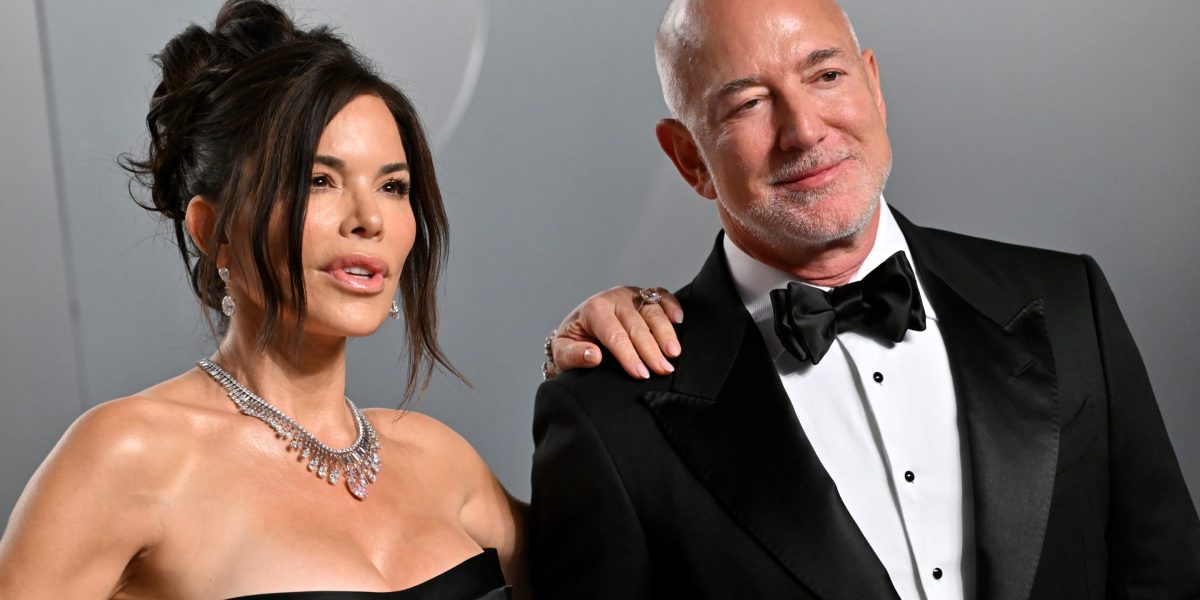
The grants are being led by Lauren Sánchez Bezos, who has served as the fund’s vice chair since its early days and has become a more visible face of the couple’s philanthropy since marrying Bezos in June 2025. She announced the first round of Pacific grants last September, and a month later, $30 million in awards for the fund’s AI Grand Challenge, a grant program for supporting climate and environment-related innovations ranging from “decoding the songs of endangered birds to automating plant species identification,” according to the Bezos Earth Fund.
This latest round of grants will help Papua New Guinea create its first large offshore marine protected area, expand protected areas in Tonga, and support the Cook Islands Marae Moana ocean park, along with habitat protection planning in Kiribati and Vanuatu. Essentially, marine protected areas limit what can happen in a stretch of ocean, and the strictest, “fully protected” areas ban fishing, mining, and other extractive activities outright, according to The MPA Guide, a framework developed with the International Union for Conservation of Nature.
A grant to conservation group Rare will also help Pacific governments draft some of the first protection proposals for the high seas under the UN’s High Seas Treaty, which took effect in January and establishes a legal framework to protect marine biodiversity in international waters.
“Out there, the ocean isn’t just a beautiful view,” Sánchez Bezos said in a statement. “It’s the road, the pantry, the backyard.”
It’s particularly important and timely work, given that the World Meteorological Organization said in a July report the vast ocean expanse in the South-West Pacific is becoming hotter and more acidic, harming local economies and marine ecosystems. Indeed, 2025 was the region’s second-warmest year on record, with marine heatwaves disrupting ecosystems and fisheries, according to the report.
“Across Asia and the Pacific, heat is intensifying multi-hazard risks, intersecting with food systems, public health, infrastructure and oceans, and placing new pressures on health and livelihoods,” Armida Salsiah Alisjahbana, executive secretary of the United Nations Economic and Social Commission for Asia and the Pacific, said in a statement.
The Bezos Earth Fund said it’s already seeing results from its push in the Pacific. With its latest round, 17 of the region’s 22 countries are now working to protect and sustainably manage their waters. Among the first-round recipients, French Polynesia created the world’s largest network of fully protected marine areas earlier this year. That covers nearly 625,000 square miles of ocean, and Niue has already protected 40% of its national waters.
The spending clock
The Pacific grants are part of a busy stretch for the Bezos Earth Fund. Since April, it has announced $34 million to develop more sustainable fabrics, $26 million for wildfire detection and prevention, $100 million to turn vacant urban land into parks in eight U.S. cities, and $100 million toward a joint effort with Leonardo DiCaprio’s Re:wild to save the world’s most threatened species.
Still, the Bezos Earth Fund will need to stay busy through 2030 to reach its $10 billion commitment. To give away the remaining $7.6 billion by the end of 2030, it would need to average about $1.8 billion a year.
The fund recently said it’s still committed to meeting its deadline. Officials told Bloomberg in May they remain committed to giving away the full $10 billion by 2030, and grantmaking had rebounded to at least $400 million this year after falling to $183 million in 2025.
“We take the time before getting into an area to understand it and make sure we’re having the greatest impact that we possibly can,” Kelly Levin, chief of science, data, and systems change at Bezos Earth Fund, told Bloomberg.
And to be sure, this is all still just a drop in the bucket for Bezos. He’s worth about $272 billion, making him the world’s fourth-richest person, according to the Bloomberg Billionaires Index. Forbes estimates the couple’s lifetime giving at about $4.7 billion. Bezos has previously acknowledged that giving money away well is hard.
“It’s not easy. Building Amazon was not easy,” he told CNN in 2022. “I’m finding … that charity, philanthropy, is very similar.”
Disclaimer : This story is auto aggregated by a computer programme and has not been created or edited by DOWNTHENEWS. Publisher: fortune.com