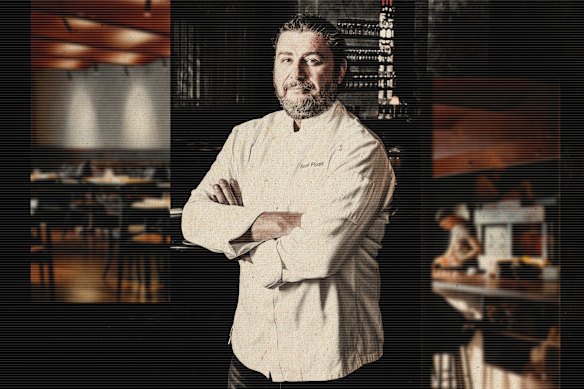

A company tied to top chef Scott Pickett collapsed under the weight of a $2.3 million tax debt just weeks after he closed one of his fine dining venues.
Nord Arc Hospitality, a company set up to pay the employees working across Pickett’s restaurants, entered liquidation in mid-September.
Another five companies associated with Pickett also appointed liquidators this month as part of the celebrity chef’s restructure of his debt-stricken restaurant empire.
The move took the number of Pickett businesses in liquidation to eight.
Nord Arc Hospitality was set up in August 2025. A month later, Pickett’s other company that serviced staff wages, SP Group Services, entered administration after drowning in debts.
All staff wages and entitlements were paid up to the date of both Nord Arc and SP Group Services being wound up, according to company records.
Liquidators said in documents sent to creditors earlier this month that Nord Arc had racked up $2.8 million in debts over the 14 months since it was first established, the bulk to the ATO.
The fresh bout of collapses comes just weeks after Pickett closed Matilda on Domain Road in South Yarra, deciding it was time to exit the business, making way for Venues by Only group’s Kiki’s Tavern.
The closure of Matilda and the winding up of Nord Arc highlights the financial mire Pickett has been trying to battle through over the past year.
Last September, Pickett was forced to restructure a group of his eateries run through his Rogue Traders Group, which collapsed owing creditors $27 million.
The restaurant venues caught up in Rogue Traders’ financial strife – Smith St Bistrot, Chancery Lane, Matilda, Longrain and sister bar Longsong – all stayed open during the restructuring and continued to pay staff wages and honour gift vouchers. Other Pickett ventures, such as Estelle in Northcote and his new pub in Collingwood, were unaffected by the restructure.
Pickett ran into trouble after borrowing heavily from the Commonwealth Bank and the First Guardian Master Fund – a now notorious investment scheme that collapsed in 2025, wiping out $500 million of people’s retirement savings.
Pickett had used the debt to build an impressive portfolio of some of Melbourne’s most popular restaurants and had counted First Guardian Master Fund’s boss David Anderson as his business partner at Rogue Traders.
According to administrators’ reports for Rogue Traders, at the time of its collapse, Commonwealth Bank was owed $12.8 million by Rogue Traders, while First Guardian Master Fund was owed $14 million.
As part of the restructure of his business empire, Rogue Traders’ five restaurants were sold to new companies overseen by Pickett with the permission of the Commonwealth Bank.
Under the deal, the existing businesses were left with no significant assets but still had large amounts of debt. The deal also meant that the scores of staff working across Pickett’s business kept their jobs.
The Commonwealth Bank seized the property that houses Pickett’s Chancery Lane eatery and an apartment in Fitzroy to recoup a portion of its debts owed by Rogue Traders.
First Guardian’s 6000 investors have been told to expect zero return on the $14 million debt owed by the Rogue Traders business.
Pickett also brought in Melbourne investment manager Salter Brothers as a new financier to bankroll his cash-hungry business.
When asked about the recent wind-ups of the businesses, a spokesperson for Pickett’s businesses said: “As we have previously stated, there have been a number of procedural changes to the broader corporate structure following the collapse of First Guardian.”
“None of these entities operate the restaurants. There will be no impact on our staff or suppliers. It’s business as usual across our venues as we continue to focus on serving great food and providing great experiences for our diners.”
The chef has also previously told this masthead that he felt deeply for everyone affected by the collapse of First Guardian.
Earlier this month, the companies that originally owned the five restaurants and the catering business entered liquidation in the final chapter of the restructuring process.
Pickett’s venues owed $21 million to Rogue Traders, with more than $11.4 million of that money due from Matilda and Chancery Lane, according to liquidators’ reports filed by restructuring practice Romanis Cant.
It is too soon to tell how much money is owed by each business as the liquidators pick through the records of Pickett’s collapsed businesses.
In a recent report to creditors for the five original restaurant companies, Romanis Cant director Manuel Hanna said the team was still investigating the debts.
“The accounting records of the [five] companies, Rogue Traders Group, SP Group Services and
Nord Arc Hospitality provided to me disclose various intercompany loan account[s]
between the respective entities.”
“I note that during my appointment to Rogue Traders Group, the director advised that the
records of the company relating to the intercompany loan accounts were inaccurate.”
Start the day with a summary of the day’s most important and interesting stories, analysis and insights. Sign up for our Morning Edition newsletter.
 Sarah Danckert is a senior reporter who specialises in investigations and corporate wrongdoing. She is a two-time Walkley Award winner, and has won six Quill Awards and two Kennedy Awards.Connect via X or email.
From our partners
Disclaimer : This story is auto aggregated by a computer programme and has not been created or edited by DOWNTHENEWS. Publisher: www.smh.com.au