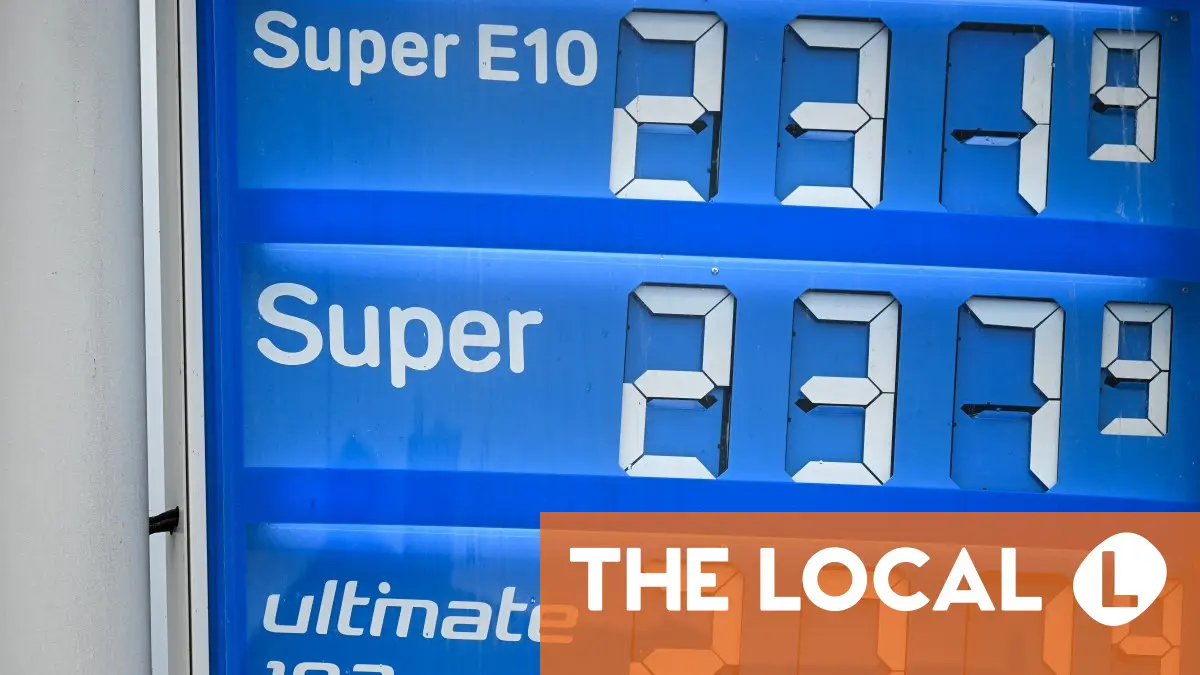
From the start of October, Germany is set to bring back a fuel price cut meant to relieve drivers from record costs at the pump. Here’s a look at the numbers, and how much you might really save.
Starting Thursday, October 1st, drivers can expect a bit of relief at the pump in Germany as a tax cut on petrol and diesel fuels kicks in.
German federal leadership approved plans to lower fuel prices via a ‘tank rebate’ (Tankrabatt) following a spike in energy prices related to escalations in the US and Israel’s war on Iran.
September saw record high fuel prices in Germany. After 28 days, the average price of E10 for the month was just under €2.27. For diesel it was about €2.38 and 2.39, according to figures from the ADAC.
Previous record values for average fuel prices over a month’s time in Germany were about 10 cents lower for each.
How much has the war in Iran cost people in Germany, and how much will the tax cut really save drivers next month? Here’s a look at the numbers.
Euros and cents
The tank rebate set to cut taxes on petrol and diesel fuels by 16.7 cents per litre.
That would be expected to make for a noticeable price drop at the pump, but would not be enough to get fuel prices below the two euro mark from their latest values.
According to figures by the ADAC, on Monday E10 petrol was selling for €2.276, and diesel for €2.425. So prices might be expected to drop to around €2.11 and €2.26 respectively.
So how much saving does the tax cut really bring?
How much the tax cut really saves you depends mostly on a few factors: how much you drive, your vehicle’s fuel efficiency, and to what extent the discount is passed on to customers.
To give an idea, the German Press Agency (DPA) offers a couple calculations:
- For an owner of a diesel vehicle, who drives about 15,000 kilometres per year in a car with a fuel efficiency of 7 litres per 100 kilometres: They could expect to save around €44 over three months.
- For an owner of a petrol car, driving about 9,000 km per year in a car with a fuel efficiency of 8 litres per 100 km: They could save around €30 in the same time.
READ ALSO: How to save money on fuel in Germany as prices hit all time high
But these calculations assume that the full 16.7 cents of tax cuts on fuels reach consumers themselves. Fuel taxes, however, are paid up front by oil and gas companies that manage petrol stations. So energy companies benefit directly, while the government assumes that the savings will be passed down consumers in full.
But a previous fuel tax cut was brought earlier this year, which lasted from the start of May to the end of June, and during that time calculations by the ADAC suggested that not all of the discount reached customers.
What has the war cost motorists so far?
The war in Iran war has been going on for seven months and during this time gasoline in Germany was on average about 29 cents per litre more expensive than on the last day before the war — diesel by about 38 cents.
The DPA calculates that a typical gasoline driver has refuelled 420 litres during this time — which amounts to additional costs of nearly €122, or about 60 cents more per day.
The typical diesel driver needed €612.5 litres — amounting to an additional cost of just under €233, or a little more than one euro per day.
Subsidised driving
Of course, a tax cut explicitly on fuels is a benefit primarily to drivers and has little affect on people who don’t own combustion engine cars, or who drive very little.
For this reason environmental organisations like BUND (Friends of the Earth Germany), Greenpeace, and the German Environment Agency have criticized such tax cuts as an environmentally damaging fossil fuel subsidy.
The federal government expects the total cost of the fuel tax cut to amount to €2.485 billion. That’s 2.5 billion less in tax revenue, to be clear — a budget hit that is borne half by the federal government and half by the states.
Disclaimer : This story is auto aggregated by a computer programme and has not been created or edited by DOWNTHENEWS. Publisher: thelocal.de