00:00:47
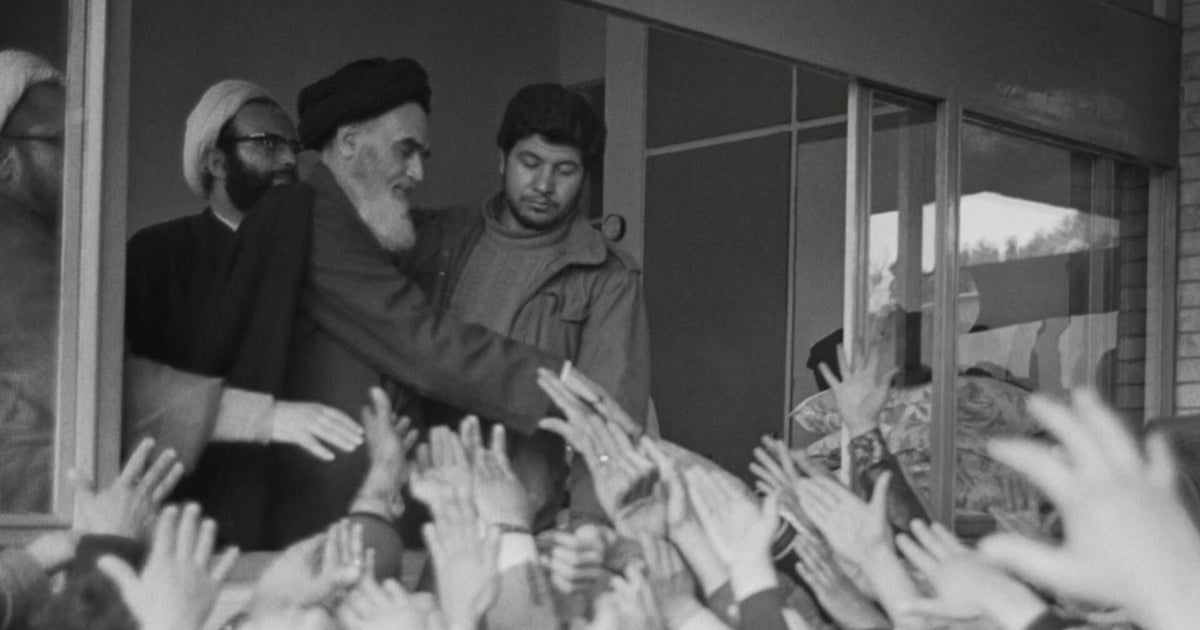
Great to be here. So let’s talk about News of the day. The US military, as you just heard, just completed its withdrawal from Iraq this week after more than two decades. You say the war is best understood as an example of how the West misunderstood the reality of the Middle East when getting involved there. What did the US get wrong, and what is the long-term impact of the mistakes made? I think that the big mistake was going into Iraq itself, not leaving just a rump Saddam regime there. And of course, the taking out of Iraq enabled Iran, the real enemy of the United States and the free world, to establish an effective empire across the Middle East, the Shia Crescent, which may be coming to an end right now. All right, we’re going to talk about Iran. But I want to talk to you about something that just happened yesterday. A flight full of Israelis flying from Dubai to Tel Aviv experienced what looks like, at least right now, like an attempted hijacking. The pilot who carried it out is Omani. The plane landed safely in Saudi Arabia, and in many ways, this story looks like the modern Middle East, which would have been unthinkable. Can we just sit back and think for a second that a plane full of Israelis landing in Saudi Arabia. The Abraham Accords have brought this into being. What do you make of that? 20 years ago, you could never have seen something like this. Well, apart from the amazing heroism of the Israeli passengers, what we’re really seeing here is the huge opportunity we see in the Middle East now for a new Middle East. The plane landed in Saudi. The Israeli passengers were treated there warmly. The Abraham Accords exist. What we’re seeing in the Middle East at this moment is a huge opportunity for a new Middle East, for Israel to take its place among the nations of the Middle East and an opportunity, perhaps, to take out Iran finally, which is an opportunity which may result from the present crisis. You actually say and part of your thesis is that many of the challenges that we are facing in the Middle East began in 1979 with the Iranian Revolution. And you argue that both the American left and the right have fundamentally misunderstood the Middle East. What with specifics? What do each side– what are they getting wrong? The left and the right. I think the key thing to understand is that 1979 is a focal year, a vital year to understand in the history of the Middle East. It’s right up there with the American Revolution, the French Revolution, the Russian Revolution. It’s the year that really changed everything. And we’re still seeing the reverberations of that right now. And that’s one of the big themes of the Cauldron, the book I’ve written, which covers the whole Middle East, from Iran to Morocco, from Turkey down to Sudan, of course, including Israel, 19 countries. And it’s a book that hasn’t really been written before. And if you want to understand how the Middle East got from the Middle East of 1900s to where the hell we are today, that’s what I was trying to do. And that’s what the book does. So what does the left get wrong? And what does the right get wrong? The left regards the fall of the Shah as just revolution. In fact, you need to see ’79 as a revolutionary moment that created the Islamism. That is a political ideology that is really opposed to Western influence. And what both sides get wrong is not understanding that across the Middle East there is a tendency to not understand to see Western interventions as the key problem. What is a bigger problem is the struggle within Islam between Islamism, resistance, radicalism that’s closed and hostile to the West, and the open tradition of Islam of countries like UAE, of Jordan, of Egypt. And we need to support those powers. And that is the struggle. That is the battle that’s going on right today. And so then what kind of a deal should the United States, should Israel, should the Iranians expect? Could we even get a deal given the misunderstandings that exist? It’s beginning to work now. The campaign which began so messily in February this year. Now the United States is focused on a blockade. And that blockade is working on Iran now and Iran is faltering. And that is probably what should have happened in the first place. What we’re doing now, the West or America is converting an Iranian asset, the Gulf, the Gulf, the Persian Gulf, or the Straits of Hormuz into a ligature that can strangle the Iranian economy. And that is a real opportunity. It seems to be working. And if it works, we may see a new more friendly Middle East coming out of it.
00:05:59
Simon Sebag Montefiore, the book is excellent. Thank you so much for joining us. We really appreciate it. The Cauldronis available to buy right now. Scan that QR code to buy your copy.
Disclaimer : This story is auto aggregated by a computer programme and has not been created or edited by DOWNTHENEWS. Publisher: cbsnews.com