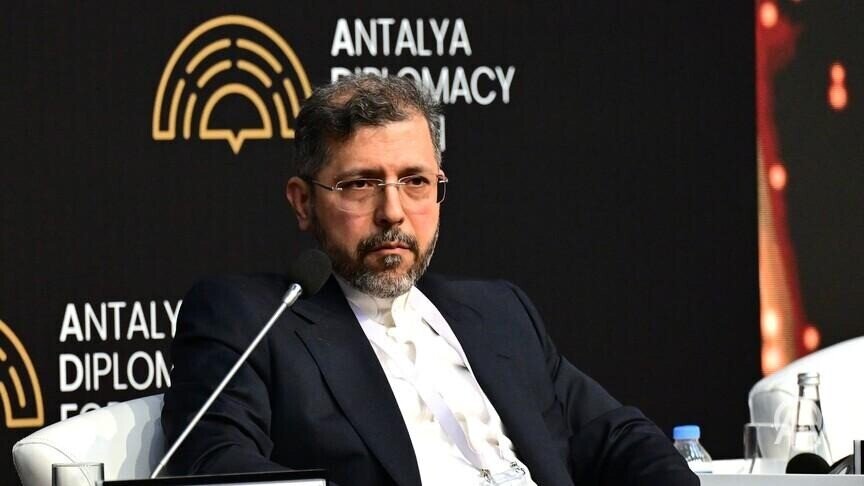
TEHRAN- Iran remains committed to resolving the conflict through diplomacy but needs tangible guarantees from the United States to ensure a lasting end to the war, a senior Iranian diplomat said, reaffirming Tehran’s position that diplomatic engagement must be backed by credible commitments and an end to repeated breaches of agreements.
Saeed Khatibzadeh, head of the Center for Political and International Studies at Iran’s Foreign Ministry, made the remarks in an interview with Russia-1 television on Thursday, responding to media reports that Qatar-mediated negotiations between Tehran and Washington had reached an impasse.
He said Iran’s policy was to pursue a diplomatic resolution despite ‘repeated US violations of commitments and betrayals of the negotiating process.’ Tehran’s seven-day initiative, he added, was part of its broader effort to bring the conflict to an end through political and diplomatic means.
“The policy and plan of the Islamic Republic of Iran are to strive to bring this crisis to an end through diplomacy,” Khatibzadeh said, stressing that Iran remained committed to negotiations even though, in his assessment, the other side had repeatedly undermined the process.
He said Iran had continued its diplomatic efforts in recent weeks following a US breach of the Islamabad agreement. At the same time, the country had maintained its defensive preparedness at the highest possible level to remain ready for any eventuality.
Khatibzadeh said Iran had sought to advance proposals through intermediaries, including Qatar and Pakistan, in response to inquiries from the other side. He presented these efforts as part of Tehran’s longstanding approach of seeking to prevent further escalation of regional crises while safeguarding its national interests and security.
Seven-day initiative conveyed through Qatar
Among the proposals put forward by Iran is the plan widely referred to as the “seven-day resolution plan” or the “seven-day initiative,” Khatibzadeh said.
According to the Iranian diplomat, Tehran conveyed the proposal to the US side through Qatar, which has played a mediating role in efforts to facilitate negotiations between the two countries.
He added that Iran had recently received Washington’s views on the initiative through the Qatari mediator and during a brief stopover by Iran’s foreign minister on his return journey from New York.
The exchange indicates that diplomatic contacts have continued despite reports of difficulties in the negotiations.
Tehran calls for credible commitments
Khatibzadeh’s comments underscore Iran’s position that a diplomatic settlement must be supported by concrete assurances rather than political declarations alone.
From Tehran’s perspective, the repeated breakdown of commitments has become a central obstacle to restoring confidence in negotiations. Iranian officials have argued that any process aimed at ending the war must address the circumstances that led to the conflict and provide sufficient guarantees against a renewed escalation.
The Iranian diplomat’s remarks also reflect Tehran’s stated effort to pursue diplomatic channels while maintaining its defensive readiness. Iran has continued to engage through regional intermediaries, particularly Qatar and Pakistan, as it seeks a framework for ending the conflict.
Whether the seven-day initiative can provide a basis for further progress will depend on the positions of the parties involved and the extent to which their differences can be addressed through mediation.
Khatibzadeh’s central message was that Iran remains open to a diplomatic resolution, but that ending the war requires tangible US guarantees and a negotiating process that is not undermined by further breaches of commitment.
Disclaimer : This story is auto aggregated by a computer programme and has not been created or edited by DOWNTHENEWS. Publisher: tehrantimes.com