Victorian private schools, many of them educating the state’s richest families, benefited from an extra $95 million in Commonwealth funding in 2025, as underfunded public schools’ battle for their share continued to go down to the wire.
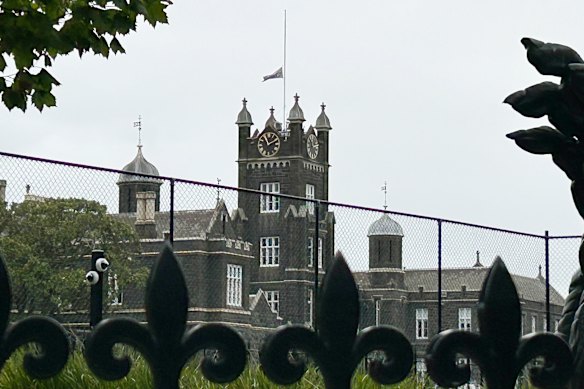
Melbourne Grammar School, where the median family income was $375,000, the highest in the state, received $1.18 million more than the nationally agreed funding benchmark from the Commonwealth last year.
It was one of 26 Melbourne schools with a median family income of $300,000 or more. At least 12 of those schools received between $134,000 and $1.5 million above their entitled funding, known as the School Resource Standard (SRS), in 2025.
The SRS is an estimate of how much public funding a school needs to meet its students’ educational needs, as detailed in the long-awaited Gonski reforms.
Federal Education Department data released in response to inquiries from Greens senator Penny Allman-Payne during budget estimates showed there were 58 overfunded non-government Victorian schools and education authorities in 2025, which received a combined $95,154,592 in funding above SRS.
The Commonwealth has now agreed to fund 80 per cent of the SRS of non-government schools, while the states’ target is 20 per cent, but the transition back to their actual entitlement is being done in stages until 2029.
Melbourne Grammar School will receive about $986,000 more than the SRS this year, $40,000 more than previous Senate estimates figures revealed.
Principal Philip Grutzner said Melbourne Grammar was “keenly aware” of the funding changes and was planning ahead to reduce the impact on families.
Asked whether this would mean fee increases, Grutzner said salaries, inflation, ongoing operating costs, payroll tax and fees all influenced tuition.
“Our focus continues to be on offering an exceptional, holistic education focused on the whole child,” Grutzner said.
Christ Church Grammar School, an independent Anglican primary school in South Yarra, educated the second-highest-income-earning families in the state last year. There is no indication that it was overfunded.
Parents of Christ Church Grammar students had a median income of $370,000, and the top 25 per cent of earners had an income of $580,000 of more.
It was one of 21 schools where the top 25 per cent of families had an annual income of $500,000 or more in 2025.
Principal Kim Wheeler said the school was proud of its community and the many families who had chosen it because they valued a high-quality education for their children.
“Our hard-working families make an informed choice in choosing an independent school education, which reflects the importance our community places on education and their desire to provide their children with the best possible opportunities,” Wheeler said.
St Joseph’s School in Hawthorn had the third-highest earners last year, with parents having a combined median income of $365,000. The Catholic school’s top 25 per cent of earners brought in $525,000 or more.
The state’s Catholic schools, most of which receive Commonwealth funding via the Victorian Catholic Education Authority (VCEA), received an extra $39.2 million from the Commonwealth last year, dropping to $31 million above their funding entitlement in 2026.
Senate estimate data released in November had indicated the peak body would receive $30.6 million this year.
VCEA chief executive Elizabeth Labone said the federal government’s data failed to account for enrolment growth and was unlikely to represent the actual funding schools received.
“With the new EBA [enterprise bargaining agreement] in Victorian government schools set to increase school costs by a much higher rate than assumed in the SRS model, it is clear that the model no longer sets an accurate funding benchmark for schools,” Labone said.
“Catholic education looks forward to working closely with the government to review and improve the SRS model.”
The federal government estimates it will provide $33.3 billion in total recurrent funding for Australian schools this year. This includes $12.7 billion to government schools, $11.1 billion to Catholic schools and $9.5 billion to independent schools.
The Commonwealth will provide about $5.3 billion to non-government schools in Victoria.
Overfunding has occurred over the past 15 years as Labor and Liberal-led federal governments stuck to a promise that private schools would never be worse off.
Public school advocate and Waiting for Gonski co-author Tom Greenwell said successive federal governments “carving out exemptions to placate the private school lobby” had led to overfunding of non-government schools booming.
“[Julia] Gillard guaranteed 3 per cent annual increases for overfunded schools, [Tony] Abbott enthusiastically maintained them, and [Scott] Morrison added fuel to the fire with a multibillion-dollar slush fund and an extension of overfunding for another decade,” Greenwell said.
Greenwell is among those critical of the pace at which overfunded non-government schools will transition back down to 80 per cent of the SRS. He said the Albanese Labor government would pour more cash into overfunding wealthy private schools this decade than it would into lifting struggling public schools up to the bare minimum standard.
“It’s pure political cowardice,” he said. “While the Albanese government is big on rhetoric about fixing public school funding, in reality it’s deferred delivery of real additional funding to the 2030s.”
Victoria government schools have been funded at about 90 per cent of the SRS since 2018, despite signing an agreement with the Commonwealth that year to reach full funding by 2028.
The current agreement, which would see the state contribute 75 per cent of the SRS for public schools and the federal government contribute 25 per cent by 2034, is set to expire at the end of the year.
The Carroll government has indicated it intends to sign a long-term funding deal ahead of the November election, though it has locked horns with the Commonwealth on the transition and key reforms tied to the federal dollars.
The Victorian Education Department has argued that the state is contributing more to school infrastructure than other states and territories, which should be considered when evaluating the state’s investment.
Education Minister Gabrielle Williams referred to Victoria’s “$20.1 billion school building program – the largest in the country” in response to questions about SRS funding.
“We’re continuing to work with the Commonwealth to secure a long-term funding agreement that delivers full and fair funding for Victoria’s public schools,” she said.
As Victoria faces the prospect of a new government come November, the powerful Australian Education Union has repeatedly called on the state Liberals to commit to honouring a funding deal if it is signed by Labor ahead of the election.
Opposition education spokesman Brad Rowswell said a Coalition government would always negotiate in good faith with the Commonwealth to get the best deal possible for Victorian students and teachers.
Read more of our education coverage:
Start the day with a summary of the day’s most important and interesting stories, analysis and insights. Sign up for our Morning Edition newsletter.
From our partners
Disclaimer : This story is auto aggregated by a computer programme and has not been created or edited by DOWNTHENEWS. Publisher: www.smh.com.au