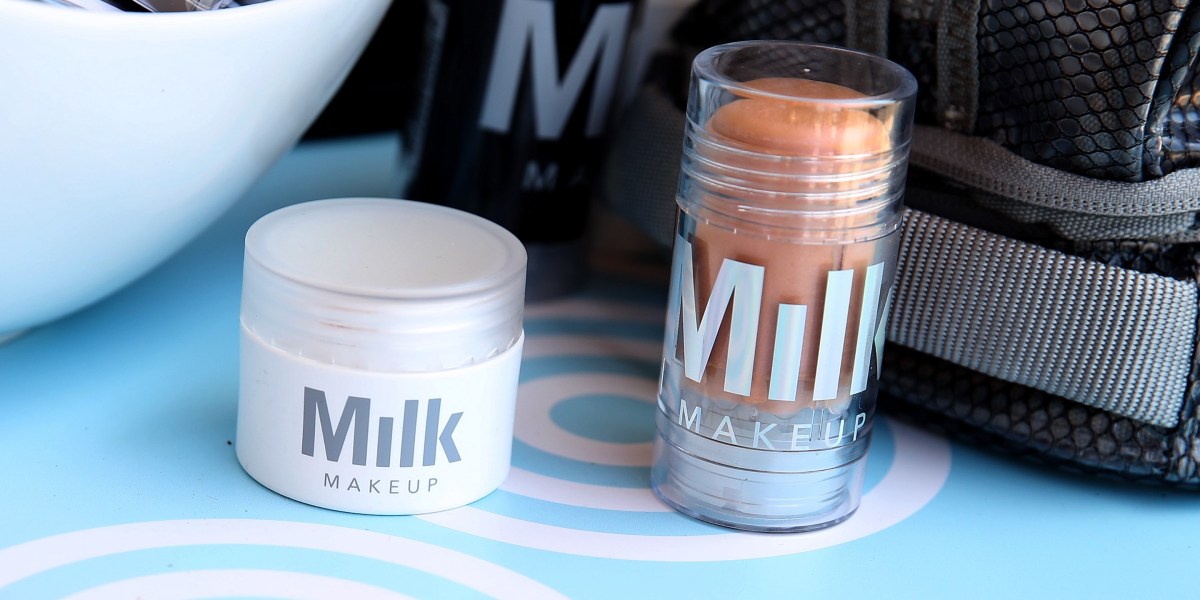
A $1.2 billion deal meant to launch a global beauty empire has shrunk to an attempt to revive one struggling makeup brand whose sales are plunging.
In early 2021, Michel Brousset, the former group president of L’Oréal’s Consumer Products Division in North America, and fellow beauty executive Hind Sebti launched Waldencast Acquisition Corp. It was a special purpose acquisition company that went public at the height of the SPAC frenzy.
In November 2021, Waldencast announced a $1.2 billion three-way business combination with Obagi Medical, a physician-dispensed skincare brand, and cult beauty brand Milk Makeup. It called the deal the “first step” in its plan to build a global multibrand beauty and wellness platform. The transaction closed in July 2022.
Four years later, that multibrand platform came apart in a matter of months.
In June, Waldencast agreed to sell Obagi Medical to private equity firm [Bridgepoint] [FORTUNE LINK: Bridgepoint/Obagi coverage]. The deal closed on July 30 for up to $460 million. That figure includes vendor notes and up to $64 million in earnout payments tied to Obagi’s future performance. Waldencast had valued Obagi at $858 million on an enterprise-value basis when it struck the original deal in 2021, according to its SEC filings. The company had separately sold Obagi’s rights in Japan to Rohto Pharmaceutical for $82.5 million in late 2025.
Three of Waldencast’s most senior executives went with Obagi. Brousset, Sebti, and CFO Manuel Manfredi left Waldencast to lead Obagi alongside Bridgepoint. Executive chairman Felipe Dutra now serves as Waldencast’s principal executive and financial officer. That left Waldencast focused entirely on Milk Makeup.
At major retailers like Sephora and Ulta, Milk Makeup still looks like business as usual. The products are on the shelves, and there is still a certain prestige that comes with making it into Sephora in the first place. But the view from the corporate level is much less reassuring.
Milk Makeup’s net revenue fell 57.1% to $26.1 million in the first half of 2026, from $60.9 million a year earlier. The figures come from Waldencast’s first-half results, published Sept. 28. According to Waldencast, the year-earlier period included roughly $10 million in pipeline shipments that did not recur in 2026. Milk also swung to an adjusted EBITDA loss of $14.8 million, from a profit of $9.7 million a year earlier. Waldencast said the first-half results “largely reflect decisions and actions taken in 2025.”
Four days before the results came out, Waldencast filed a Form 25 to voluntarily delist from Nasdaq. Its last day of trading is expected on or about Oct. 2. The company plans to seek quotation on an over-the-counter market under the ticker “MLKM.” It estimates it can eliminate 80% to 90% of its $18.5 million in annual central headquarters costs.
Tim Coolican, who was CEO of Milk Makeup when the Waldencast deal was struck and still held the role in early 2025, has since left the company. Waldencast’s public filings do not specify when or why he departed. By February, Coolican had joined [Blackstone] [FORTUNE LINK: Blackstone coverage] as an operating executive focused on consumer businesses. A Waldencast spokesperson told Fortune the company could not comment on former employees’ departures.
Earnings reveal how Milk has fallen
Waldencast’s own accounting offers another clue to how far expectations for Milk have fallen.
In its first-half results, the company took a $52.3 million noncash goodwill impairment charge on Milk. That followed a $20 million impairment a year earlier. Goodwill is essentially the extra amount a buyer pays for a business beyond the value of its identifiable assets. The latest write-down reduced Milk-related goodwill on Waldencast’s balance sheet from $115.1 million to $62.8 million.
As part of the impairment test, Waldencast also estimated the fair value of the Milk Makeup reporting unit. Its model was weighted 80% toward a discounted cash flow analysis, which estimates value based on projected future cash flows, and 20% toward comparisons with publicly traded companies. Waldencast didn’t disclose the resulting fair value outright, but it gave enough information to work backward.
Waldencast said that if Milk’s projected adjusted EBITDA were 5% lower in each year of its forecast, its estimated fair value would fall by $74.7 million, or 41.6%. Divide $74.7 million by 41.6%, and the base estimate comes out to roughly $180 million.
That doesn’t mean Milk could be sold for $180 million today. It is an accounting estimate based on Waldencast’s own forecasts and assumptions, not a price offered by a buyer. It also isn’t perfectly comparable with the $382 million enterprise value Waldencast placed on Milk in the original 2021 deal. Goodwill is also only one piece of Milk’s book value. As of June 30, Waldencast’s balance sheet also carried $95.8 million in intangible assets, plus inventory and other assets. Still, the impairment and the roughly $180 million implied fair value show how much lower Waldencast’s expectations for Milk are now.
Waldencast itself has acknowledged what went wrong at Milk
The company named four main problems:
- Distribution expanded faster than the company could support with field education and marketing.
- Some 2025 launches failed to recruit enough new consumers or generate enough incremental demand.
- The quality and value of its previous generation of Sticks fell behind consumer expectations.
- The lack of an early-summer launch in 2026 left the brand without new products during one of the category’s busiest periods. A year earlier, it had four launches in the same period.
Now the company is going back to Milk’s roots. Cofounder Mazdack Rassi was named president in November 2025, as part of a restructuring. In its Sept. 28 shareholder letter, Waldencast said he and fellow cofounder Zanna Roberts Rassi are “now back at the center” of the brand’s creative direction, product vision, and cultural relevance.
Restoring brand relevance is the first of five priorities in Waldencast’s strategy to get Milk back to growth. There are some bright spots. The company said its Hydro franchise now makes up about half the business and is growing 69% year over year. It relaunched its Sticks line in August, and it spent about $4 million in the third quarter installing redesigned displays in U.S. Sephora stores. Its stated “North Star” is to double Milk’s 2025 revenue over the next five years, though the company stressed that the target is not financial guidance. Subject to shareholder approval, Waldencast will also rename itself Milk Makeup plc, since Milk is its only remaining brand.
The company is not out of money. When the Obagi sale closed, Waldencast repaid $178.4 million of debt, including a $27 million prepayment premium, and received $149.9 million in net cash proceeds. As of Aug. 31, it had $138.6 million in cash after fully repaying its senior term loan. The board is still reviewing how to allocate the remaining proceeds.
So Waldencast now has $138.6 million in the bank, Milk’s founders back at the center of the brand, and no other operating brand to fall back on. Can they make Milk relevant again?
Disclaimer : This story is auto aggregated by a computer programme and has not been created or edited by DOWNTHENEWS. Publisher: fortune.com