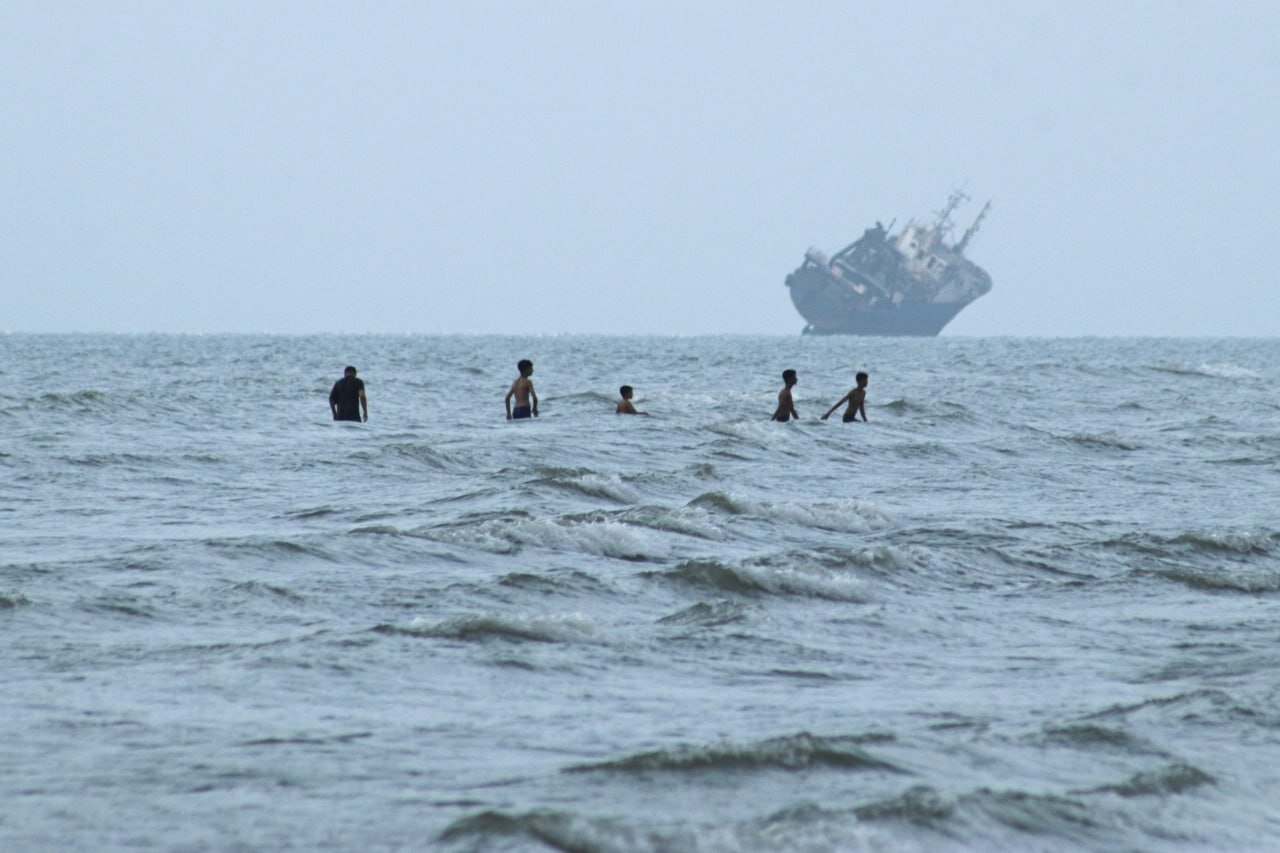
TEHRAN – Senior U.S. officials have spent months declaring the Strait of Hormuz “open” and Iran’s leverage over the waterway “burned.” A first-hand Bloomberg report from the strait itself tells a different story — and the facts it contains point to a single conclusion: Iran’s Hormuz card remains very much in play.
What the Bloomberg report actually documents
In a report published on October 1, 2026, under the headline “No Lights, No Radio: Getting Oil Through Hormuz Is a Risky Job,” Bloomberg interviewed a tanker captain who transits the strait by evading rather than passing. His account is factual, not rhetorical:
Vessels move through the southernmost edge of the strait, hugging Oman’s coastline, within sight of land — far from the main shipping lanes.
The crossings are made in total darkness, with navigation lights off and no radio communication.
Transits are conducted under the shadow of U.S. aircraft and helicopter patrols, effectively under escort.
Crews are paid several multiples of their normal wages; one ship owner has offered six months of bonus pay simply to sail the crossing.
Contracts have been shortened because crews consider the voyage dangerous.
The captain confirms that vessels transiting near his own have, on occasions, come under Iranian fire.
Reading the facts against the “open strait” claim
Before the war, the strait carried a steady 110–130 vessel transits per day. What the Bloomberg report documents is something categorically different: a trickle of covert, high-cost, high-risk crossings that structurally cannot approach pre-war levels. Three measurable gaps separate the two:
Volume. Night-time, radio-silent, coastline-hugging transits — however many — are by definition a fraction of routine traffic. No logistical arrangement of this kind can scale to 110+ daily passages.
Risk. Pre-war transits were safe and insured under standard conditions. Current crossings involve war-risk exposure, documented incidents of vessels coming under fire, and dependency on continuous military coordination. Energy trade does not operate sustainably under these conditions.
Cost. Shipping lines face sharply inflated expenses — insurance premiums, hazard pay, shortened crew contracts. These are the cost structures of a closed or constrained waterway, not an open one.
Each of these indicators is drawn directly from the American outlet’s own reporting. Far from corroborating the White House line, it undermines it.
Why the card still works
The strategic logic is straightforward. Iran’s leverage over Hormuz has never depended on fully closing the strait; it depends on the cost and risk of every single transit. By that measure, the current situation represents the card functioning, not burning:
Every crossing now carries elevated insurance, labor and operational costs — a permanent tax on traffic through the strait.
Traffic flows only in a degraded, escorted, covert mode that cannot sustain normal energy commerce.
Iran retains the demonstrated capability to put vessels under fire — an active deterrent that keeps war-risk premiums high and shipping lines cautious.
The “open strait” narrative exists precisely because the strait is not open: Washington, having failed to seize the lever by force, is running a sustained messaging campaign to convince Tehran that its leverage has evaporated and to alter its calculations, particularly its demand for a security order over the Hormuz orbit.
An open strait requires neither darkness, nor silence, nor danger pay, nor naval escort. The Bloomberg report documents all four. The current state of the Strait of Hormuz is neither safe, nor normal, nor sustainable for ordinary commerce — which is exactly what gives Iran leverage. The claim that Iran’s Hormuz card has been burned is not supported by the facts on the water; it is a psychological operation, and its very intensity is the clearest evidence that the card is still being played.
Disclaimer : This story is auto aggregated by a computer programme and has not been created or edited by DOWNTHENEWS. Publisher: tehrantimes.com