
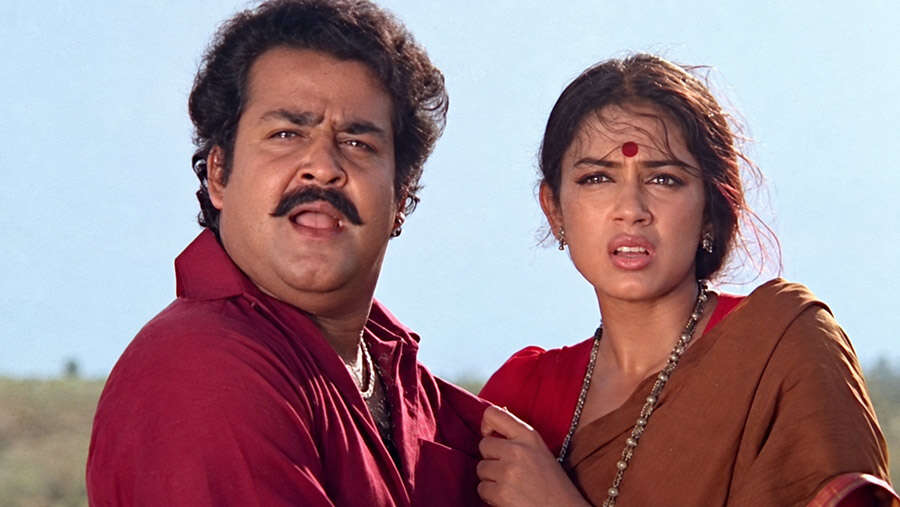
When Thenmavin Kombathu returns to theatres in 4K, the story behind its restoration is almost as fascinating as the film’s return itself. Getting a beloved Malayalam classic back onto the big screen is not simply a matter of finding an old print and scanning it. It begins with a hunt for something that has survived.
For Ajith Rajan, Managing Director and Founding Partner of Matinee Now, the first challenge in any restoration is finding a usable master. The obvious place to begin is the laboratory where the film was originally processed. If the material survives there, it can be retrieved. If it doesn’t, the search moves elsewhere — to collectors, theatres, distributors and anyone who might have held on to a surviving print.
“Some collectors would be having it, some theatres would have kept a copy, some distributors would have kept a copy,” Rajan says. “We have a lot of film enthusiasts who give us tips as to who has what.”
In the case of Thenmavin Kombathu, there was a remarkable stroke of luck. The film’s producer had retained a positive print. That single surviving element became the foundation for the restoration. Without it, the 4K re-release may simply not have been possible.
“Finding a print is actually like a hunt,” Rajan says. “It’s very difficult these days.”
The difficulty is not merely about locating physical film. The legal ownership of those films is equally complicated. Rajan says one of the first obstacles when Matinee Now began exploring restoration was ensuring that the rights and documentation were in place. Laboratories cannot simply hand over material because someone wants to restore a film. Rajan wishes the restoration movement had begun earlier, particularly around 2013-14, when the industry was making the transition from analogue to digital. “Had we started it a little earlier, perhaps we could have saved a lot of wonderful movies,” he says.
His own entry into restoration was not born from a conventional business plan. A telecommunications engineer by profession, Rajan became interested in the possibility of bringing older films back to the big screen after seeing restoration work being done in Europe. He wanted to experience classic Indian films in the quality in which they were originally meant to be seen.
“When I really started digging, I realised that not many are doing it in that sort of reference quality,” he says. “Basically, it was a craving for me to watch it on the big screen. It was not a business plan.”
That craving eventually became a business. Matinee Now’s early restorations, including Devadoodhan and Spadikam, demonstrated that there was an audience for bringing older films back into theatres. In the case of Devadoodhan, the surviving negative was in poor condition, but the team managed to restore it.
“When we did the restoration, it was wonderful to see the finer details, depth and textures of the output,” Rajan recalls.
The process, however, varies dramatically from film to film. There is no fixed cost of restoration because the condition of the surviving material determines the amount of work required. A relatively well-preserved print may need considerably less intervention than one that has suffered decades of deterioration.
Sound can complicate matters further. Many Malayalam films of the 1980s and 1990s were recorded in mono, with music, dialogue and effects contained within a single track. For Manichitrathazhu, Rajan explains, the team had to extract the vocal layer digitally and recreate the orchestra, score and effects before mixing the soundtrack in Atmos. With Thenmavin Kombathu, the team made another important decision. Instead of scanning the surviving print at 4K, it opted for an 8K, 16-bit scan.
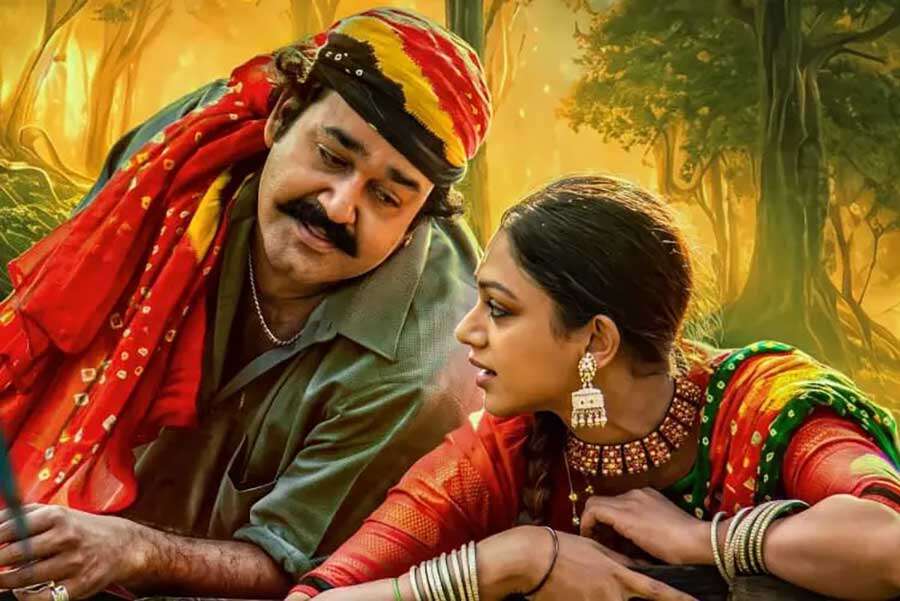
For Geethasanumathy Raghavan, Chief Delivery Officer for Special Projects at Prasad Corp, the decision was particularly important because of the film’s visual character. “Thenmavin Kombathu is very, very famous for its colours and depth,” she says.
The scale of the process is considerable. Each 8K frame is approximately 340 MB, and the film contains around 230,000 frames. The 8K material was subsequently converted to Super 4K, after which the restoration began.
The surviving print had been preserved by the producer, but preservation does not mean a film has escaped the effects of time. Decades of exposure to temperature and humidity can cause severe deterioration. Much of the film stock historically used in India was acetate-based, making it vulnerable to what is known as vinegar syndrome.
The team encountered the familiar problems associated with ageing film: dust, dirt, flicker, colour bleed and warping. Dust and debris are relatively straightforward to address. Flicker and colour deterioration are considerably more complicated, particularly on a film celebrated for its visual richness. Warping occurs as film shrinks over time, distorting the image.
The challenge, Raghavan says, was not simply to make the old film look clean. It was to preserve what made the original look the way it did. “We took a long time for cleaning up all those issues, keeping in mind that the viewers had to see what they saw in theatres years back,” she says. “Without impacting the originality of the film, retaining all the characteristics and reproducing it was a challenge.”

That distinction is crucial to understanding the current wave of classic-film restorations. The aim is not to make an old film look artificially new, but to recover as faithfully as possible what has been lost to deterioration.
The problem is that Thenmavin Kombathu is one of the fortunate cases. A usable print survived. Many other films do not have that luxury.
Prasad has access to a substantial repository of South Indian films, including material dating back to the black-and-white era, in co-operation with the National Film Archive of India. The institution has also worked on silent films, some of which survive in extremely poor condition. Even so, getting those films back onto a screen can be enormously rewarding because audiences might otherwise never see them.
But restoration ultimately confronts two unavoidable questions: is there surviving material, and is there enough commercial value to justify the expense?
“Availability of the right print or right negative of those films is a challenge,” Raghavan says. “Two, the commercial viability.”
Even when an element survives, its quality matters. An original telecine tape can potentially be used to produce a high-resolution output, but a compressed or degraded copy may already contain artefacts that cannot be eliminated. This helps explain why restoration activity can sometimes appear concentrated on films from the last 30 or 40 years. It is not necessarily because older films are considered less important. Often, the material simply isn’t there.
That brings the conversation to the larger problem: India’s relationship with its own film heritage. Rajan believes preservation has traditionally been viewed through a commercial lens. Once a film has exhausted its immediate commercial rights, there is often little financial incentive to maintain the physical material. Years later, when an opportunity such as an OTT release or theatrical re-release appears, the value of that material suddenly becomes apparent. By then, however, it may be too late.
Rajan says Matinee Now has encountered situations where obtaining rights can take more than a year. During that time, the physical material may continue to deteriorate. Some films remain in old laboratories, but are not necessarily stored under the environmental conditions required for long-term preservation. “Out of the ten we take, one or two would be good enough for a scan,” Rajan says.
Raghavan believes preservation should not always be postponed until technology is capable of producing a perfect restoration. Technology will continue to improve. A film that cannot be fully restored today may become restorable tomorrow. But that possibility only exists if the surviving material is first stabilised and digitised. “Even if it is not an 8K resolution, probably a 2K or a 4K,” she says, “we should scan and keep.”
The immediate question from rights holders is often whether the material can be monetised. Raghavan’s answer is that preservation and monetisation do not necessarily have to happen simultaneously. “You cannot immediately monetise this, but you can in future,” she says. “For its cultural value, please take a scan copy and keep it.”
There are institutions capable of doing precisely that. Rajan points to the National Film Archive of India as the example he has personally seen operating according to professional international standards, with controlled temperature and humidity and carefully organised vaults.
Raghavan has worked with the institution through the National Film Heritage Mission. One major exercise involved cataloguing and categorising film assets according to their condition. Category A material required minimal intervention before digitisation, Category B required repairs to elements such as perforations and joints, while Category C required chemical treatment before it could even be safely scanned.
The preventive conservation project ultimately involved nearly 69,000 reels, with around 7,000 to 8,000 requiring chemical treatment to make them ready for scanning. The material was also separated according to its condition, ensuring that deteriorating reels were not stored alongside healthy camera negatives.
And there is now room for considerably more. According to Raghavan, a recently inaugurated vault has the capacity to accommodate another 200,000 film reels.
For Thenmavin Kombathu, the journey back to the big screen is therefore more than a restoration story. It is a reminder of how easily India’s cinematic history can disappear. A producer retaining a single positive print, enthusiasts knowing where to look, rights being secured, an 8K scan being made and a team painstakingly correcting decades of deterioration all had to come together.
The 4K image audiences eventually see is the final stage of that process. Behind it is a much less glamorous but considerably more important task: finding something that still exists, and saving it before it doesn’t.
Also Read: Operation Ganga Arjun Rampal Shares Screen With Mohanlal, Calls Experience ‘An Honour’
Disclaimer : This story is auto aggregated by a computer programme and has not been created or edited by DOWNTHENEWS. Publisher: filmfare.com




