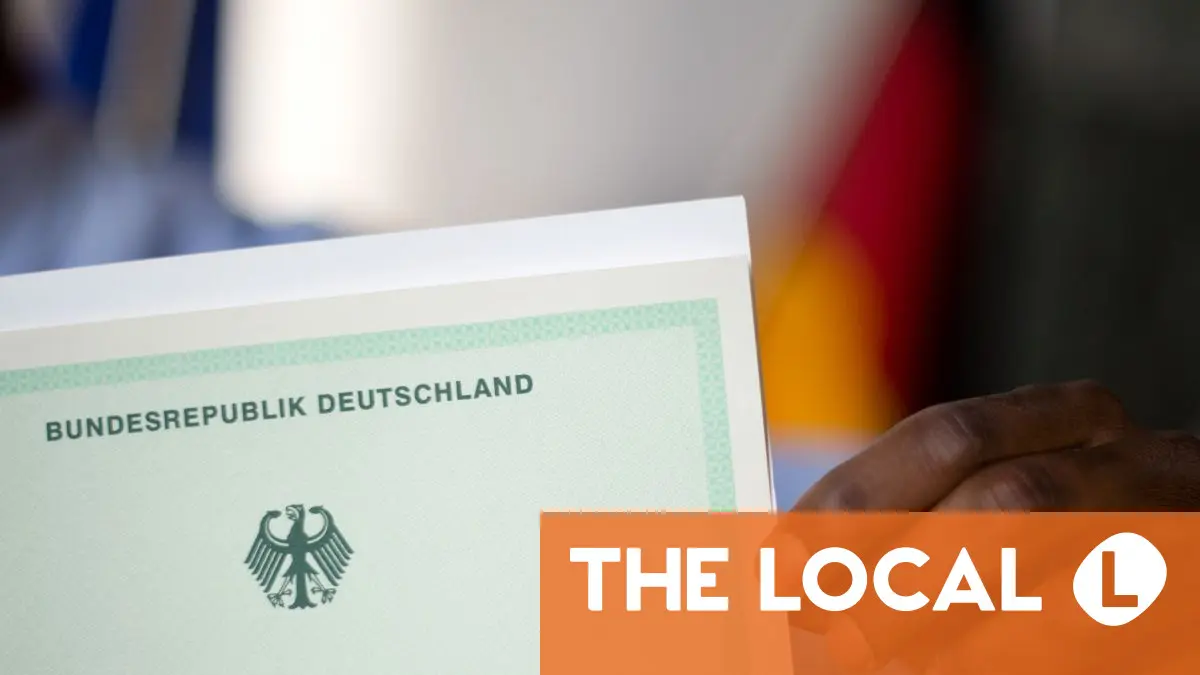
Should Germany’s citizenship test be be rewritten, made harder or simply scrapped? We asked readers, and also political parties, how they would change the ‘Einbürgerungstest’.
While many of our readers recently told us that Germany’s citizenship test (Einbürgerungstest) had taught them something, few described it as flawless.
But if Germany’s citizenship test isn’t perfect, then how should it change?
Some readers said it should be tougher, while others thought the current format was broadly right but the focus all wrong.
The Local also contacted Germany’s major political parties to find out whether they believe the citizenship test is effective in its current form – and how they would reform it if they could.
The responses revealed striking differences, not only between the parties themselves but also between politicians and people who have actually sat the test.
Many readers want a more demanding test
A number of respondents to our survey felt the current test sets the bar too low.
Lin, a 34-year-old who currently lives in Saxony and naturalised in Bavaria two years ago, was among the clearest voices calling for change.
“The German citizenship test is too easy; its difficulty should be increased.”
Dee, a 34-year-old from South Africa living in Berlin, reached a similar conclusion after passing comfortably without preparation.
“I did not study for it and still passed with over 80 percent, if you can read and understand German, thinking logically you can answer most questions,” she said.
READ ALSO: How to appeal if your application for German citizenship is rejected
Jim, 42, originally from Massachusetts and now living in Berlin, questioned whether the current pass mark is high enough.
“Only needing to get 17 correct is an incredibly low bar. Any test in school where you only get half right would be considered failing.”
… but lots would also like to see more practical questions
Interestingly, rather than arguing for easier or more difficult questions, many respondents were more concerned that they should become more relevant.
They felt the current test focuses too heavily on historical facts that can easily be forgotten while neglecting practical knowledge that would genuinely help newcomers navigate life in Germany.
“Half of the questions were reasonable, half were pointless history memorisation,” said Tom, 43, from Karlsruhe.
“The test is just weird,” said Rob who lives in Berlin. “Some really obscure legal questions, but in many ways the most important bits simply missing e.g. nothing about how to properly understand a voting ballot!?”
Steve, a British-born resident of Cologne who is now a German citizen, offered an even longer list of topics that he believes deserve greater attention.
“When you arrive in Germany there’s a whole bunch of info you need to know – church tax, lohnsteuerkarte, Rundfunk, wohnung, 112 emergency number, lebenslauf etc. These are core things missed off the test.”
READ ALSO: The essential guide for anyone who’s just moved to Germany
Steve also argued that the people designing the exam should pay closer attention to the experiences of newcomers: “Whoever writes the test questions needs to view life in Germany with outsider eyes.”
Other respondents suggested that integration might be better promoted through education rather than testing.
For example, Dee argued that people seeking permanent residence or citizenship should complete more substantial integration courses.
“We don’t know anything. You cannot expect us to integrate without knowing what is expected of us,” she said.
A written essay?
Some readers responded directly to recent calls by the far-right Alternative for Germany to replace the current multiple-choice test with a written essay on a political, historical or cultural topic.
One anonymous respondent living in Germany said, “An essay requirement would be disproportionate.”
Rather than improving the assessment, the reader argued that essays would primarily test “academic writing skills and formal written German, rather than whether someone participates constructively in German society.”
“A citizenship test should test civic knowledge in a fair and reasonable way, rather than impose an academic hurdle,” they added.
READ ALSO: ‘Mix of joy and relief’ – What it’s really like to get German citizenship
How do Germany’s political parties compare?
To understand how readers’ views compare with the wider political debate, The Local also contacted the CDU, CSU, SPD, Greens and the Left party (Die Linke) for comment.
The SPD and Die Linke provided responses, the Greens declined to comment and the CDU and CSU did not respond before publication.
Among the parties that replied, the SPD’s position was arguably closest to many of the readers who supported retaining the test while refining it.
A party spokesperson described the naturalisation test as “in principle, a sensible measure” that helps demonstrate applicants’ knowledge of Germany’s legal and social order.
At the same time, the SPD said the test “must be reviewed regularly and further developed as needed”.
The Left party, by contrast, takes a more radical view of the issue.
“The Left does not view the naturalisation test as a meaningful prerequisite for integration, but rather as an unnecessary or discouraging hurdle,” the party’s press office told The Local.
They added, “Die Linke fundamentally opposes civics tests as a prerequisite for acquiring German citizenship.”
Interestingly, relatively few respondents to The Local’s survey suggested abolishing the test altogether.
READ ALSO: ‘Are you ready to be German?’ – A first-hand account of the final interview for citizenship
While readers disagreed on whether the test should be harder, whether the pass mark should be raised and whether some questions should be scrapped, many still returned to the same idea: the issue is not necessarily that Germany has a citizenship test, but that it tests the wrong things.
As politicians continue debating the future of Germany’s citizenship test, they might consider listening to the views of the people who have actually sat the exam, navigated the bureaucracy and gone on to become German citizens themselves.
Disclaimer : This story is auto aggregated by a computer programme and has not been created or edited by DOWNTHENEWS. Publisher: thelocal.de