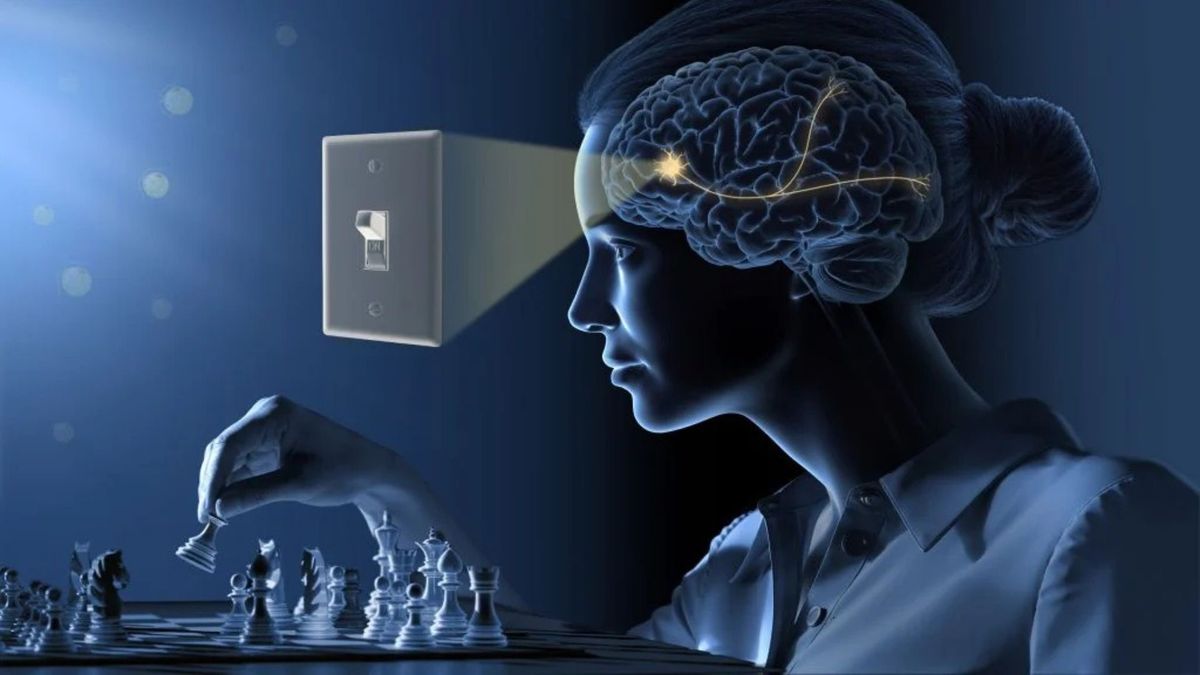
Nobel Prize in Medicine 2026: How Pond Algae Rewired Brain Science
In a freshwater pond, a single green cell far thinner than a human hair swims toward the sun. It has no brain and no eyes, only an orange eyespot and two whip-like tails. On Monday, October 5, 2026, that humble alga, Chlamydomonas reinhardtii, found its way to Stockholm. The Nobel Prize in Medicine went to Karl Deisseroth, Peter Hegemann and Georg Nagel for the discoveries that turned the alga’s light-sensing trick into optogenetics, a way to switch individual brain cells on and off with flashes of light.
The Nobel Assembly at Karolinska Institutet honoured the trio “for their discoveries concerning light-gated ion channels and optogenetics.” Deisseroth, 54, is an American psychiatrist and bioengineer at Stanford University. Hegemann, 71, is a biophysicist at Humboldt University of Berlin, and Nagel, 73, is a professor at the University of Würzburg. The three will share 12 million Swedish kronor, roughly $1.2 million.
Thomas Perlmann, secretary-general of the Nobel Assembly, said the method “makes it possible to switch on, or off, the activity of individual nerve cells in a living brain.” Committee chair Per Svenningsson said it lets scientists map the brain in ways they once could only dream of.
That precision is why this prize matters. With optogenetics, scientists can wake or silence one type of brain cell at a time and watch what changes, which is how they are now tracing the circuits behind memory, fear, addiction and mental illness. The tool has also reached patients. In results published in 2021, a French-led team showed it could restore partial sight to a person blinded by an inherited eye disease, the first proof that optogenetics could work against a human disease.
What Is Optogenetics?
Optogenetics is a technique in which scientists give chosen brain
Disclaimer : This story is auto aggregated by a computer programme and has not been created or edited by DOWNTHENEWS. Publisher: theprobe.in