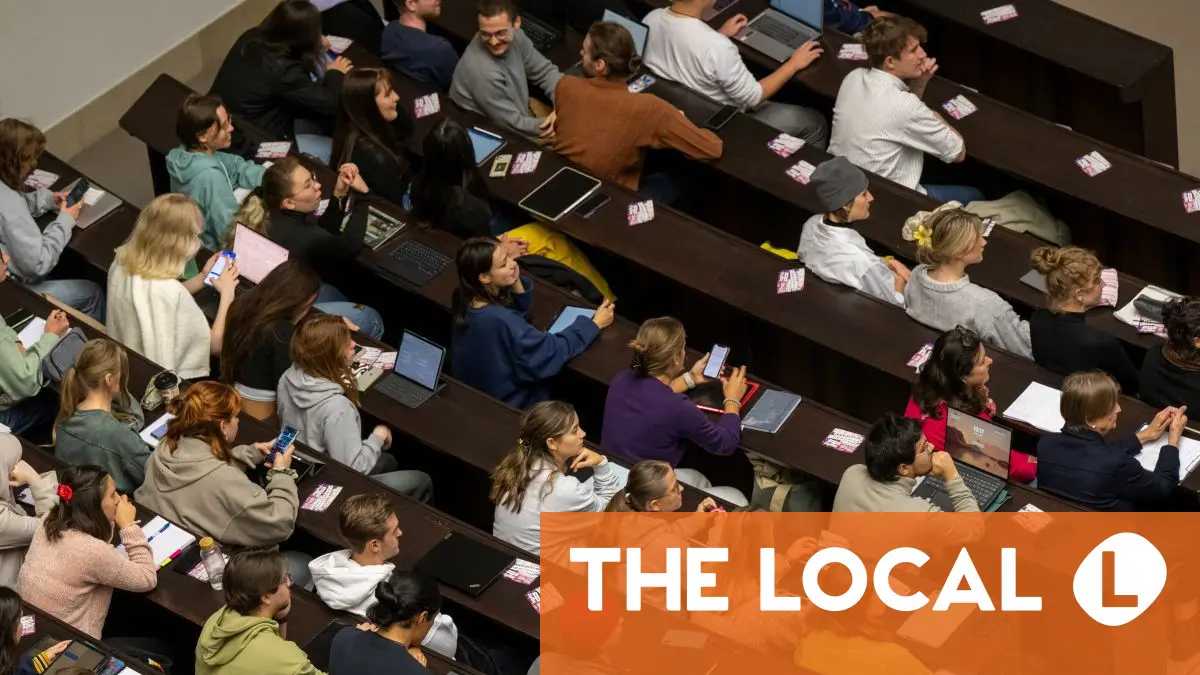
Unemployment rates are rising among graduates in Germany while traineeships, for jobs facing a shortage of workers, are increasingly vacant. So has vocational training become the better bet for job security?
For generations, the classic advice from parents to their kids has been, ‘Go to university to get a good career that pays more’. But a growing unemployment rate among university graduates in Germany calls that advice into question.
The number of university students in Germany continues to rise while companies are increasingly looking to AI to consolidate tasks and cut jobs. So a degree does not seem to guarantee work opportunities in the same way that it used to.
And at the same time a growing number of vocational traineeships, which can lead to paid work very quickly, are vacant.
So which path offers better prospects for young people in Germany today, a university degree or a vocational traineeship?
The numbers
Last year 335,000 university graduates were unemployed in Germany, according to figures from the Federal Employment Agency. That’s a sharp increase compared to 2024 (up by 46,000) and represents a new peak in the unemployment rate among university graduates, at 3.3 percent.
Germany’s overall unemployment rate was higher, at about 6.3 percent in 2025. But in recent years unemployment has grown faster among university graduates.
Before the Covid pandemic, unemployment among graduates stood at 2.1 percent – meaning that it’s jumped by 57 percent in just a few years. The last time unemployment rate for graduates in Germany was above three percent was in 2007.
READ ALSO: Why launching a career is getting harder in Germany
This comes while the number of students is rising and the number of trainees is declining.
In 2014, there were 2.7 million students and 1.43 million trainees, according to a report by Tagesschau. Ten years later, there were 2.9 million students and only 1.21 million trainees.
The context
“In recent years we have seen that even academics are no longer immune to the [jobs] crisis,” labour market researcher Enzo Weber told ARD.
People with degrees are still more likely to be employed than those without one, but it no longer comes with the kind-of employment guarantee that it used to.
Contributing to this is the fact that the number of students in Germany has been growing for decades, and also that AI is increasingly being used in workplaces – especially for tasks that would have previously been done by entry-level workers.
At the same time, many of the jobs that are lacking workers are those that in Germany require a vocational traineeship e.g. electrician, professional driver or nurse.
Shortages of workers in these so-called bottleneck occupations are projected to intensify in the coming years as the baby boomer generation retires.
According to the Federal Statistical Office (Destatis), roughly 25 percent of employees across all of these professions are 55 years or older. For bus and tram drivers, this figure is 44 percent, and the situation is similar in other skilled trades and care professions.
This is bad news for Germany at large, but represents an opportunity for young people considering their career choices. Put simply, completing a traineeship in any of Germany’s bottleneck occupations would likely lead to plentiful job offers.
Who makes more?
Currently, university graduates tend to earn more in terms of average monthly salaries. According to Destatis, the average gross monthly salary for a master’s graduate is €7,019. A master craftsman, on the other hand, earns an average gross monthly salary of €5,405.
But today’s salaries are not necessarily an indicator of tomorrow’s pay rates. Especially considering that workers in shortage occupations might have more leverage in salary negotiations going forward.
Another factor to consider is that vocational trainees tend to start earning a wage well before their counterparts in university programmes.
In many roles trainees begin earning a salary even during their apprenticeship, whereas a student aiming for a degree in the same field would need three years for a bachelor’s degree and then a master’s programme before entering the workforce. Starting to earn income from a younger age can give apprentices a significant financial boost.
Ultimately, of course, income depends mainly on which field or role a student pursues. And here, the old rules still generally apply: work in the humanities tends to pay less compared to doctors, lawyers or engineers.
The dual study option
A third option for young professionals in Germany is a dual study programme, which typically combines practical experience at a company alongside theoretical study at a university.
These programmes allow students to earn both a vocational qualification and a bachelor’s degree simultaneously, and sometimes allow students to earn stipends of around €1,000 to €1,600 per month.
READ ALSO: ‘Germany is 40 years behind’ – Foreigners share their struggle getting qualifications recognised
In some cases the company itself covers tuition fees and may offer a permanent job directly after graduation. For these reasons dual study is becoming increasingly popular, and the number of programmes has rapidly increased in recent years.
As for which option is the better choice; it really depends on which career a young professional wants to pursue.
Experts like Weber suggest that success usually requires having both specialist knowledge and practical experience, and increasingly it helps to know how to use AI and digital tools as well. Whether it makes more sense to gain those skills and experience at a university or in a training programme depends on the person and their job of choice.
Disclaimer : This story is auto aggregated by a computer programme and has not been created or edited by DOWNTHENEWS. Publisher: thelocal.de