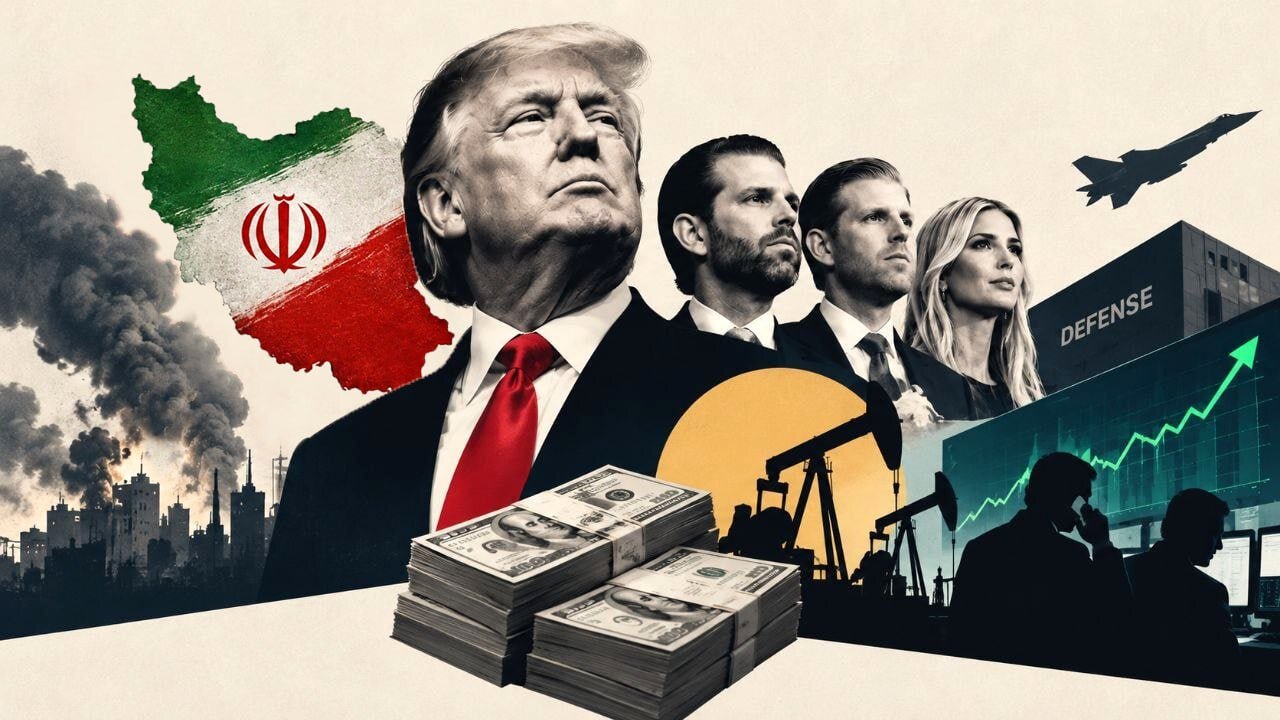
TEHRAN- The US-Israeli war against Iran was not merely a military and geopolitical crisis; it also created a major economic shock. According to an estimate by the US Congressional Budget Office (CBO), the direct cost of US combat operations against Iran had reached approximately $38 billion by August 1, 2026. That figure includes the cost of replacing expended munitions and lost equipment, increased flight hours, military operations, and higher fuel costs. It does not include costs borne by other federal agencies or the war’s longer-term economic consequences.
At the same time, Americans faced a sharp increase in energy costs. According to an estimate by the Democratic members of the Joint Economic Committee, US households had spent an additional $71.5 billion on gasoline since the war began an average of about $604 per household.
Public opinion also showed that the war did not enjoy broad support. In a June 2026 Quinnipiac poll, 60 percent of American voters said the military action against Iran was not worth the cost, while only 34 percent said it was. A Reuters/Ipsos poll similarly found that just 25 percent of Americans believed the war was worth it, while President Trump’s approval rating had fallen to 34 percent.
Under these circumstances, the important question is not simply whether the war has a cost. The more important question is: Who ultimately pays those costs, and who benefits financially from the consequences of the war? Every dollar spent on missiles, air-defense systems, aircraft, or ammunition creates revenue for a defense contractor. Every sharp increase in oil prices that means higher costs for consumers at the gas pump can translate into higher revenues and asset values for oil producers, refiners, and energy investors. And every surge in financial markets can generate substantial gains for investors who happened to be positioned correctly gains from which the average American has little or no direct benefit.
The broader picture, therefore, is one in which a large part of American society faces higher public spending, more expensive energy, and an unpopular war.
But the war has not been equally costly for everyone. For some companies, executives, investors, and asset owners, it has instead created an opportunity to increase revenues and wealth. The following sections examine some of the most prominent individuals and mechanisms through which financial benefits have emerged from the conflict.
The Defense Industry: Where the Cost of War Becomes a Contract
One of the clearest examples is the American defense industry. During a war, companies that manufacture missiles, air-defense systems, aircraft, radar systems, and ammunition benefit not only from new contracts but also from the government’s need to replenish weapons and equipment consumed during military operations.
RTX, the parent company of Raytheon, for example, reported $24.7 billion in sales in the second quarter of 2026, up 14 percent from the previous year. Adjusted earnings per share increased by 21 percent, while the company’s backlog reached $289 billion, including $119 billion in defense-related orders.
Lockheed Martin reported a similar expansion. In the second quarter of 2026, the company recorded $20.1 billion in sales and $1.8 billion in net income, while its backlog reached a record $230 billion. A significant portion of that backlog is tied to missile-defense systems and other military programs whose importance increases during periods of war.
At the top of these companies are executives such as Chris Calio, CEO of RTX, and Jim Taiclet, CEO of Lockheed Martin. Their compensation structures include not only salaries but also substantial bonuses and equity-based awards. As a result, rising company revenues and stronger long-term performance can have a direct impact on their personal wealth.
Trump, His Sons and His Son-in-Law: Financial Interests Around the War Economy
Among political figures in the US administration, Donald Trump is particularly significant because, unlike many presidents, he continues to hold substantial investments in publicly traded companies.
This is especially important in the energy sector. According to an analysis by the Democratic members of the Joint Economic Committee, Trump held as much as $45.6 million in oil and gas stocks at the end of 2025. As energy stocks surged in 2026, the value of those holdings rose to as much as $61.1 million, representing an increase in market value of up to $15.5 million.
The rise in oil prices and energy stocks associated with the Iran war had a direct positive effect on the value of the president’s personal holdings. Trump also purchased up to $3.6 million more in oil and gas stocks during the first three months of 2026.
The financial connections between the Trump family and industries benefiting from the war, however, do not stop with the president’s own portfolio.
Donald Trump Jr. has become closely involved with 1789 Capital, while Eric Trump has invested in defense and technology companies through American Ventures, the investment arm associated with Dominari Holdings. Their investment portfolios include startups involved in drones, artificial intelligence, space technology, robotics, and military technology precisely the sectors receiving increased attention as the US expands defense spending and develops new military capabilities.
The significance of these investments becomes clearer when looking at the companies in their portfolios. According to reporting by The Washington Post, at least 15 companies connected to investment portfolios associated with Trump’s sons received approximately $3.2 billion in direct federal business, including contracts, investments, and loans, after the Trump administration came to power. Those companies also had roughly $3.1 billion in future contract opportunities.
A separate report from Democratic members of the House Judiciary Committee claimed that after Donald Trump Jr. joined 1789 Capital, assets under management grew from roughly $150 million to more than $3 billion, while its main fund had generated approximately a 200 percent return as of June 30, 2026.
Taken together, however, the investment activity shows that the Trump family has positioned itself financially in several sectors particularly defense technology and energy that have benefited from the economic consequences of the war.
Jared Kushner, Trump’s son-in-law, presents another important case. Kushner owns the investment firm Affinity Partners, which invested heavily in Phoenix Financial, one of Israel’s major financial companies.
The connection is important because Phoenix operates within the broader Israeli financial and investment ecosystem, including investments linked to companies involved in sectors connected to Israel’s defense and security economy. As a result, the expansion of Israel’s war economy and the rise in valuations of related assets have had financial implications for Kushner’s investment firm.
The financial benefit was not merely theoretical. In July 2026, Affinity Partners sold roughly one-quarter of its stake in Phoenix Financial for more than $340 million. CNN reported that the investment generated a return of more than five times the initial purchase price. Affinity nevertheless remained Phoenix’s largest shareholder, retaining about 7.4 percent of the company, a stake worth more than $1 billion at the time.
Still, when an investment in a major Israeli financial company generates more than five times its initial return during a period of intense regional conflict, and the investor is able to cash out more than $340 million while retaining a stake worth over $1 billion, Kushner clearly belongs among the individuals who have financially benefited from the wider regional war economy.
The more sensitive issue is that Kushner is not simply an ordinary investor. He is a close member of Trump’s family and played a major role in Middle Eastern diplomacy. That combination political proximity to power alongside major financial exposure to an economy benefiting from regional conflict makes his investment activity particularly relevant to the broader debate over who benefits financially from war.
Oil: The Other Side of the Equation
The war with Iran naturally had a major impact on global energy markets. Iran, the Persian Gulf, and the Strait of Hormuz sit at the center of one of the world’s most important energy corridors. Increased fears of supply disruptions pushed energy prices higher, creating opportunities for some oil producers and refiners.
Executives at major energy companies such as ExxonMobil, Chevron, Cheniere Energy, and ConocoPhillips were therefore operating in an environment where corporate performance was closely tied to energy prices and global demand.
Executives such as Darren Woods of ExxonMobil and Michael Wirth of Chevron own shares in their respective companies in addition to receiving salaries, bonuses, and other forms of compensation. In Wirth’s case, stock transaction records show that he sold shares worth tens of millions of dollars in 2026.
Similarly, Jack Fusco, CEO of Cheniere Energy, and executives at ConocoPhillips receive part of their compensation through shares and equity awards. As the value of their companies rises, those holdings can increase their personal wealth.
But perhaps more important than the personal wealth of individual executives is the enormous amount of money flowing into the energy industry itself.
According to the Financial Times, US independent refiners were expected to generate approximately $32.4 billion in combined profits over the two quarters following the outbreak of the conflict, compared with about $6.8 billion during the same period a year earlier. Companies such as Marathon Petroleum, Valero, and Phillips 66 benefited from wider refining margins and higher fuel prices.
This is where the contrast between consumers and corporations becomes especially visible: higher fuel prices mean higher costs for American households, while the same conditions can generate significantly higher margins for certain energy companies.
Members of Congress and the Stock-Trading Question
Another layer of the story involves members of Congress. Some senators and representatives traded shares of defense and energy companies in 2026, including companies such as Lockheed Martin, General Dynamics, and Chevron.
The significance of these transactions is not necessarily that they prove wrongdoing. Rather, it is that lawmakers responsible for decisions involving foreign policy, defense spending, and government contracts can, in some cases, simultaneously hold financial positions in industries directly affected by those decisions. That overlap has fueled renewed debate over whether members of Congress should face stricter restrictions on individual stock trading.
Alan Armstrong, a Republican senator, purchased Lockheed Martin shares on March 27, 2026, in a transaction valued between $1,001 and $15,000.
Jared Moskowitz, a Democratic representative, made several purchases of General Dynamics shares in March 2026. One transaction on March 23 was estimated at around $8,000.
Dwight Evans, a Democratic representative, sold General Dynamics shares on June 10, 2026, in a transaction valued between $1,001 and $15,000.
Kevin Hern, a Republican representative, also sold Lockheed Martin shares in two transactions on September 2, 2026, each reported in the $15,001-$50,000 range. Using the midpoint of each range gives an estimated total sale value of roughly $65,000.
Anonymous Traders: Profits Whose Owners Remain Unknown
Perhaps the most unusual part of the story concerns the oil market.
A Reuters investigation identified a series of trades in March and April 2026 that bet on falling oil prices shortly before several major Trump announcements concerning Iran. The combined value of these positions was estimated at up to $7 billion. The trades involved futures contracts for crude oil, diesel, and gasoline on major US markets.
The identities of the traders remain unknown. And $7 billion refers to the value of the positions. Nevertheless, the timing of some trades raised questions because they occurred shortly before major political announcements that could have caused significant movements in oil prices.
US regulators were reportedly investigating the activity, but there is no public proof that the traders had access to illegal inside information.
A similar pattern appeared on the prediction market Polymarket. Roughly 150 accounts reportedly bet on the likelihood of a US-Israeli attack on Iran shortly before it occurred, with 16 accounts making more than $100,000. One anonymous account known as “Magamyman” reportedly earned around $553,000. A crypto-data analysis also identified six accounts suspected of having potentially used insider information, with combined gains of approximately $1.2 million.
The financial dimension of the Iran war ultimately reveals a striking contradiction at the heart of Trump’s presidency: while American taxpayers and households absorbed the costs of military operations and higher energy prices, Trump himself stood to become wealthier as the value of his oil and gas holdings increased. His family’s investments in defense technology and Jared Kushner’s highly profitable investment in Israel’s financial sector reinforce the same broader pattern: the economic consequences of war do not fall equally on everyone. For Trump in particular, war-driven increases in energy prices and defense spending have created financial opportunities alongside the political and strategic consequences of the conflict.
Disclaimer : This story is auto aggregated by a computer programme and has not been created or edited by DOWNTHENEWS. Publisher: tehrantimes.com