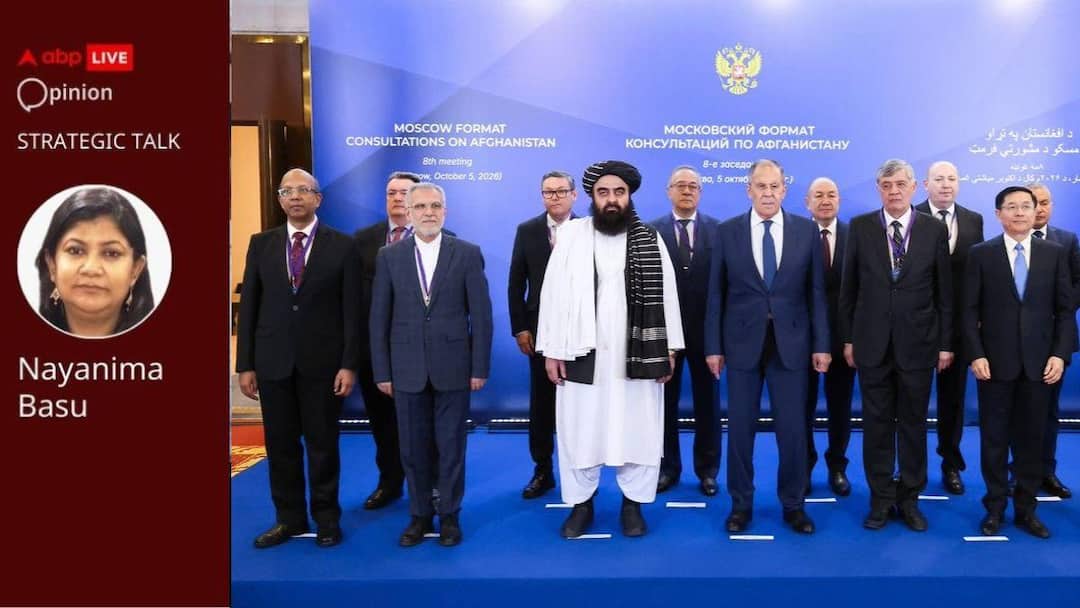
- Moscow talks failed joint statement amidst Taliban-Pakistan dispute.
- Taliban rejected extensive terrorism references; Russia regretted lack of consensus.
- Russia warned NATO against military infrastructure deployment in Afghanistan.
The ongoing struggle for dominance among major powers in war-torn Afghanistan appears to be intensifying once more. Recent discussions held in the Moscow format highlighted this precarious situation. Despite Russia openly expressing its support for the Taliban, it has become increasingly clear that the group is confronting significant challenges and threats from multiple sources.
This precarious position underscores the complexities of Afghanistan’s geopolitical landscape, where various factions and international interests are continually vying for influence, leaving the Taliban in a vulnerable position as it seeks to navigate these turbulent waters.
The Moscow Format was created in 2017 as a vital regional platform aimed at fostering dialogue among the special envoys of key nations, including Russia, Afghanistan, India, Iran, China, and Pakistan. Its primary goal is to promote peace and stability while facilitating a process of national reconciliation in the war-torn landscape of Afghanistan.
Over time, this initiative expanded its diplomatic reach to include five Central Asian nations, further enriching the dialogue and collaborative efforts toward a peaceful resolution in the region.
The eighth meeting of the Moscow Format Consultations on Afghanistan concluded on 5 October without a joint statement for the first time in its history due to sharp disputes between the Taliban and Pakistan. The meeting got overshadowed by the ongoing conflict between Afghanistan and Pakistan even as Russia was unable to stitch-up a joint statement from the talks – something that happened for the first time since its inception.
Also Read: OPINION | Pakistan Does China-Style Collision, India Should Remain Alert
August 2026 marked the fifth anniversary of the return of the Taliban to power in Kabul. The Afghan delegation was led by Taliban Foreign Minister Mawlawi Amir Khan Muttaqi, who also held a separate meeting with Lavrov on the sidelines of the of the conference.
Sergei Lavrov, Foreign Minister of Russia, said the dispute between Kabul and Islamabad did not allow the member countries to reach a consensus. However, he also warned NATO of creating a military infrastructure there – something that was not expected to many who were watching the meeting closely as Afghanistan is making a slow but steady comeback on the global geopolitical theatres as its war with Pakistan intensifies much to India’s chagrin as New Delhi shares close strategic ties with both Moscow as well as Washington.
“The deployment of NATO military infrastructure in Afghanistan and neighbouring countries under any pretext whatsoever is categorically unacceptable. As we know from history, presence of this kind carries the risk of destabilisation and heightened tensions and conflict. We have seen no other outcome from this kind of presence over the past several decades,” Lavrov in an apparent warning to the United States.
In other words, Lavrov was signalling a warning against external powers attempting to return militarily or re-establish control over strategic installations — for example, the U.S.’ reported plan to regain control of the Bagram Air Base near Kabul from the Taliban — arguing that historical experience shows foreign military presence only invites new conflicts and instability.
Russian President Vladimir Putin’s special envoy for Afghanistan, Zamir Kabulov, said the meeting ended without a joint statement due to disagreements between the Taliban and Pakistan — a development Moscow regretted. He added that consensus on a joint communique collapsed at the last minute because the Taliban objected to Afghanistan being mentioned “too extensively in relation to terrorism” compared to previous years.
According to Kabulov, Moscow found the Taliban’s stance surprising because similar language on terrorism had been included in last year’s joint statement without objection.
The Taliban, however, contended that bilateral relations had since evolved and that such extensive references to Afghanistan in the context of terrorism were no longer acceptable to them.
Despite the setback, Russian officials emphasized that the inability to adopt a joint statement would not derail the Moscow Format. They maintained that the mechanism would continue to function as a key platform for coordinating regional approaches and fostering cooperation on Afghanistan.
However, Lavrov’s warning to NATO about the potential establishment of military infrastructure in the region took many by surprise, signalling a shift in the dynamics of international involvement in Afghanistan.
This development is particularly noteworthy given India’s intricate strategic partnerships with both Moscow and Washington, indicating that the region’s stability remains a tightrope walk.
India, which now shares a growing bilateral relationship with the Taliban government in Kabul, was represented by Vinay Kumar, India’s Ambassador to Russia and M. Suresh Kumar, Joint Secretary (Pakistan, Afghanistan, and Iran Division), Ministry of External Affairs.
After the meeting New Delhi said, it has “again reiterated our strong support for the independence, sovereignty, and territorial integrity of Afghanistan.”
New Delhi must brace itself for an eventual resurgence of tensions between the United States and Russia, particularly as geopolitical dynamics in this region continue to shift. Moscow has already taken a significant step by officially recognizing the Taliban, a move that has not been mirrored by Washington or New Delhi.
Given this evolving landscape, it is crucial for India to develop a well-defined and strategic policy towards Afghanistan, one that prioritizes its national security interests.
This policy should also skilfully navigate the complexities of India’s relationships with both Russia and the United States. Merely extending humanitarian aid to Kabul is insufficient in addressing the broader implications of these changes.
India cannot afford to adopt a passive role in international discussions and must actively engage in shaping the narrative around Afghanistan’s future at global forums.
Also Read: OPINION | India-US Ties: No More Diplomacy Of Deference, Now Diplomacy Of Deterrence
[Disclaimer: The opinions, beliefs, and views expressed by the various authors and forum participants on this website are personal and do not reflect the opinions, beliefs, and views of ABP News Network Pvt Ltd.]
Disclaimer : This story is auto aggregated by a computer programme and has not been created or edited by DOWNTHENEWS. Publisher: abplive.com