Pakistan’s proposal to reorganise its provincial boundaries has renewed debate over governance, regional representation and the distribution of political power. While creating smaller administrative units could make government services easier to deliver, dividing the country’s influential provinces could also alter the relationship between provincial leaders, Islamabad and the military establishment. The debate assumes greater significance amid political tensions involving jailed former prime minister Imran Khan’s Pakistan Tehreek-e-Insaf (PTI), the federal government and regions grappling with long-standing grievances. The proposal also raises questions about whether administrative restructuring would address these challenges or change the balance of influence within Pakistan’s political system.
Punjab And Sindh Hold Political Weight
Pakistan’s four provinces are central to its political landscape, with Punjab serving as the principal base of the Pakistan Muslim League-Nawaz (PML-N) and Sindh remaining a stronghold of the Pakistan Peoples Party (PPP). Their influence extends beyond administration. Both provinces have maintained substantial political clout even during periods of military rule, with their electoral strength and established political networks helping them retain a significant role in national affairs, as per reports.
Breaking these provinces into smaller units could change that equation. Smaller provinces might bring government closer to local populations, but dividing established political strongholds could also reduce the influence of parties that have traditionally dominated them.
ALSO READ: Houthi Missile Attacks On Riyadh Damage Kindergarten, Medical Complex In Saudi Arabia
More Provinces, An Old Proposal
The idea of increasing the number of provinces is not new in Pakistan. Planning Minister Ahsan Iqbal has previously supported expanding the administrative structure, including proposals involving 12-15 provinces and as many as 160 districts.
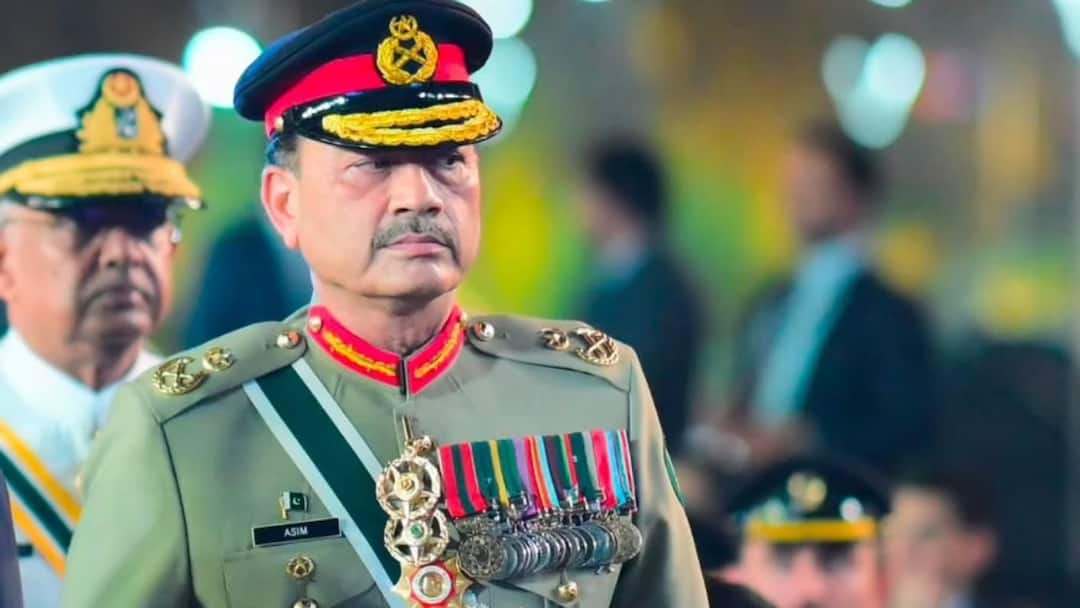
The discussion has taken on added political significance as Army Chief Asim Munir has strengthened his position within the country’s power structure. His cooperation with the PML-N and PPP has coincided with Imran Khan’s continued imprisonment, leaving Pakistan’s political landscape shaped by competing party interests and the military’s influence.
Any effort to redraw provincial boundaries would therefore involve more than an administrative exercise. It could affect the authority of existing provincial leaderships, the distribution of political representation and the relationship between elected governments and the military establishment.
PTI Tensions Add To The Challenge
The debate is unfolding against a backdrop of strained relations between Islamabad and Khyber Pakhtunkhwa, a province governed by Khan’s PTI.
Thousands of Khan’s supporters began marching towards the federal capital earlier this week after negotiations between the party and the government collapsed. The protest has intensified the confrontation between the opposition party and the federal administration.
Authorities have responded by deploying heavy security around Islamabad and vowing to prevent demonstrators from entering the capital. The standoff has further complicated relations between the federal government and the PTI-led provincial administration.
Khyber Pakhtunkhwa is also dealing with a serious militancy problem, placing additional pressure on its administration. Political confrontation, security concerns and disagreements with the centre create a complex backdrop for any proposed changes to provincial governance.
Balochistan And PoK Raise Concerns
The challenges extend beyond Pakistan’s four provinces. Balochistan has faced years of separatist violence linked to demands for independence, disputes over natural resources and opposition to Islamabad’s role in the region.
Any attempt to divide Balochistan would raise difficult questions about territorial boundaries, access to resources and the distribution of political authority. Changes to the region’s administrative map could also intersect with existing grievances over local representation and control.
In Pakistan-occupied Kashmir (PoK), protests have periodically erupted over governance, rising prices, taxation and economic conditions. These grievances underline the difficulties of restructuring a country where regional demands and disputes over resources remain politically sensitive.
ALSO READ: Houthi Missile Attacks On Riyadh Damage Kindergarten, Medical Complex In Saudi Arabia
Governance Versus Political Control
Creating smaller provinces could offer administrative benefits in a country whose existing territorial units have evolved since independence in 1947. Smaller jurisdictions may make it easier for governments to address local needs, although the outcome would depend on how powers, funding and responsibilities are allocated.
However, the political implications could be just as significant as the administrative ones. Dividing Punjab and Sindh, in particular, could reshape the influence of established political parties and change the balance between provincial governments and the federal centre.
Disclaimer : This story is auto aggregated by a computer programme and has not been created or edited by DOWNTHENEWS. Publisher: abplive.com