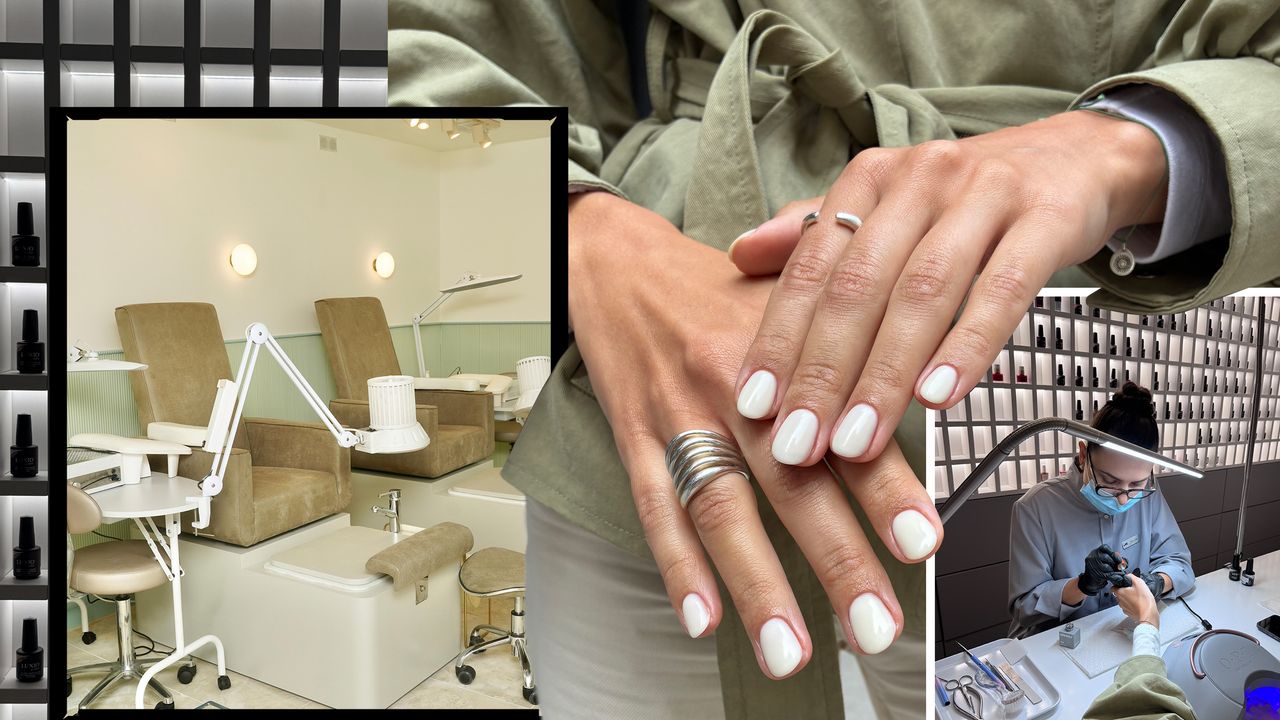
“When the full-scale invasion began, we had 250 to 270 people working in Kyiv,” Lera Borodina, founder of salon chain G.Bar, previously told Allure. “We had G.Bars all along the front line, and we had to make decisions on what to do.” Staff were then relocated from eastern Ukraine to salons in the west of the country, or the business’s locations in Poland, Georgia, and Cyprus. Meanwhile in western Ukraine, Ponomarenko told Allure that in Ivano-Frankivsk, where she and her family evacuated, salons reopened within a week.
This wasn’t only about a sustained demand for beauty services. These were businesses with staff who needed to work and earn a living to support themselves and their families, not to mention the Ukrainian economy; salon owners felt a sense of responsibility to both. Decisions to reopen were ones of bravery, solidarity, and patriotism.
Today, headlamps are no longer needed, according to Ponomarenko. “Salons across the country have installed inverters and generators so they can operate independently of power cuts,” she continues. “This kind of energy independence, even at the level of a single salon, means being able to run an autoclave to sterilize instruments, as well as keeping the lights on and powering the lamps and electric nail equipment.” In other words, salons have evolved to be able to continue functioning in the aftermath of an attack.
What is a Ukrainian manicure and why is it special?
As is the case globally, the go-to manicure techniques in Ukraine have evolved over the years. “[In Ukraine] we used to do the classic manicure with [manual] cutting tools,” Kolodii says of the early days of using emory boards and metal cuticle trimmers. “The electric file (e-file) technique existed too, but at first it was not well-known or popular. Clients didn’t understand it, and most people just wore regular polish.”
The arrival of hard gel and colored gel polishes changed things. “The longer you wear gel, the harder it is to remove, and it takes time. So technicians started using e-files to remove it. After that, people stopped doing the wet manicure—soaking the nails in water during the treatment—and moved to combined techniques.” (Combined techniques generally refer to those that use both manual tools, like nail file and cuticle trimmers, and electric ones, like an e-file.)
Disclaimer : This story is auto aggregated by a computer programme and has not been created or edited by DOWNTHENEWS. Publisher: www.allure.com