
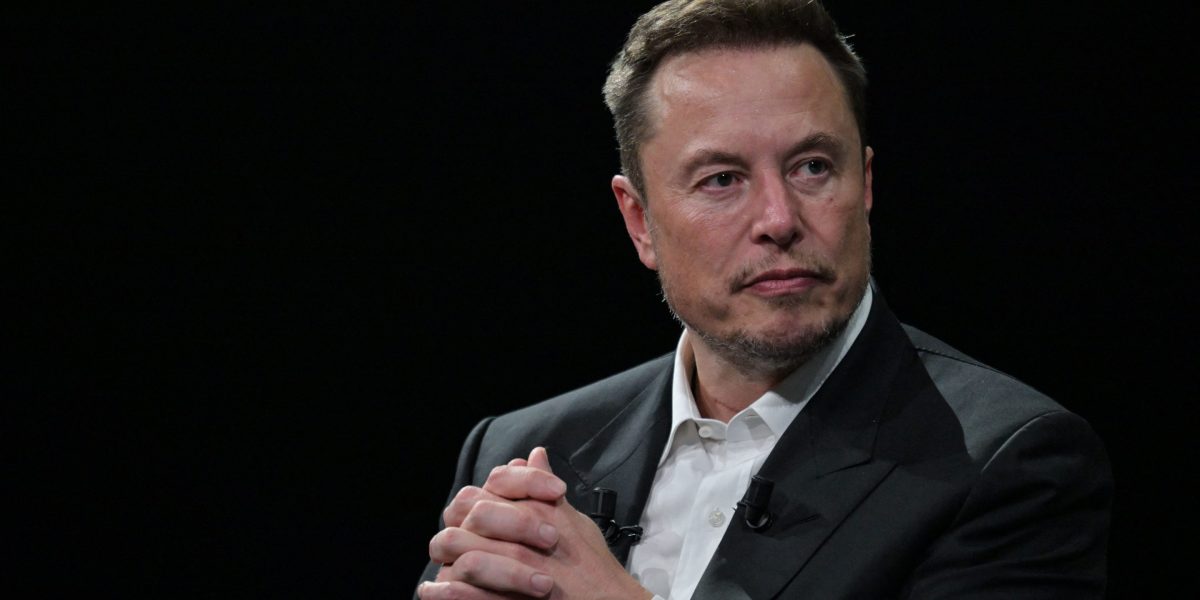
In the span of just three days, SpaceX founder Elon Musk ascended to trillionaire status before crashing out of the club in a billion-dollar downturn. And while he remains the richest person in the world by a $600-billion longshot, the entrepreneur says his wealth is always at the whim of his companies’ success.
“Trillionaire represents some percentage ownership in companies that I built, and it’s not sitting in a bank account,” Musk said in an interview with entrepreneur Peter Diamandis earlier this year, about three months before he first became a trillionaire following SpaceX’s IPO in June.
Musk’s net worth started to fall from its recent high of $1.05 trillion on Tuesday, dropping down to $987 billion on Thursday, according to the Bloomberg Billionaire Index.
His aerospace company’s shares were down 3.5% and trading under $162 yesterday, just as his EV car business Tesla was also down over 2%. Forbes estimates that Musk lost $21 billion Wednesday morning when SpaceX shares fell following a report that the company plans to raise $40 billion to buy Nvidia chips. The strategy could have impacted shares due to potential concerns about the company’s spending needs and debt load, even as it invests heavily in AI infrastructure.
It’s a steep $63 billion loss after he regained his trillionaire status this Monday; SpaceX shares rose nearly 8% at the start of the week, as Morgan Stanley analysts even called the stock “cheap” at the day’s prices. And as Musk owns around 4.76 billion shares of SpaceX—including another 1.3 billion shares of unvested restricted stock—his net worth shot up from $976.9 billion to $1.04 trillion afterward.
Very few people—if any others at all—will ever reach a 13-figure net worth in their lifetimes. But the jaw-dropping number isn’t actually what it seems, Musk has said. And in 10 years, he’s predicted his fortune may mean nothing at all.
“I own a percentage of the companies. The companies are doing lots of useful things, the value of the company grows,” the tech entrepreneur continued. “I own a percentage of the companies, and that sums up to that number, which seems high.”
Musk and other billionaire fortunes are at the whim of the stock market
Musk is just one of the world’s richest entrepreneurs who have watched their net worths dramatically rise and fall with the motions of the stock market.
Oracle founder Larry Ellison dethroned Musk as the richest person in the world briefly last year after his company’s breakout earnings report sent shares soaring by 36%. The now-82-year-old entrepreneur, who owns 40% of Oracle, experienced an eye-watering $101 billion wealth surge. But Ellison’s net worth fell by an estimated $34 billion just two days following Oracle’s stock surge, while Musk enjoyed a $35 billion gain, putting him back on top.
And on the flipside, Michael Dell, who owns 40% of his namesake tech company, gained around $122 billion between September of this year and the same time in 2025—nearly doubling his wealth within the span of that year. Larry Page’s net worth had grown $16.3 billion in the same period, while Jeff Bezos watched his wealth surge $24.5 billion.
But despite the massive wealth surge, Ray Dalio, the billionaire founder of Bridgewater Associates, has also echoed Musk in arguing that paper wealth and spendable money are two different things. Rising asset values can make people wealthier on paper, but they must sell those assets to turn that wealth into money they can actually spend.
“Wealth is not the same as money,” Dalio said on Steven Bartlett’s The Diary of a CEO podcast earlier this year. “You see a lot of people getting wealthy but you can’t spend the wealth. You have to sell the wealth to get money because you can only spend money.”
Musk says money won’t matter in the next decade anyway
As billionaires’ fortunes balloon while many workers struggle to keep up with their paychecks, Musk, the richest person on earth—and occasionally, the only trillionaire—believes that monetary wealth will be less meaningful thanks to gains from AI.
In response to how companies would earn returns in the era of AI, Musk told The Economist that “Money won’t matter in 2036.”
The reason, he said, is that AI would take over so much human work that jobs will be voluntary, and cash itself would become irrelevant. Back in 2024, Musk also proposed the idea of “universal high income” to distribute money in a non-working world. The 55-year-old entrepreneur took inspiration from Iain M. Banks’ Culture sci-fi novels, which feature a world filled with intelligent robotic beings and no traditional jobs.
“In those books, money doesn’t exist. It’s kind of interesting,” Musk said in an episode of the Moonshots with Peter Diamandis podcast earlier this year. “And my guess is, if you go out long enough—assuming there’s a continued improvement in AI and robotics, which seems likely—money will stop being relevant.”
Disclaimer : This story is auto aggregated by a computer programme and has not been created or edited by DOWNTHENEWS. Publisher: fortune.com




