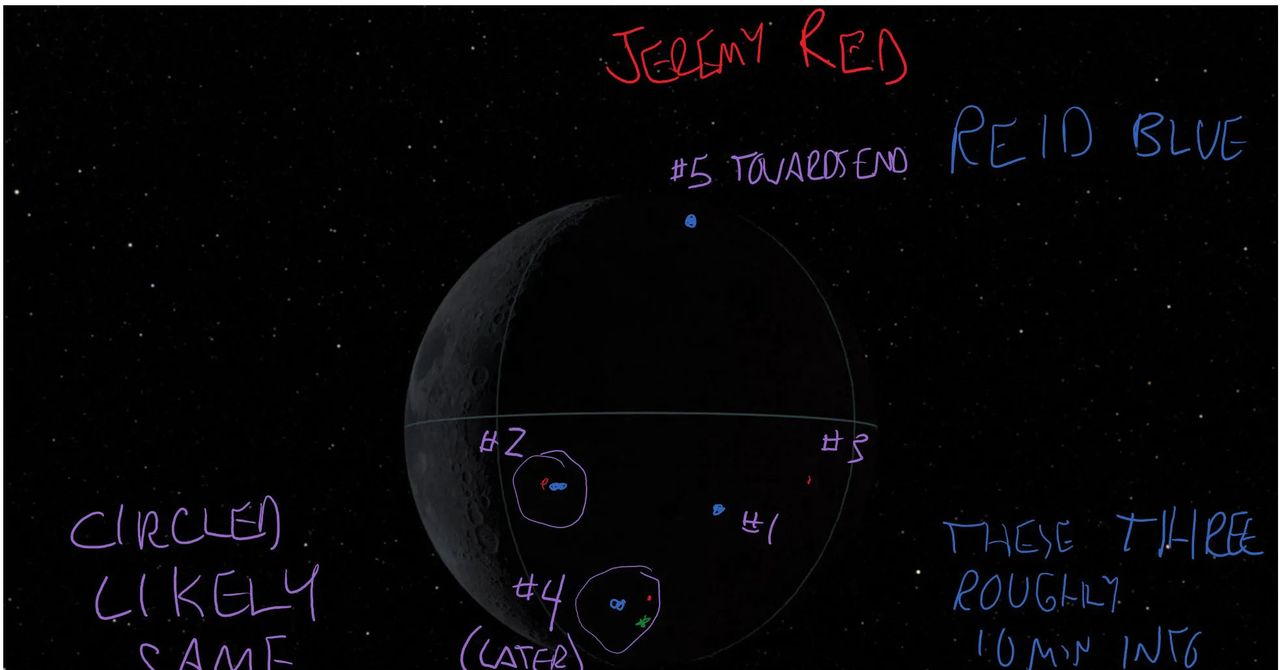
NASA has just released about 800 gigabytes of scientific data generated by the Artemis II mission. The archive documenting the astronauts’ return to the far side of the moon includes 11,000 full-resolution images and videos, 8.5 hours of spoken observations, notes taken by the astronauts, transcripts, and photographs from the cameras aboard the Orion capsule.
The space agency describes this effort as the first set of planetary science data obtained outside Earth and—for the most part—directly by humans in more than half a century. The closest comparable precedent dates back to the Apollo era and its missions to the lunar surface.
In addition to the public database, NASA released three reports summarizing what was learned during the first crewed spacecraft mission to approach the moon in five decades. These are the Artemis II Preliminary Lunar Science Report, the Artemis II Lunar Science Operations Report, and the Artemis II Lunar Science Data User Guide.
Anyone can access the near terabyte of data, though the release is primarily intended for the scientific community. While the astronauts capture and collect the data during the mission, it’s the researchers on Earth who will be able to analyze it and produce new findings about the moon. The information may be particularly useful for planetary geologists, flight engineers, heliophysicists, experts in telecommunications and remote sensing, as well as specialists in meteoroid impacts.
For space and astronomy enthusiasts, some of the most accessible materials include mission transcripts and lunar photographs annotated by the astronauts themselves. NASA has centralized access through its Planetary Data System, the public repository where it stores data from its planetary missions. In the section dedicated to the moon, users can access Artemis II and browse the various available collections, documents, and files.
For a less technical exploration, the agency has also set up an Artemis II science page where you can download the three reports, view a selection of photographs, and access the mission’s audio library. Anyone wishing to work directly with the raw data can visit the Planetary Data System, where the scientific files and their metadata are available for individual download and analysis.
Initial analyses of some of the Artemis II data have already yielded several concrete results. The most clear-cut finding is the detection of five small meteoroid impacts on the lunar surface during the 54-minute eclipse observed by the Orion crew. Recording these flashes will improve estimates of how often fragments just a few centimeters in size strike the moon—a key factor in calculating the risks future bases, vehicles, and astronauts will face.
The observations also documented differences in color, brightness, and texture among various lunar regions, which scientists can compare with composition maps previously obtained from orbit. In addition, photographs taken near the terminator—the boundary between lunar day and night—show in great detail how the terrain and visibility change when the sun is very low on the horizon. These conditions will be common near the south pole, where NASA plans to conduct the next Artemis missions. These data can therefore help the astronauts anticipate challenges related to navigation, lighting, and terrain recognition.
This story originally appeared on WIRED en Español and has been translated from Spanish.
Disclaimer : This story is auto aggregated by a computer programme and has not been created or edited by DOWNTHENEWS. Publisher: wired.com