Sports clubs have a knack for turning strangers into locals. In this week’s Inside Germany, journalist Tom Pugh explains how playing football and tennis helped him find a home in Berlin.
When I moved from London to Berlin in 2008, I had a single contact in the city, a friend of a friend who agreed to meet me for a drink.
On the evening we met he brought along another friend who mentioned that he played for a hobby football team that trained on Sunday afternoons close to Schönhauser Allee in Prenzlauer Berg. They were always on the lookout for players, he said.
Looking back, a surprising amount of my life today can be traced back to that conversation.
At the time I wasn’t looking for a wife or children or a way to integrate into German society. I just wanted a kick-about.
One of the advantages of sport when you’re new to a country is that it requires so much less language than many other activities. Had I been invited to join a book club or take part in amateur dramatics, I’m sure I’d have spent the evening staring blankly into space and never gone back.
Football was easier.
I began to feel at home in Berlin – and at home with the people in Germany – running up and down a football pitch, trying to develop that almost telepathic understanding with teammates that allows you to deliver a perfect pass or get on the end of a cross.
I also think it’s the only time I’ve ever improved my German without making a conscious effort to do so.
Geh Drauf! (Press!), Zum Ball! (Go to the ball), Hintermann! (Man on!) – my first German phrases all came with exclamation marks.
READ ALSO: ‘Vereine’ – How you can start your own club in Germany
The process was so automatic I didn’t register what was happening until a trip back to the UK when I went to watch England play Germany with a group of friends.
I didn’t realise I was shouting at the television in German until people I’d known for years started shuffling away from me.
I should stress I was shouting for England. As much as I love Germany, football allegiances are for life. But my non-German-speaking friends had no way of knowing that.
I should also stress that while I don’t quite have two left feet, I’m no great catch when it comes to football. Fortunately, Germany’s Vereinskultur, its long-standing culture of clubs or associations, seems just as willing to reward the simple act of showing up as any actual sporting ability.
Building a life
Apart from the odd, awkward moment, my very amateur football career in Germany was a joy. Beyond the pleasure of just playing, I also travelled to new parts of the city, went up against legendary clubs like SC Tasmania 1900 Berlin (still famous for having conceded more goals than any other team in a single Bundesliga season back in 1965/66) and nearly came to blows with a Green Party team over a dodgy penalty decision.
But undoubtedly the moment which had the greatest impact on my life came on the day a teammate introduced me to the woman who would become my wife.
For years, football remained a constant. Even after our first child arrived, I managed to keep playing semi-regularly.
But when the second came along and we moved to another part of Berlin, disappearing for hours at a time to play football became increasingly difficult.
READ ALSO: Jugger to Sporthocking – Six off-the-wall German sports everybody should try
Eventually, though, the children got older and more independent, and I suddenly felt that familiar yearning to chase a ball again.
I briefly considered returning to football, but bones don’t get stronger with age and I’ll admit I’d lost my nerve a little.
My second sporting life
Most days, between work and the school run, I walked past the gate of a tennis club in Kreuzberg. I’d played the game as a child and managed to persuade them to take me on as a member. Within weeks, I was happily obsessed with my new hobby.
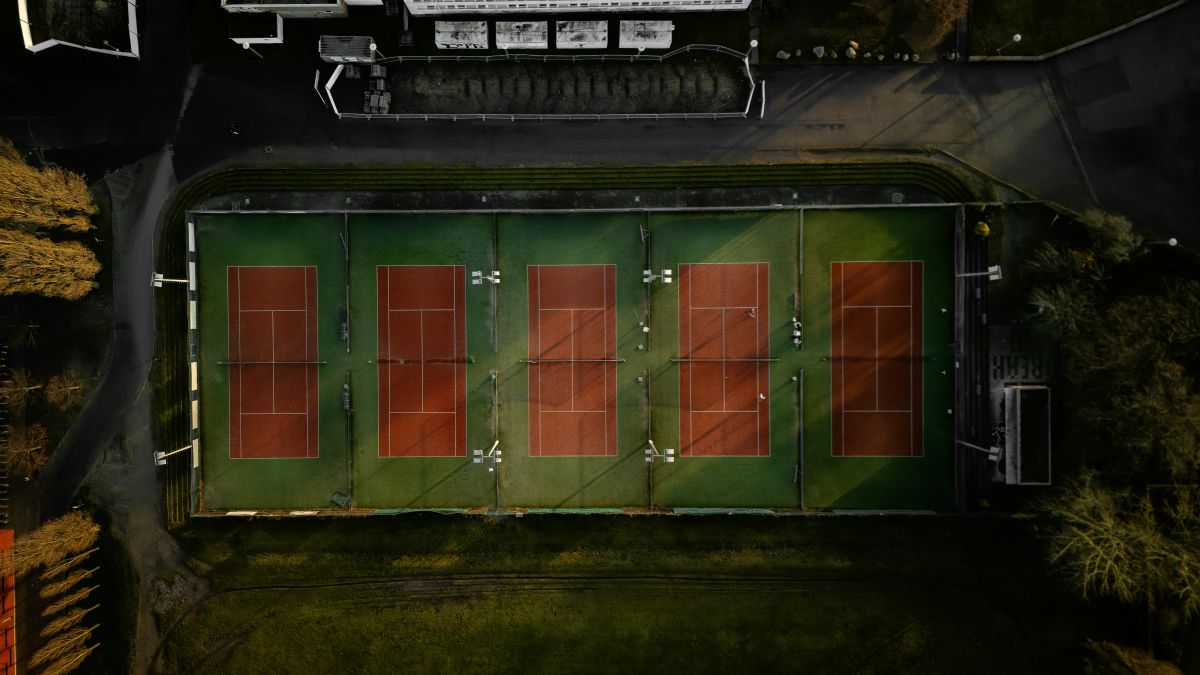
Tennis courts in Berlin. Photo by Arthur Charles Pratt on Unsplash
My German is obviously much better now, but I don’t think I talk with my tennis buddies much more than I did with my football teammates. We don’t need to know that much about each other. We don’t work together. We’re not related and we don’t see each other at parents’ evenings.
It’s enough that we’re teammates. And, for me, it’s an added bonus knowing there’s absolutely no chance I’ll be drawn into conversations that have anything to do with schools, homework or childcare arrangements.
READ ALSO: Five of the best ways you can do volunteer work in Germany
The tennis club reflects Kreuzberg in a way that gives me pleasure. The membership is international and (for a tennis club) satisfyingly difficult to categorise. German is usually the common language, but on my over-40s team alone we have German, British, French, Swiss, Colombian and Russian players.
We travel together to away matches, often driving out into Brandenburg. Once the tennis is done, we sit down with our opponents for a shared meal – an experience which always feels oddly satisfying regardless of whether we’ve won or lost.
I think I’d still be in Germany without the sports clubs – though if I hadn’t met my wife, who knows? – but they’ve added hugely to my quality of life here.
They’ve given me friendships that exist beyond work and family life, reasons to explore parts of Berlin and Brandenburg I might never have seen otherwise, and a sense of belonging that arrived long before I could have explained it in German.
Disclaimer : This story is auto aggregated by a computer programme and has not been created or edited by DOWNTHENEWS. Publisher: thelocal.de