TEHRAN – Three elections loom: Israeli Knesset elections, the U.S. midterms, and Palestinian legislative elections.
Each will unfold amid ongoing wars, domestic crises, shifting public opinion, and mounting international pressure. But not every election can reshape the political landscape in a region burdened by wars, divisions, and international shifts.
As for the Israeli regime, the contest appears to be between Benjamin Netanyahu and Gadi Eisenkot. In the United States, the focus is increasingly on President Trump’s ability to pursue his agenda without greater constraints from Congress. In Palestine, the question is whether the Zionist regime will allow Palestinians a democratic choice and strong international representation.
The Israeli elections scheduled for October 27 are taking place, for the first time, after three years of genocidal war in Gaza. Those three years have been marked by major security, political, social, and economic crises within the Zionist regime. All of these issues pose challenges for Netanyahu, making it difficult for him to secure another government.
However, the opposition camp may also face a major challenge in successfully forming a stable government. The equation within the regime’s political landscape remains uncertain for either side, despite opinion polls favoring Eisenkot. Leading a political camp in terms of votes does not, by itself, give it the ability to determine the outcome. What matters is the ability to form a bloc of 61 seats in the Knesset.
Netanyahu could lose the election without losing his grip on power if he succeeds in forming a new coalition. Likewise, his political opponents could emerge on top without possessing the keys to forming a cohesive and strong alternative government.
The failures of Netanyahu’s coalition are also substantial: the cost of the illegal wars he has waged against Gaza, Lebanon, and Iran; the internal divisions over judicial issues and military conscription; and the damage to the regime’s image internationally.
One important aspect remains at the forefront: if Netanyahu leaves the political scene, that does not mean the regime will abandon a right-wing fascist ideology. The region is facing an extremely quasi-Nazi Israeli right giving way, perhaps, to a camp that is only marginally less extreme. Netanyahu may be replaced as prime minister, while the political and security structures that produced the same policies remain in place, with Eisenkot, another criminal, taking center stage.
In the United States, the real electoral battle will be over the limits of presidential power. The congressional midterm elections are approaching on November 3 and will determine all seats in the House of Representatives and one-third of the seats in the Senate. If the Democratic Party regains control of either chamber, or both, Trump will face a Congress with greater capacity to exert influence and oversight in two important areas: federal spending and legislation.
Here, an important issue arises: If the Democratic Party succeeds, how will it deal with the Zionist regime amid the shift taking place within the party’s supporters? Observers argue that reducing the matter to the assumption that a Republican defeat would automatically mean a decline in U.S. support for the regime would be a superficial reading.
U.S. foreign policy is not made by Congress alone. The president and lobby groups retain broad political powers and tools for managing America’s relations with the regime.
Yet what could realistically change? Analysts believe a change in the composition of Congress may raise the political cost of certain U.S. policies relating to the regime. This would come on the backdrop of public opinion shifting amid the U.S.-backed genocide in Gaza.
Such a shift has already begun, particularly among younger people, university students, and other segments of American voters. At that point, the elections would not represent a sudden turning point, but rather one stage in a longer process that could redefine the boundaries of the U.S.-Israeli relationship.
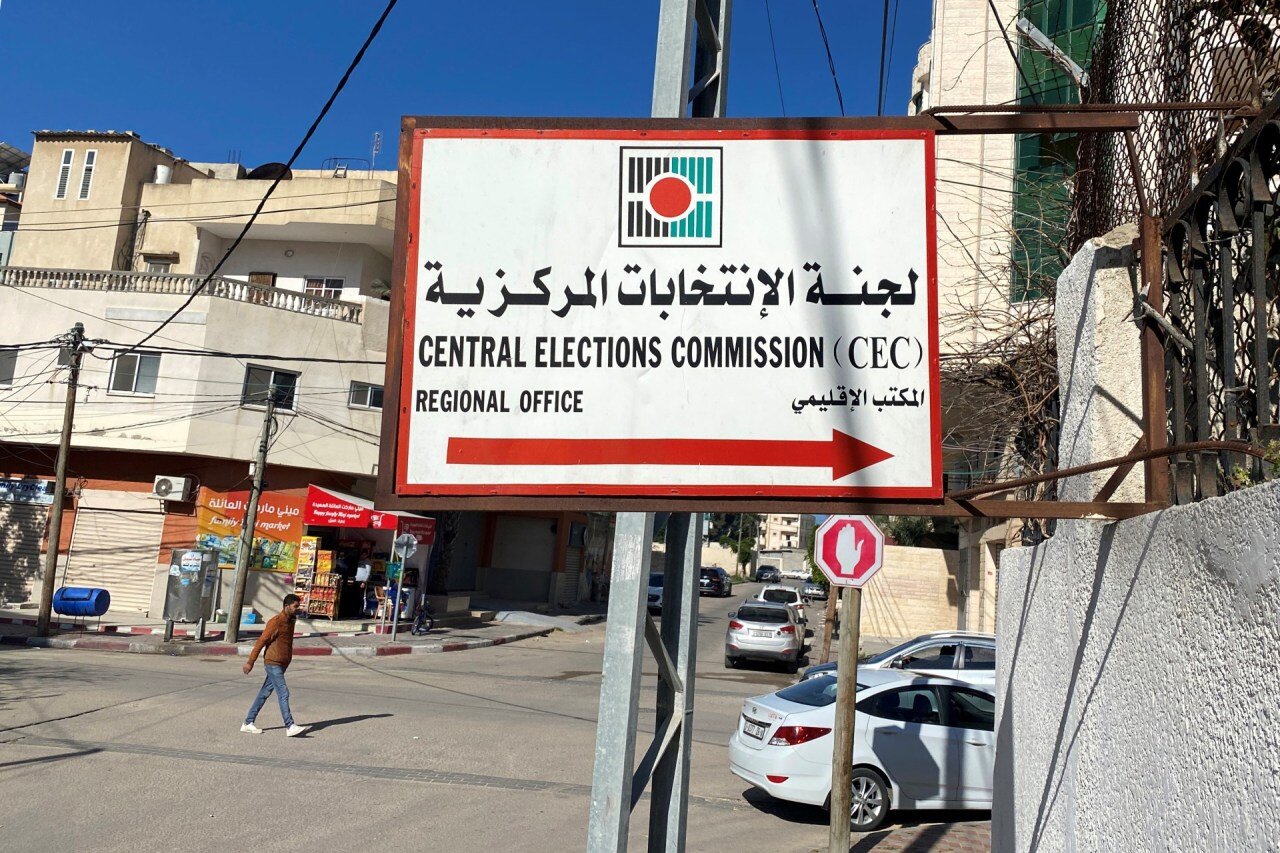
In the Palestinian case, the ballot box is the most important and sensitive of the three. Legislative elections, originally scheduled for November 28, 2026, have now been postponed until September 11, 2027, when presidential elections are also set to take place. The delay extends an electoral freeze that has left Palestinians without legislative elections since 2006 and presidential elections since 2005. The two votes would mark a significant moment in Palestinian political life, offering a long-overdue opportunity to renew the leadership’s mandate amid deep divisions and mounting public frustration.
Palestinian elections face a fundamental question that goes beyond who will win and who will lose, particularly amid reports of political challenges and alliances now taking shape. The more important question is: Can Palestinians conduct an electoral process in a political geography that is enduring a genocidal war, settler terrorism, and Zionist occupation?
The success of any Palestinian election should not be measured by opening polling stations and announcing the results. It begins with ensuring that elections are held free of Zionist terror and occupation. The reason cited for the reported delay is “that the anticipated political, security and economic conditions, on which the scheduling of the legislative elections for 28 November, 2027 was based, have not materialized.” This is hardly surprising.
Some analysts argue that there is an opportunity for Palestinians that goes beyond simply electing a new legislative council. It is an opportunity to rebuild a new political compact based on reforming the institutions of the Palestine Liberation Organization, redefining the role of the Palestinian Authority, uniting Palestinians at home and abroad, and developing a clear national strategy for confronting the occupying regime.
To do that, Palestinians need genuine global recognition and representation. As of last week, that was supposed to be the case. Now the Zionist regime is trampling on this too.
This is where the three elections intersect. Netanyahu may lose without the regime’s policy changing its treatment of the Palestinians. The Republican Party may lose control of one of the chambers of Congress without U.S. military support for the regime coming to an end. And the Palestinian people may proceed without a new political map emerging.
The U.S. and Israeli elections will produce little for Palestinians and the wider region. Recent history demonstrates that sustainable peace cannot be achieved by a change of policymakers in Washington or Tel Aviv.
Disclaimer : This story is auto aggregated by a computer programme and has not been created or edited by DOWNTHENEWS. Publisher: tehrantimes.com