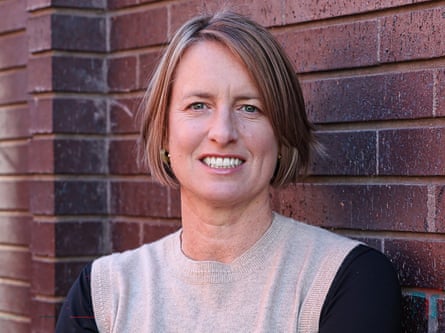
With looming job cuts and an ongoing pay dispute, there has not been much to smile about for BBC journalists working in “the pit” – their pet name for the newsroom deep in the belly of New Broadcasting House.
On Monday afternoon, however, they were greeted by a grinning figure conducting a tour of the news floor. She was Rachel Jupp, the BBC’s newly appointed director of news and current affairs. Jupp engaged in a series of polite if brief conversations with her new troops.
It was a small but welcome gesture for a newsroom that had been desperate for a sense of direction from a new, permanent leader. The shock resignation of Deborah Turness, Jupp’s predecessor, was almost a year ago. Frustration has grown among journalists awaiting a grand plan.
“We just need a set direction of travel,” said one. “A north star, as startups call it. Lay out a timeline and tell everyone what cuts are coming and what needs to be done.”
Beyond the small talk, figures at all levels of the corporation acknowledge that Jupp faces a huge task. Running the world’s most scrutinised newsroom is a tall order at the best of times, even without the turmoil over pay and job losses.
Jupp takes the helm at BBC News as it is gripped by an angst-ridden debate about the place of its journalism in an increasingly digital world. It is one she has been tasked with resolving.
It is a world in which the BBC’s hallmarks of impartiality and authority – and focus on television and radio news – are pitted against content creators and a myriad of other established media brands converging to reach audiences via a handful of smartphone apps.
Inside BBC News, a series of announcements about show closures and strategy shifts have fuelled a “clicks v public service” debate. There are competing views over how the BBC should adapt its content for commercially driven digital platforms favoured by younger audiences – while sticking to the corporation’s founding principles of informing the public.
“I’ve heard the DG [director general, Matt Brittin] and [the deputy director general, Rhodri Talfan Davies] have been saying to people that they want the new director of news to restore the authority of BBC News,” said Roger Mosey, the former head of BBC TV News.
“I think that’s what a lot of us have been arguing for. BBC News does all sorts of good things and it’s generally an impartial and fair service. But it hasn’t been able to translate the authority of the really big brands of TV and radio into an online world.”
Those concerned that the corporation is at risk of losing its bearings point to a BBC website piece about penis fillers or recent social videos of reporters holding cheap mics, content creator-style. Meanwhile, they fear flagship shows such as the Today programme or the 10 O’Clock News, which continue to attract large audiences, have not been nourished or championed online.
Those pushing for a faster embrace of new platforms say it is clearly where audiences are heading and the broadcaster’s requirement to cater for everyone is at the heart of its public service remit. As one BBC figure put it: “Rachel’s task and challenge is to show how we can do what every news organisation is having to do – go digital, without becoming a value-free click factory.”
Above all else, Jupp’s willingness to take on this precarious task is why she was handed such a big promotion.
While the BBC’s relatively new director general, Matt Brittin, inherited many of the cuts being announced across the BBC, Jupp’s appointment was in his hands. At an all-staff call this week, he said he wanted the organisation to be “a bit more Elvis – a little less conversation, a little more action”. In Jupp, Brittin believes he has found one of his best Elvis impersonators, willing to make changes for the digital age.
Jupp triumphed from a shortlist of four candidates. There was a recognition that one of her competitors, Jonathan Munro, had managed to avoid any major crises as the interim head of BBC News – an achievement not to be underestimated, given recent criticisms.
However, the job came down to Jupp and Esme Wren, the editor of Channel 4 News. Wren was recognised as a formidable champion of journalists and journalism, but the conclusion was that the BBC’s news machine produces plenty of high-quality, award-winning material.
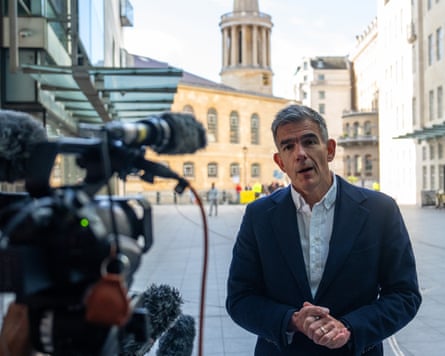
While Jupp had not run a big organisation before – something Brittin had been looking for – the director general believed Jupp had two important qualities. The first was solid editorial judgment – a requirement after bruising criticisms over a Gaza documentary that had to be pulled and a spliced-together Trump speech that led to a multibillion-dollar lawsuit.
Jupp had been tasked with overseeing the BBC’s documentary and long-form journalism content after the Gaza row, so was seen as someone who would safeguard the BBC’s authority as it pushed deeper into digital content.
Her second quality was an appetite for transformation, the buzzword for the mammoth task of translating the BBC’s journalism on to new digital platforms without losing its authority – seen, at best, as a work in progress. Jupp has also been at the heart of the BBC’s use of generative AI, and Brittin – a former Google executive – believes this can have a bigger role if used in the right way.
It also helped that Jupp could start almost immediately, given the pace at which a cash crisis is forcing the BBC into big, strategic choices.
Jupp also begins her tenure with another underrated advantage: she is genuinely liked by close colleagues and respected by journalists who have worked with her in previous roles at Channel 4 News, Newsnight and Panorama.
As her tour of the pit illustrated, starting with the support of her staff is seen as essential as she embarks on a transformation of BBC News that will include some difficult and unpopular decisions.
Disclaimer : This story is auto aggregated by a computer programme and has not been created or edited by DOWNTHENEWS. Publisher: theguardian.com