TEHRAN — Iran’s top security official says Tehran will determine the outcome of its confrontation with Washington, rules out a return to previous diplomatic norms and warns of potential retaliation against US assets in the event of renewed aggression.
Major General Mohsen Rezaei, secretary of Iran’s Supreme National Security Council (SNSC), has warned that the United States will face the same fate as previous powers that attempted to subjugate Iran, saying even stronger empires ultimately disappeared into the “dustbin of history.”
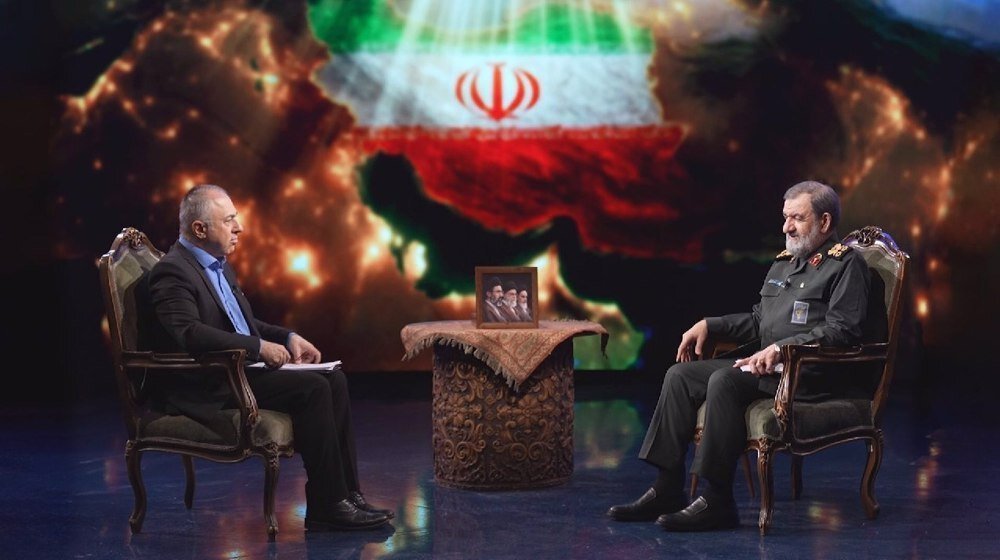
In an exclusive interview with Press TV on Saturday, Rezaei said Washington had suffered repeated defeats in its confrontation with Iran and had increasingly resorted to economic warfare, which he characterized as a response to its failure to achieve its objectives through military pressure.
He stressed that Iran, rather than the United States, would determine when the confrontation ends, adding that Tehran would continue to resist until its demands were met.
Addressing the US military presence in West Asia, Rezaei pointed to the withdrawal of American forces from Iraq as evidence, in his assessment, of Washington’s failure to impose its military agenda on the region. He described the development as vindication of Iran’s longstanding opposition to the deployment of US forces in the region.
Rezaei also said more than 30 million Iranians had registered for the Janfada (Sacrifice for Iran) campaign, which was intended to mobilize volunteers prepared to take up arms in the event of US aggression.
On diplomacy, the SNSC secretary said Iran would not return to its previous diplomatic norms, while emphasizing that Tehran was not abandoning diplomacy altogether.
His remarks signaled that, although diplomatic engagement remained an option, Iran’s approach would be shaped by its assessment of the confrontation with Washington and the need to secure its demands.
Rezaei also warned that renewed US aggression could expose American assets to retaliation, including key data systems and artificial intelligence sensors.
Rezaei invokes ancient Rome to counter ‘civilizational war’ narrative
In a separate part of his remarks, Rezaei invoked the defeat of Roman forces by the Sasanian Empire under King Shapur I to challenge the framing of the confrontation with Iran as a civilizational war by US officials.
The reference draws on a significant episode in Iranian history. In 260 AD, Shapur I defeated the Roman emperor Valerian at the Battle of Edessa and captured him, marking a major setback for Rome in its eastern campaigns.
By invoking that episode, Rezaei placed the current confrontation within a broader historical narrative of Iran’s resistance to foreign powers and attempts at domination.
Hormuz tensions and the dispute with Washington
Rezaei also identified Washington and its regional allies as central to the tensions surrounding the Strait of Hormuz, one of the world’s most strategically important maritime corridors for oil and gas shipments.
Iran’s restrictions on passage through the strait followed the latest round of US-Israeli military aggression. The disruption affected a critical route for international energy trade and contributed to heightened concerns over global oil and energy supplies. The resulting market pressures also prompted the United States and the International Energy Agency (IEA) to draw on strategic reserves on multiple occasions.
Following the signing of an Iran-US memorandum of understanding in Islamabad in June, Tehran reopened the waterway. Iran subsequently said Washington had breached the understanding by imposing a blockade on Iranian ports, prompting the country’s armed forces to close the maritime corridor again.
The dispute over the strait has become a major point of contention between Tehran and Washington, linking military developments and diplomatic commitments to the security of international shipping and global energy markets.
Rezaei’s remarks underscored Tehran’s position that any resolution to the confrontation must take account of Iran’s security demands and its role in the region. His comments also made clear that Iran does not regard a return to the previous diplomatic framework as inevitable, even as it continues to leave the door open to diplomacy.
Disclaimer : This story is auto aggregated by a computer programme and has not been created or edited by DOWNTHENEWS. Publisher: tehrantimes.com