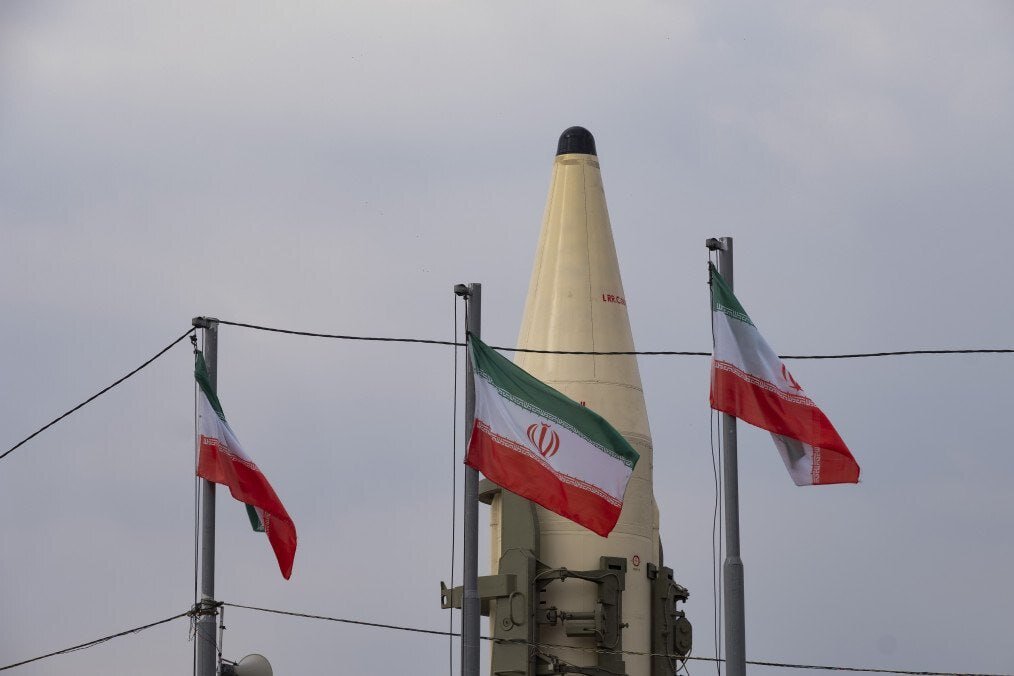
TEHRAN – Donald Trump says he went to war to ensure Iran never gets the bomb — dozens of times and counting. Yet the war fought in the name of non-proliferation has acted like a boomerang: far from closing Iran’s path to the bomb, it may have pushed Tehran closer to it.
The US and Israel say they attacked Iran twice to prevent it from acquiring a nuclear weapon. Yet at the time of both attacks, both US intelligence and the International Atomic Energy Agency (IAEA) assessed that Tehran was not building one.
No evidence has emerged that Iran is currently racing to build a bomb. But a growing number of Western analysts argue the wars themselves have strengthened Tehran’s incentive to do so — while inside Iran, calls to revise the nuclear doctrine and reconsider membership in the Non-Proliferation Treaty (NPT) have moved from the margins to the mainstream.
The result is the central paradox of the current confrontation: a preventive war that may have produced the very outcome it claimed to prevent.
The justification vs. the assessment
Washington’s stated rationale has been consistent: Iran must not be allowed to obtain a nuclear weapon.
But two key institutions directly contradicted the claim that Iran was actively pursuing one.
US intelligence: Director of National Intelligence Tulsi Gabbard testified to Congress in March 2025 that Iran was not building a nuclear weapon and that Ayatollah Seyyed Ali Khamenei had not reauthorized the weapons program suspended in 2003. A leaked US intelligence assessment reported by News24 on March 18, 2026, after the US operation known as Midnight Hammer, again found “no effort to rebuild enrichment” and concluded that Tehran had not moved to weaponize.
The IAEA: Director General Rafael Grossi said on June 19, 2025, amid the first war: “We found no indication of an active, systematic plan to build a weapon in Iran.” He added that military strikes would only “delay the indispensable diplomatic work” needed for long-term assurance that
Iran does not acquire a weapon.
In other words, both attacks were launched not against an ongoing weaponization program documented by inspectors or spies, but against capabilities and intentions that Washington and Tel Aviv insisted could turn into one.
The second war removed a barrier: the fatwa
For two decades, Iran’s principal political-religious barrier to a bomb was explicit: a fatwa by Ayatollah Seyyed Ali Khamenei declaring the production, stockpiling and use of nuclear weapons haram (forbidden).
Iranian officials repeatedly cited the fatwa as the reason Iran had the technical capacity but not the intent. Former Foreign Minister and former Atomic Energy chief Ali Akbar Salehi said in February 2024 that Iran possessed “all the pieces” needed for a weapon but had not assembled them — a restraint Tehran attributed to the Leader’s ruling.
Ayatollah Seyyed Ali Khamenei was martyred in the joint US-Israel airstrike on the morning of February 28, 2026, in his office in central Tehran.
His successor, Ayatollah Seyyed Mojtaba Khamenei, has made no clear public statement on the nuclear fatwa. Foreign Minister Abbas Araghchi acknowledged the uncertainty in an interview with Reuters on March 18, 2026, saying Iran’s position against weapons would not undergo “significant change,” but adding that fatwas depend on the issuing jurist and that he could not yet judge the new Leader’s jurisprudential view. Any change, he said, would depend on the new Leader.
But that key religious prohibition that underpinned this doctrine for 20 years no longer exists — removed by those who coveted Iran’s collapse and US domination over Iran.
In Washington and Tel Aviv, a quiet consensus: the bombing is making the bomb more likely
The most striking warning came, paradoxically, from inside Israel’s own intelligence establishment. Danny Citrinowicz, who until recently ran the Iran branch of Israeli military intelligence, told The Times of Israel last summer that kinetic action would push Tehran “to cross the Rubicon on the nuclear file.” The war, he said, would not prevent an Iranian bomb. It would accelerate it.
Citrinowicz was not alone, and what followed over the next year was something rare in the normally fractious world of arms control: agreement. From different capitals, disciplines and politics, analysts began describing the same mechanism — a state under existential bombardment, watching its declared, inspected sites destroyed, rationally concluding that only an undeclared deterrent could prevent the next round.
At Carnegie, James Acton argued that the premise of “obliteration” was an illusion. Iran, he noted, had almost certainly dispersed fissile material and key equipment before the strikes, and with what it retained it could, if it ever chose weaponization, move “in less than a year, even significantly less than a year.” Eric Brewer, a former US intelligence analyst now at the Nuclear Threat Initiative, put it more bluntly to Reuters in May: as far as anyone knows, Iran still has all of its nuclear material, much of it in places American munitions cannot reach.
The institutional voices followed. Daryl Kimball of the Arms Control Association observed that the campaign had exposed the ceiling of force: bombing could neither erase knowledge nor permanently eliminate capability. Ellie Geranmayeh of the European Council on Foreign Relations noted that capability was “largely still in place,” and that without inspectors — themselves now sidelined by war — existing stocks could be enriched to weapons grade with alarming speed. Even the press that had initially cheered restraint turned sombre. Time warned that destroyed centrifuges can be rebuilt but a changed strategic calculus cannot be undone; The Guardian editorialised that prevention by bombardment, absent any diplomatic endgame, historically hardens proliferation incentives rather than softening them.
The most systematic verdict arrived in August 2026 from Defense Priorities in Washington. In an explainer titled “A Security Dilemma Made Worse,” it concluded that by waging a war that threatened the very survival of the Iranian state, the US and Israel had strengthened Tehran’s motive to acquire the one weapon that might deter a third war. Proliferation was not inevitable, it wrote — merely more likely than before the strikes. Trita Parsi at the Quincy Institute and Ali Vaez at the International Crisis Group, neither of them hawks, reached the same destination by a shorter road: Tehran’s determination to obtain a deterrent, they wrote, had been “dramatically increased,” and rebuilding from under the rubble with an explicit weapons goal was now thinkable in a way it had not been before.
In short, deterrence theory was working — but in reverse. A country that finds conventional deterrence insufficient, and international verification incapable of protecting it, does what threatened states do: it reconsiders.
In Tehran, the unsayable is now said aloud
For years, even raising the question of a bomb in public in Iran was taboo. The fatwa of Ayatollah Seyyed Ali Khamenei stood like a wall around the debate: possession itself was forbidden, and that was the end of it. The wall is gone now, and the debate that has rushed into its place would have been unimaginable two years ago.
It began as a whisper. In October 2024, Kamal Kharrazi — the urbane head of the Strategic Council on Foreign Relations — said calmly that if an existential threat emerged, Iran would revise its doctrine. On April 1, 2026, during the US-Israel war against Iran, his house in Tehran was struck by US-Israeli aircraft. His wife was martyred in the attack and he was severely wounded, succumbing to his wounds eight days later. The capability, he noted, existed. Only the Leader’s ruling stood in the way. That same month, 39 members of parliament wrote privately to the Supreme National Security Council asking for precisely such a revision.
Then came the first war, and the whispers grew louder. Ali Shamkhani, the veteran security official martyred on the first day of the second war, on February 28 of this year, appeared on state television in October 2025 and said, with the bluntness of a man who felt history had vindicated his doubts, that had he known then what he knows now, he would have supported building the bomb in the 1990s. By September 2025, the private letters had become a public petition: more than seventy MPs wrote to the president and the Council declaring an arsenal “necessary for nuclear deterrence” and openly asking for the fatwa to be reinterpreted — production for deterrence, they argued, was not the same as use.
What is remarkable is not merely the content but the setting. The argument is now made on camera, in parliament, and from the Friday pulpit. When Hojjatoleslam Haj Ali Akbari told worshippers in Tehran on October 9 that the nuclear program “belongs to the Iranian nation” and that there is a domestic demand to revise membership in the NPT, no one in the establishment criticized him. A month earlier, Nezamoddin Mousavi, a former MP close to the Revolutionary Guards, had told Ensaf News what many in the system now say privately: ambiguity did not prevent war.
It was time, he said, to review the doctrine, the worth of the NPT, and the meaning of deterrence after the strikes on Iran’s own facilities.
Foreign Minister Abbas Araghchi still holds the official line — no significant change, he told Reuters in March — but even his reassurance contained the seed of doubt. Fatwas, he acknowledged, belong to the jurist who issues them, and the new Leader, Ayatollah Seyyed Mojtaba Khamenei, has not yet spoken. In Tehran today, that silence is itself the story.
A 47-year-old dream turned nightmare
Seen from Tehran, the two campaigns were never really about centrifuges. The US and Israel knew better than anyone that Iran was not pursuing a nuclear weapon — their own intelligence services and the IAEA had told them so. What they pursued was a 47-year-old dream: regime change in Iran.
The calculation was that a heavy air campaign, combined with inciting street unrest, would finally realize that old fantasy. But aggression still needs a pretext. And what better pretext than the nuclear file — an issue they had spent more than two decades turning into a lever for global anti-Iran propaganda and for imposing wave after wave of sanctions?
Iran stood firm. The dream did not come true. Instead, it has curdled into a nightmare — one whose ultimate cost for Iran’s enemies is still unknown, and still growing. The wars meant to foreclose Iran’s nuclear options have instead opened the most serious national debate in its history about whether those options should be reconsidered, and have left Washington and Tel Aviv facing an Iran more convinced than ever that only its own strength can guarantee its survival.
Disclaimer : This story is auto aggregated by a computer programme and has not been created or edited by DOWNTHENEWS. Publisher: tehrantimes.com