
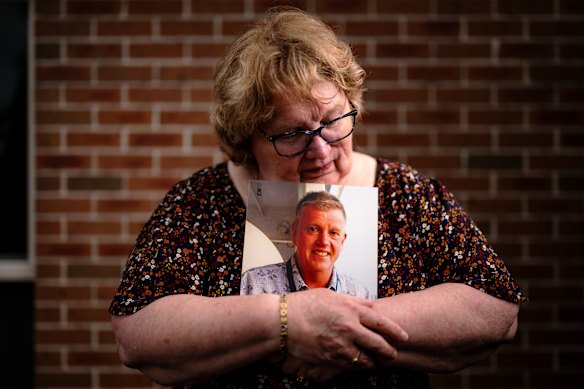
A gaping hole in laws designed to protect first responders has left grieving families thousands of dollars out of pocket and police officers without proper recognition.
In old gumboots, daggy cotton overalls and rubber gloves, Mark Bransgrove dug through the charred remains of buildings and belongings, looking for the cause of the carnage around him; like a bloodhound, he followed his expertly trained nose through the destruction, painstakingly sifting through the remnants of lives and property lost.
Trying to find a fire’s ignition point, he would bend down, scoop up handfuls of scorched debris, bring them to his face and inhale. In the 1980s and 1990s, he and fellow crime scene investigators were trained that the best way to find the start and cause of a blaze was to follow your nose; the sharp scent of petrol told him he was investigating an arson. Something more subtle called for extra digging. Face masks, which could hinder their ability to identify possible causes, weren’t part of the standard-issue uniform; when the communal storeroom ran out, investigators bought their own.
In early 2024 – almost seven years into retirement – a trip to the toilet rang alarm bells for the former detective sergeant: there was blood in his urine. He was alert to the health risks his career had probably posed and, within weeks, testing confirmed his fears.
He was diagnosed with stage four urothelial carcinoma, a cancer of cells lining the bladder that can be caused by prolonged exposure to harmful chemicals. “It’s all through you,” an oncologist said. Bransgrove’s work had caught up with him.
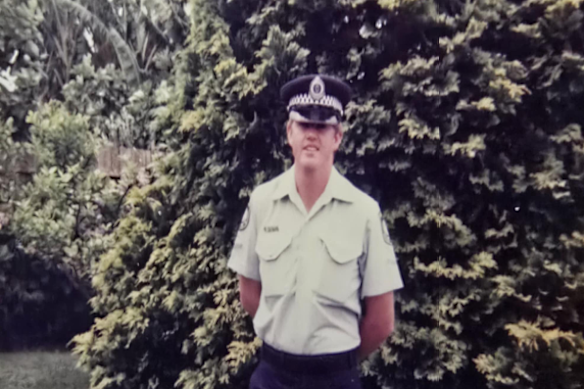
Well before cancer claimed Bransgrove in July last year, he and his family were sure that almost 20 years of combing through crime scenes had caused his illness; a report by Sydney occupational hygienist Alan Rogers found his cancer was likely to have been a result of his sustained exposure to carcinogenic fire residues.
Eighteen months of treatment had cost him and his wife, Elizabeth, $130,000. The Bransgroves also encountered a gaping hole in NSW legislation designed to protect first responders that has left grieving families out of pocket and without proper recognition of the toll of their loved ones’ service.
Under the Workers Compensation Act, firefighters – paid or volunteer – who develop any of a listed 22 cancers are presumed to have developed the illness due to their work, including from exposure to chemicals and toxic residue.
That presumption, however, does not cover police officers tasked with examining the same crime scenes as firefighters and they are required to prove their work caused their illness. For some in the depths of suffering, the burden of proof is an insurmountable obstacle.
In the 15 months since her husband’s death, Elizabeth has been advocating for recognition of officers like him who died as a result of protecting the community. Now, with the backing of the state’s police union, she is lobbying the state government to right wrongs of the past and legislate changes – “Mark’s Law” – to put the men and women in blue on a level playing field.
NSW Work Health and Safety Minister Sophie Cotsis declined to be interviewed about proposed changes to presumptive cancer laws. “We will continue to monitor this closely and are open to hearing from workers, their families and unions about ways in which the system can be improved,” a government spokesperson said in response to questions.
“Mark’s life has got to matter,” Elizabeth tells this masthead. “His life counts.”
A cancer ‘cluster’
When NSW Police overhauled its policies in the early 2000s and introduced additional protective equipment for forensics officers, Bransgrove had spent almost 20 years exposed to toxic chemicals. As officers who moved into other areas of policing avoided the same prolonged exposure, veteran colleagues spent decades unaware their work was slowly killing them.
In mid-2024, Stephen Horn, the state’s longest serving crime scene investigator, died of cancer. The detective senior sergeant had retired in 2018 after more than four decades examining sites, including fires. When Bransgrove received his own diagnosis months earlier, Horn, who had trained him in the 1980s, was among the first former colleagues he shared the news with. “That’s the same cancer I’ve got,” Horn told him. “It’s a bastard of a cancer.”
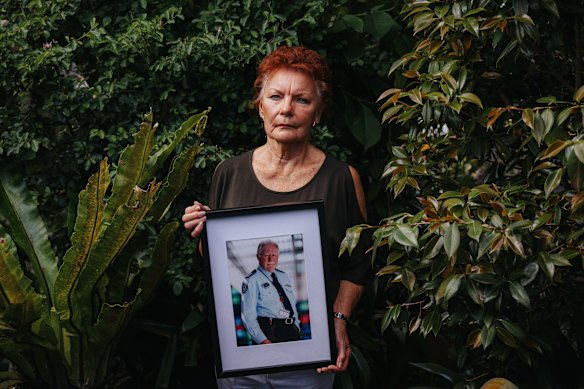
For both men, the end was excruciating. “The stoicism shown in your battle against such an insidious disease, and without complaint, was nothing less than admirable,” Brenda Horn said of her husband in a tribute at his funeral. “Dedicated to your job after a long career of public service and caring about others, you deserved so much more than what you endured.” Unlike Bransgrove, though, Horn’s death has not been deemed to have been caused by his decades of exposure.
“He’d be the first one to go into a scene, and he’d be the last one to come out,” his widow tells this masthead at her Sydney home. “He would have been exposed to anything and everything.”
Two other cases involving former colleagues with similar diagnoses point to a cancer cluster within NSW Police’s fire investigators, Rogers’ report concluded. For firefighters, because of exposure to carcinogens and toxic residue, the risk of developing bladder cancer is 16 per cent higher than for a member of the public, according to Rogers’ findings; for police fire investigators, the risk is up to 700 per cent higher. Rogers – a friend of Bransgrove – found his case and those of former colleagues “strongly support the finding of a high increased incremental risk of bladder cancer other than could be expected purely by way of chance”.
Overdue recognition
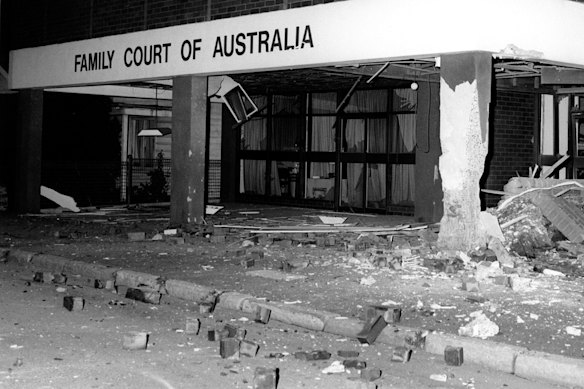
When Bransgrove was diagnosed, he and his family were sure his work was the cause of his cancer. Being able to prove it, though, was a different story. As her husband’s health deteriorated, Elizabeth, determined to have the cost of his service recognised, compiled a record of his career and probable instances of exposure. A 26-page dossier, compiled with the help of close friends and former colleagues, outlined decades of jobs he’d attended, including some of the state’s most notorious crimes, to present his case.
Knowing what Horn and other former colleagues had faced, Bransgrove was determined to be recognised. As the end neared, though, hope faded; he was convinced justice would never be done. In July last year, the phone rang. The police force, having reviewed his records and Rogers’ report, agreed: Bransgrove’s work was killing him.
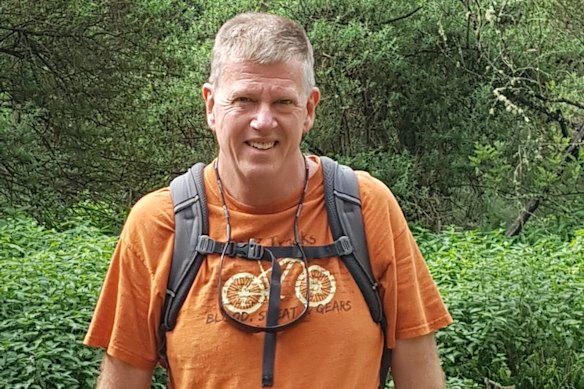
“I remember him crying because he couldn’t believe it,” Bransgrove’s daughter, Kate, says. “I remember seeing his face, and you could see the emotion that he built up for so many years.” Finally, Bransgrove could rest. He died five days later.
When Horn was diagnosed with bladder cancer, Brenda, too, suspected his work had contributed to his illness. But her husband, a 50-year policing veteran who had seen the worst of humanity, accepted his fate without complaint. Bransgrove’s unprecedented recognition was still four years away, so there was no blueprint.
She was unwilling to jeopardise her family’s financial security to pursue costly legal action or compensation claims – even if she believed her husband’s work had killed him, how could she prove it? And his death was imminent. “I knew it was coming, but I just couldn’t see life beyond it,” Brenda says. “It’s like losing half [of] yourself. You’re not complete.”
She hopes the changes Elizabeth Bransgrove has been advocating for will finally bring overdue recognition for the cost of her husband’s service. Acknowledgement goes beyond repaying the thousands spent on medication. It is simply the right thing to do, she says. “It’s only fair. The police are the ones who have got to go in to … pick up the pieces, and they’re exposed to exactly the same sort of things, and then even more because they go to other things that perhaps firefighters don’t go to.”
Under the Workers Compensation Act, firefighters are presumed to have developed bladder cancer – the illness that killed Bransgrove and Horn – as a result of their work, if they served on-scene for at least 15 years. Bransgrove worked in crime scene investigations for at least 20 years; Horn spent 44 years as a forensics officer.
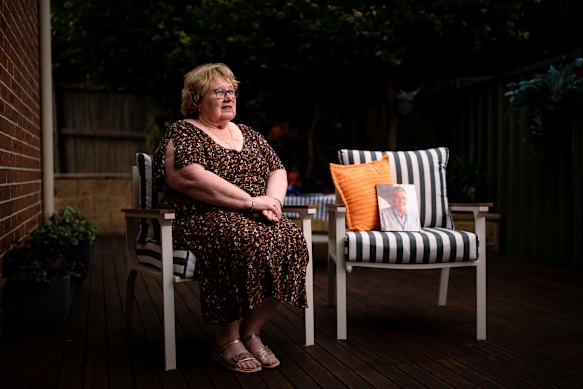
To Brenda Horn, protecting first responders, in even in death, is the NSW government’s responsibility. “It’s the right thing to do,” she says. “Not that that’s always happened, but it’s something that’s certainly owed to them. It’s a duty of care – a proper duty of care that should be owed to them.”
In coming weeks, Elizabeth Bransgrove has meetings with Police Commissioner Mal Lanyon, Premier Chris Minns and Police Minister Yasmin Catley. She harbours no anger towards the police force, which she says has indicated its support of her cause. “No one knew,” she says. But after months of pushing for change, she is reaching the end of her tether. “I feel like it’s opening up old wounds again, and I’m reburying him again, and I don’t know how much longer I can keep doing that,” she says. “I want to know what my life’s about, and I want closure.”
Police Association of NSW president Kevin Morton says the union wants urgent amendments made to the Workers Compensation Act to protect officers. Police fire investigators, he says, are exposed to the same dangers as firefighters without any of the safeguards.
A lasting legacy
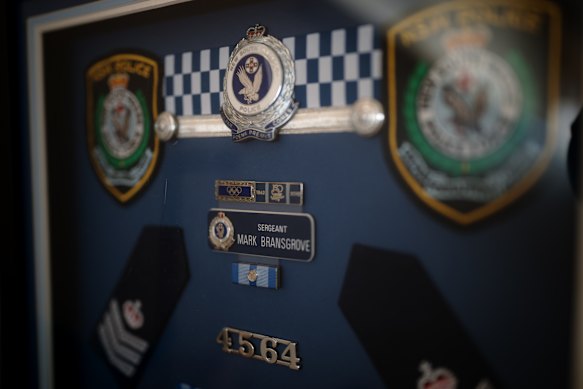
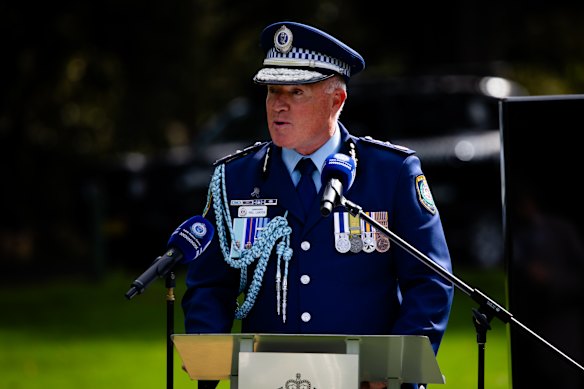
On September 29, there was permanent recognition for Mark Bransgrove as police paused nationally to commemorate fallen comrades on National Police Remembrance Day. His name was etched into policing history and onto NSW Police’s wall of remembrance in Sydney’s CBD. “Mark devoted three decades to excellence in police forensics, a field where the risks are often unseen, but very real,” said Lanyon, who worked alongside Bransgrove at several crime scenes. “His illness was determined to be a consequence of his work.”
Stephen Horn’s name should be etched on the same wall. “I think it’d be proper recognition of his service,” his widow says.
Recognition as the first forensics officer deemed to have died from his work was significant for the Bransgrove family, but their work is far from over. “I just want to see fairness for the police,” Elizabeth says. His legacy is not one of anger, his loved ones say, but change. “I don’t want anyone to go through what Mark went through,” says close friend and former colleague, Lyle van Leeuwen. “We can’t stop other people getting sick, but if we can stop them having to fork out hundreds of thousands of dollars for treatment, his death’s not in vain.”
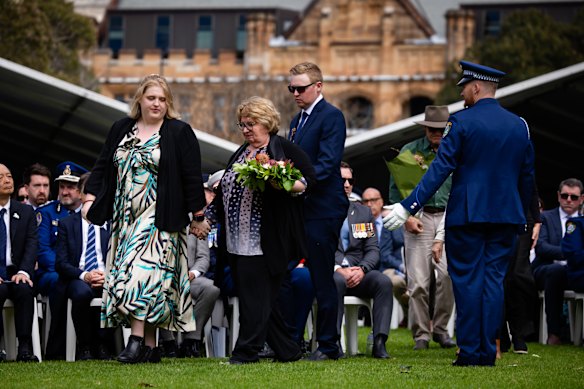
Bransgrove’s son, John, says his father would take the shirt off his back to clothe a stranger. He was kind, loyal and believed in anyone willing to have a crack. “He was one in a million,” Elizabeth says. “I was blessed to have him in my life.” In death, he remains deeply respected by former colleagues. When the Bransgroves opened their home for former colleagues to say goodbye, officers lined up at the door. Lanyon’s predecessor, Karen Webb, who also worked with him, attended his funeral – indicative, van Leeuwen says, of how many lives he affected.
Brenda Horn believes that her husband, who insisted on a civilian funeral and ended a life of service with little fanfare, is owed more. “He wanted to bring justice to those where something had happened,” she says. “He just gave everything. He wanted to do the best he could.”
Start the day with a summary of the day’s most important and interesting stories, analysis and insights. Sign up for our Morning Edition newsletter.
Disclaimer : This story is auto aggregated by a computer programme and has not been created or edited by DOWNTHENEWS. Publisher: www.smh.com.au



