TEHRAN – The costs and risks of Syrian intervention in Yemen could begin to mount from the moment a decision is made.
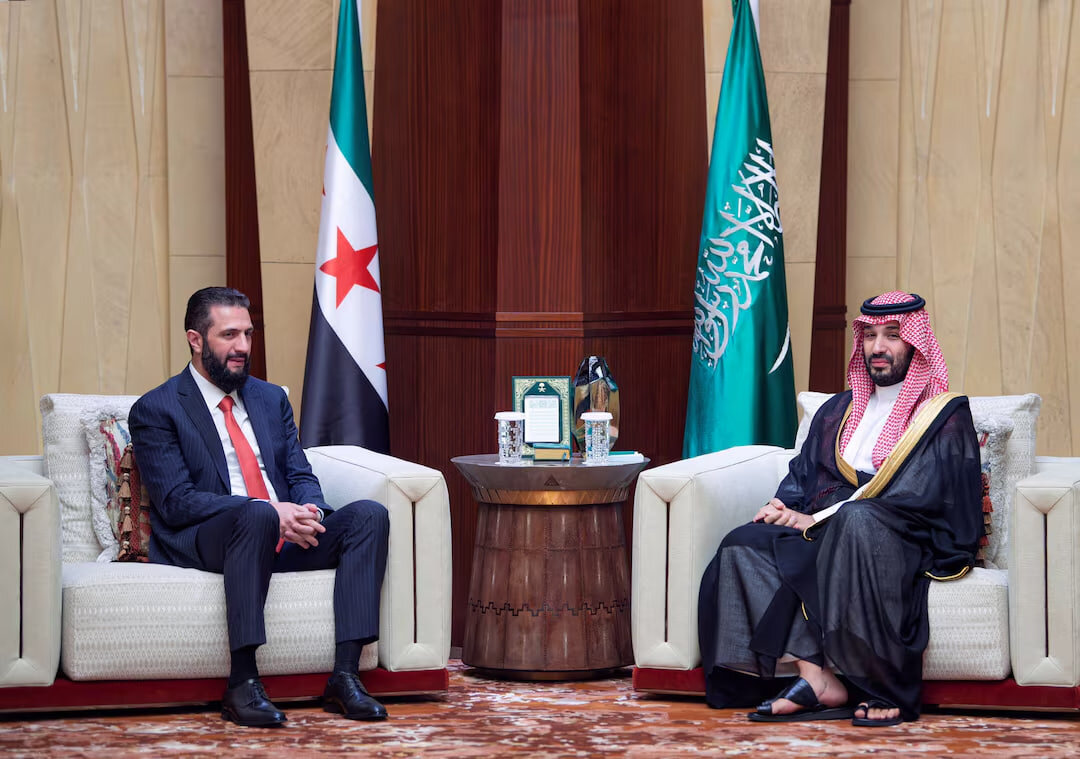
Following Syrian President Ahmad al-Sharaa’s visit to Riyadh a few days earlier, reports on October 7, citing U.S. officials, said Saudi Arabia and Syria were discussing the possibility of deploying Syrian forces to Yemen to participate in military operations against the Sanaa government.
According to reports, between 10,000 and 20,000 soldiers could be sent, with the 90th and 84th Divisions among the formations under consideration. Al-Sharaa was reportedly seriously weighing the proposal but has not yet made a final decision.
Meanwhile, Ahmad Mowaffaq Zaidan, an adviser to the Syrian presidency, denied that Riyadh had asked Damascus to send troops to Yemen. Syria’s official position has emphasized that rebuilding the country remains the priority and that any military cooperation must proceed through official channels and within existing bilateral frameworks.
The official denial, however, does not negate the existence of multiple reports suggesting that various options are under consideration. Nor do the leaks amount to a finalized agreement. To date, there has been no official announcement of a Syrian decision to intervene, no confirmed Saudi request, and no publicly disclosed agreement on the matter.
The significance of these reports, however, extends beyond the question of whether Syrian forces will ultimately be deployed to Yemen. The very fact that such a possibility is being discussed raises broader questions about the regional role Syria’s new leadership might assume, the limits of its commitments to its allies, and the criteria it will apply when deciding whether to intervene militarily beyond its borders.
Lebanon and Yemen: Why the different calculations?
The debate takes on greater significance when viewed alongside President al-Sharaa’s position on the possibility of intervening in Lebanon against Hezbollah, despite an explicit appeal from U.S. President Donald Trump himself. Al-Sharaa ruled out Syrian military intervention in Lebanon, arguing that such a move would require a request from the Lebanese government and that neither the Syrian army nor the country’s internal situation was ready for such a step.
These considerations are even more consequential in the case of Yemen. Geographically, Yemen is much farther away, and its conflict is exceptionally complex. Military intervention could expose Syria to security and political risks extending well beyond the battlefield.
If the Syrian army’s lack of readiness was sufficient reason to rule out intervention in Lebanon, what has changed to make sending thousands of troops to Yemen a viable option? Have Syria’s military capabilities improved sufficiently within a matter of months to support a large-scale overseas deployment? Or does Damascus’s relationship with Riyadh lead it to assess the risks differently?
What could Damascus gain and lose?
Reports suggesting that Syrian forces could be sent to Yemen are closely linked to the central role Saudi Arabia has played in supporting the new leadership in Damascus.
Riyadh has been one of al-Sharaa’s most prominent political backers and has helped advance Arab and international efforts to restore engagement with Syria. It has also played a role in efforts to lift sanctions and create conditions for the country’s reintegration into the region. For Damascus, relations with Riyadh extend beyond economic interests to encompass the pursuit of political and security support at an exceptionally sensitive stage of the country’s transition.
Damascus may view closer military cooperation with Riyadh as an opportunity to build political trust, secure economic and security assistance, and expand its room for regional maneuver. Through such cooperation, it could also seek to demonstrate that Syria is a capable partner able to contribute to a broader framework of Arab security, rather than simply a country seeking external assistance.
These potential benefits, however, are not enough on their own to justify sending thousands of troops into a foreign conflict. Military intervention abroad inevitably carries serious consequences. In addition to exposing Syrian forces to retaliatory attacks, it could expand the circle of Syria’s enemies and draw the country into a conflict whose outcome and terms of settlement it cannot determine independently.
The risks become even more pronounced if the proposed mission remains poorly defined.
Would Syria’s role be confined to protecting Saudi facilities and strategic sites, with its forces assigned clearly defined defensive responsibilities? Or would Syrian troops participate in offensive operations inside Yemen?
The distinction between these scenarios is fundamental. It would determine the legal, military, and political risks involved, as well as whether the mission would remain limited and time-bound or evolve into a prolonged military entanglement.
Domestic crises cannot be overlooked
These discussions are unfolding as Syria continues to face serious and deeply complex domestic challenges.
The integration of the “Syrian Democratic Forces” into state institutions has yet to produce a final settlement. Arrangements governing control, administration, and security in northeastern Syria remain contested, while ongoing protests and political mobilization in Hasakah Governorate underscore the depth and gravity of the unresolved issue.
The situation is even more precarious in the south, where much of Suwayda Governorate remains outside the Syrian state’s control. The far-reaching demands advanced by the community’s spiritual leader, Sheikh Hikmat al-Hijri, reflect the depth of the divisions confronting the government.
At the same time, Israel’s invasions and aggression continue across southern Syria. This is occurring alongside the resumption of excavation and fortification work aimed at completing the occupying regime’s so-called “Sufa 53” line inside Syrian territory, consolidating new realities on the ground at the expense of Syrian sovereignty.
Under these circumstances, the challenge is not simply to restore control over the territory facing aggression but to prevent the fragmentation of central authority in parts of Syria, at a time when the capital itself remains within the reach of the Zionist regime’s military aggression.
How, then, can a state facing a direct threat near its capital and struggling to preserve its territorial integrity in the south seriously consider sending thousands of troops to Yemen, thousands of kilometers away? What strategic imperative could justify diverting troops and resources to a foreign theater while the struggle to consolidate sovereignty within the country’s own borders remains unresolved?
Between a leak and a decision
Potential military involvement could offer Damascus an opportunity to strengthen its relationship with Riyadh and open the door to economic and political benefits. Yet these gains remain speculative unless they translate into tangible results, while the costs and risks of intervention could begin to mount from the moment a decision is made.
A state that has yet to complete the reconstruction of its army, economy, and institutions cannot afford to treat overseas military interventions as bargaining chips in a broader contest for regional influence.
Disclaimer : This story is auto aggregated by a computer programme and has not been created or edited by DOWNTHENEWS. Publisher: tehrantimes.com