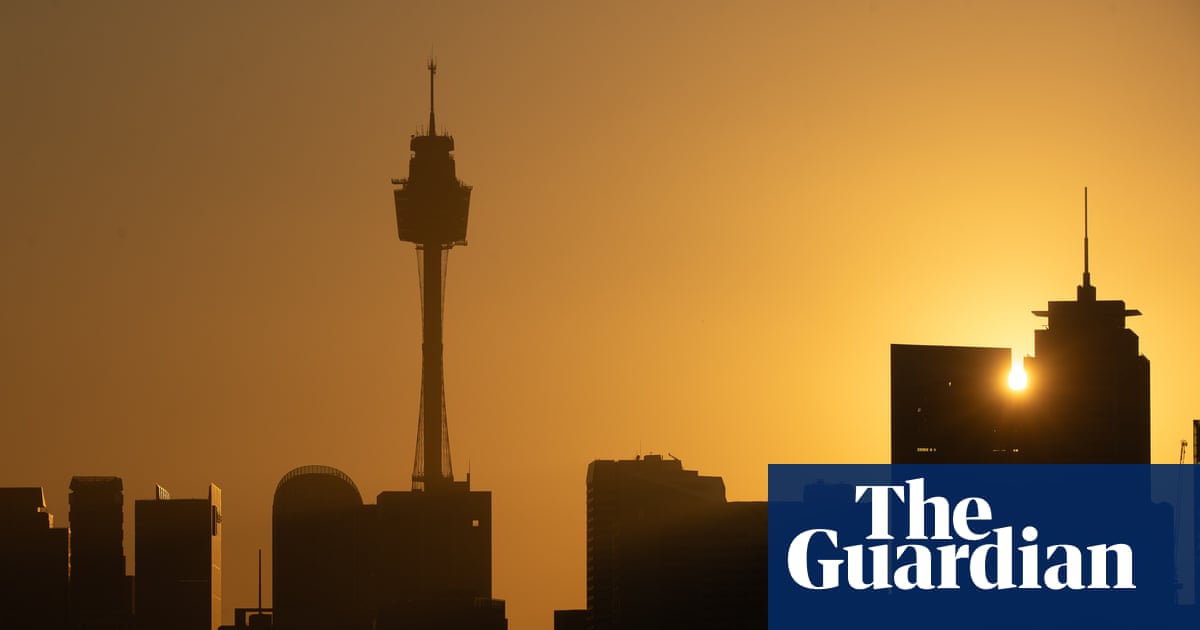
A total fire ban is in place across greater Sydney, with temperatures forecast to reach 37C in the city’s west.
The Bureau of Meteorology said Sydney faced extreme fire danger due to hot, dry conditions and the chance of thunderstorms, with little rainfall.
Temperatures would be “well above average” on Monday, the bureau added, with areas including Mount Druitt predicted to hit 37C about 2pm.
Temperatures would hover between 34C and 36C from north of Newcastle down to Wollongong, before a change later in the afternoon, alongside potentially damaging winds.
The NSW Rural Fire Service said the total fire ban applied to the greater Sydney and greater Hunter regions. Outdoor fires, solid fuel barbecues and activities such as grinding and welding were all prohibited.
“Fire danger is going to be right up today, and so people need to take care right through the day to make sure that they’re not doing anything with flames out in the open,” Trent Curtin, the commissioner of the NSW RFS, told ABC radio.
“We’ve got some severe thunderstorms expected across large parts of NSW.
“We don’t think we’re going to see a whole lot of rain with that today, so that dry lightning starting fires out in the west and through the middle parts of NSW is going to be a real problem.”
Curtin said the RFS had made good progress this year with hazard reduction burning due to favourable conditions.
“We’ve been able to do a lot more this year than we have in prior years, because the conditions have been a little bit better and we’ve made sure we’ve taken every opportunity,” he said.
Kristy McBain, the federal emergency management minister, on Monday touted the rollout of the AusAlert system.
It means compatible phones sound an alarm and receive a text message if there’s an emergency situation nearby. Only two states – Victoria and Western Australia – have signed on to the system so far.
“That will get much better protection for communities who are experiencing disaster,” McBain told ABC TV.
“Near real-time message not [reliant] on any one telco provider is a real gamechanger for emergency management.”
Monday’s extreme heat comes on the back of Australia’s second-hottest September on record, spurred by a strengthening El Niño. The bureau said average temperatures ranked in the top five Septembers for every state.
“There’s only one clear driver of this and that’s climate change,” climate scientist Dr Linden Ashcroft said earlier this month.
Disclaimer : This story is auto aggregated by a computer programme and has not been created or edited by DOWNTHENEWS. Publisher: theguardian.com