The prayer may be over, but the flowers do not have to become waste.
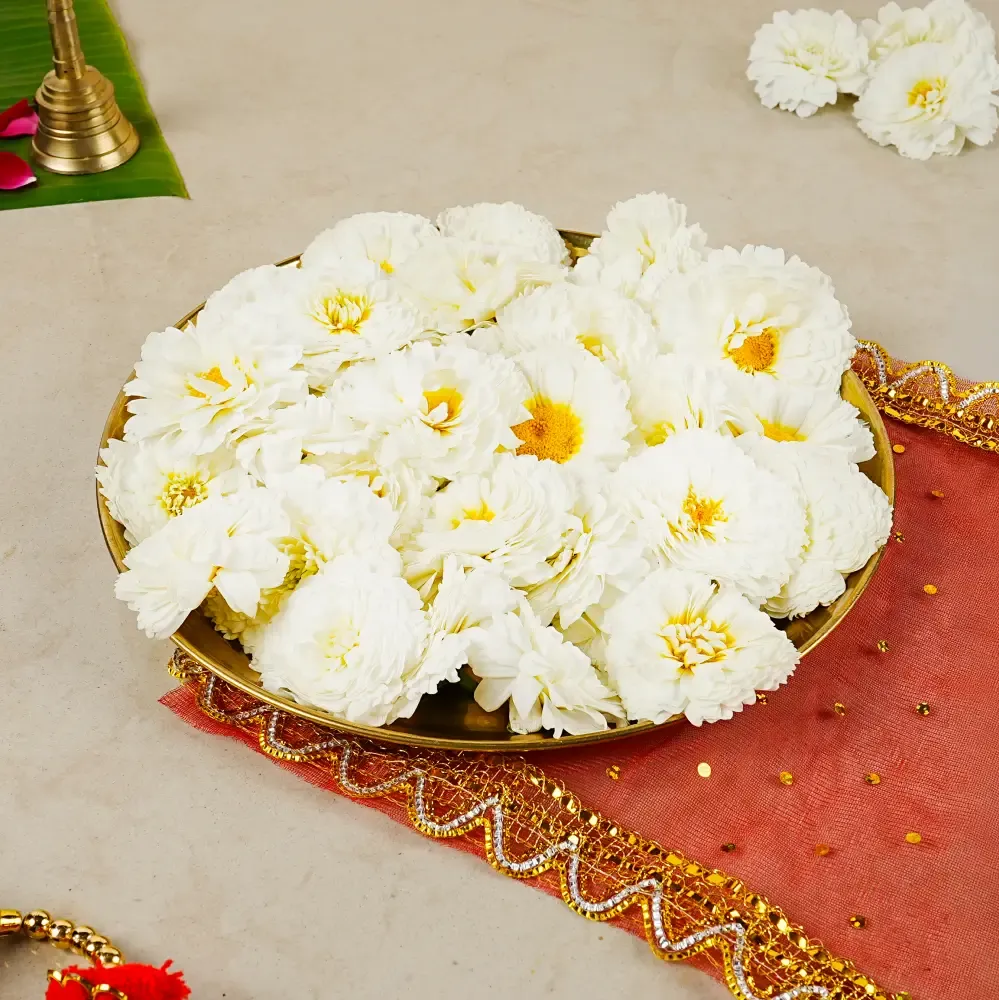
Across Indian homes, flowers are an inseparable part of puja. Marigolds are strung into garlands, roses are placed before deities, and jasmine finds its way into everything from daily prayers to festive decorations. Once the ritual is over, however, these flowers usually have nowhere to go.
For many families, putting them in the bin does not feel right. Traditionally, nirmalya, the flowers and other offerings left after worship, has often been immersed in rivers, ponds or lakes.
But there is another way to honour them.
Mumbai is turning flowers into manure
After this year’s Ganpati celebrations, Mumbai’s BMC collected floral waste from 18 artificial immersion sites in the F-South ward, covering areas including Parel and Dadar.
Dedicated handcarts also went through neighbourhoods and collected flowers from homes and large mandals. The aim was to keep the nirmalya separate from other waste and prevent it from being thrown into the sea.
At St Xavier’s Ground in Parel, the flowers were placed in large composting bins. A microbial culture was added to help speed up decomposition. The compost is expected to be ready in about a month and will eventually be used as manure in civic gardens.
The idea is not new. Across India, flowers have been composted, dried, reused, and turned into useful products rather than being allowed to become another source of pollution.
So, what can you do with the flowers after your own puja?
First, separate the flowers
Before deciding what to do with them, remove everything that should not go into the compost or soil. Take flowers and leaves out of plastic bags. Remove ribbons, synthetic threads, thermocol, foil, decorative wires, and artificial flowers.
This small step matters because flowers are biodegradable, while many of the things they are wrapped in are not.
Government guidance on religious waste recommends keeping floral offerings separate from non-biodegradable material. Flowers and leaves can then be composted or otherwise processed as organic waste.
The easiest option is composting
If you already compost your kitchen waste, your puja flowers can usually join it.
Add the flowers along with other biodegradable material and keep the compost moist but not soaking wet. If the flowers come in thick garlands, break them into smaller pieces so that they decompose more easily.
You do not need to create a separate composting system just for a handful of flowers. They can become part of the wet waste you already compost at home. For larger quantities, a community composting facility, apartment society composting unit or municipal nirmalya collection point can be a better option.
Mumbai’s current example shows what can happen when floral waste is collected separately at scale. Flowers that might otherwise have been discarded are being returned to the soil as manure for gardens.
Let them dry before giving them another life
If you do not compost at home, do not rush to throw the flowers away.
Spread the petals and flowers in a clean, dry place with good ventilation. Allow them to dry completely, turning them occasionally so that moisture does not remain trapped underneath.
/filters:format(webp)/english-betterindia/media/media_files/2026/10/09/puja-flowers-reuse-2026-10-09-18-38-03.webp)
Once dry, they can be used in several simple ways.
You can keep pressed flowers in a diary or frame them as a small reminder of a festival. You can also use dried petals for simple home decorations.
Some people take this a step further and turn dried flowers into natural dhoop. The process involves drying the flowers, grinding them into a powder, mixing the powder with other ingredients, and shaping the mixture into cones before drying them again.
You can even preserve the flowers
Not every flower has to be composted.
If a particular garland or a few flowers have sentimental value, press them between sheets of paper under a heavy book and leave them undisturbed until they dry flat. Pressed flowers can later be used in cards, bookmarks, framed artwork, or other small keepsakes.
People have also found creative ways to preserve and reuse puja flowers. Dried flowers can be turned into natural fabric prints, simple tabletop decorations, coasters, handmade paper, and other keepsakes.
You do not need to preserve everything. Keeping just a few petals from an important festival can be enough.
What about throwing them into water?
For generations, taking puja flowers to a river, lake, or pond may have felt like the respectful thing to do.
But flowers are not always as harmless in water as they appear.
Floral offerings can carry residues from pesticides and fertilisers used during cultivation. They can also be mixed with plastic, synthetic decorations, and other materials before being discarded. Official guidance has therefore encouraged the removal of flowers and other puja material before immersion and their separate disposal.
So if there is a designated nirmalya collection point near you, use it rather than putting the flowers directly into a natural water body.
/filters:format(webp)/english-betterindia/media/media_files/2026/10/09/puja-flowers-reuse-2026-10-09-18-41-43.webp)
A small ritual after the ritual
The next time you finish a puja, you do not have to stand with a handful of wilted flowers wondering where they belong.
Take off the plastic. Remove the decorative material. Separate the flowers and leaves.
Then choose what works for you.
Compost them if you have a home or community composting system. Give them to a designated religious offeringscollection point if your local body provides one. Dry a few special flowers to preserve them. Or allow them to return to the soil through a proper organic waste system.
The prayer may have ended, but the flowers can still do something beautiful.
Source:
Flowers offered to Bappa set to nourish Mumbai’s civic gardens
Disclaimer : This story is auto aggregated by a computer programme and has not been created or edited by DOWNTHENEWS. Publisher: thebetterindia.com