When we asked readers how Germany has changed since they arrived here, we heard about rising costs, housing shortages and political tensions. Yet many also said they wouldn’t want to live anywhere else.
When The Local asked readers how Germany had changed since they arrived, many respondents felt that life in Germany had become more expensive, more divided and more difficult to build a future in – but the responses weren’t uniformly negative.
Several long-term residents pointed to improvements in digitalisation, greater diversity and better international connections – while others argued that many of the problems facing Germany were part of a broader global trend rather than something unique to the country.
The respondents who have spent the longest in Germany were among the most critical of how the country had changed. Many compared today’s Germany with what they remembered as a cheaper and more optimistic place.
At the same time, they were very often the people most likely to describe the country as home.
The responses came from people who between them averaged nearly 16 years in the country. The shortest stay was two years and the longest stretched to almost five decades.
As seen through decades of experience
One of the most interesting aspects of the responses to our survey was the range of perspectives.
Taken together, the responses suggest that length of stay shaped how people viewed change. Newer arrivals often focused on immediate challenges such as housing and employment, while people who have spent decades in Germany were more likely to compare present-day Germany with the country they first encountered decades ago.
Susan, from the US and living in Essen after nearly 47 years in Germany, pointed to changes that younger arrivals might barely notice.
“One positive development that I really appreciate is the number of different types of restaurants with international cuisines. When I moved to Essen, there weren’t even any Greek restaurants here, let alone Thai or Indian!”
READ ALSO: The essential guide for anyone who’s just moved to Germany
Larry, who was born and raised in the Chicago suburbs and has lived mainly in Munich since 1979, described Germany’s transformation from “the postwar analogue stage into the digital world”.
“The shift to AI in this decade is greatly affecting business and personal lives,” he added. “It’s been a real whirlwind of accelerating change and the need for adaptation.”
Heather, from the UK and living in Baden-Württemberg, highlighted changing family structures, increasing diversity and the move from landlines to smartphones.
‘Everything is much more expensive’
If there was one theme that united respondents, it was the feeling that life in Germany has become significantly more expensive.
Chris from Dorking in the UK who has lived in Cologne for 18 years, put it simply: “The cost of eating and drinking has gone up. Most other costs in city life have also risen, such as tram fares.”
Boro, a 40-year-old from Serbia who’s been in Berlin for the last five years, echoed that view: “Everything is much more expensive, flying is worse, people are more anxious, salaries are lower.”
READ ALSO: German lawyer leading fight against far-right tells foreigners ‘don’t accept it’
Sally, 32, from the Bodensee (or Lake Constance) region, described rising costs across almost every aspect of life.
“Germany has gotten more expensive in terms of everyday needs, less service provision, more clogged bureaucracy, fewer available doctors and nurses… both gas and electricity prices have skyrocketed as well as real estate and overall rent,” she said.
Yet respondents often placed these concerns within a broader international context. A 42-year-old respondent living in Munich said: “Not just Germany but all of Europe has become increasingly expensive.”
Several readers made similar observations, suggesting that while Germany’s problems are real, they’re not necessarily unique.
A harder place to put down roots?
If rising costs were the most common complaint, housing was close behind.
Many respondents described a Germany where finding a flat, buying property or building a long-term future had become significantly more difficult. They weren’t talking about getting rich, but about being able to make long-term plans.
Steve, 50, from Cologne and a 25-year resident, said: “Flat hunting used to be easy. Now it’s difficult with way more screening criteria, where even an impeccable Schufa, good job and past landlord references mean very little.”
READ ALSO: Seven questions foreign residents should ask before buying property in Germany
A Canadian respondent who has spent eight years in Berlin said it was becoming “harder to ‘make it’ (find a job, find a flat, find a friend)” in Germany.
Lorie, 49, living near Stuttgart, added that the job market had deteriorated sharply.
“The economy has gone from doing OK to teetering on the edge of recession. It’s very hard for me to find a job,” she said.
Even among respondents who still felt at home in Germany, there was often a sense that planning for the future had become more difficult than previously.
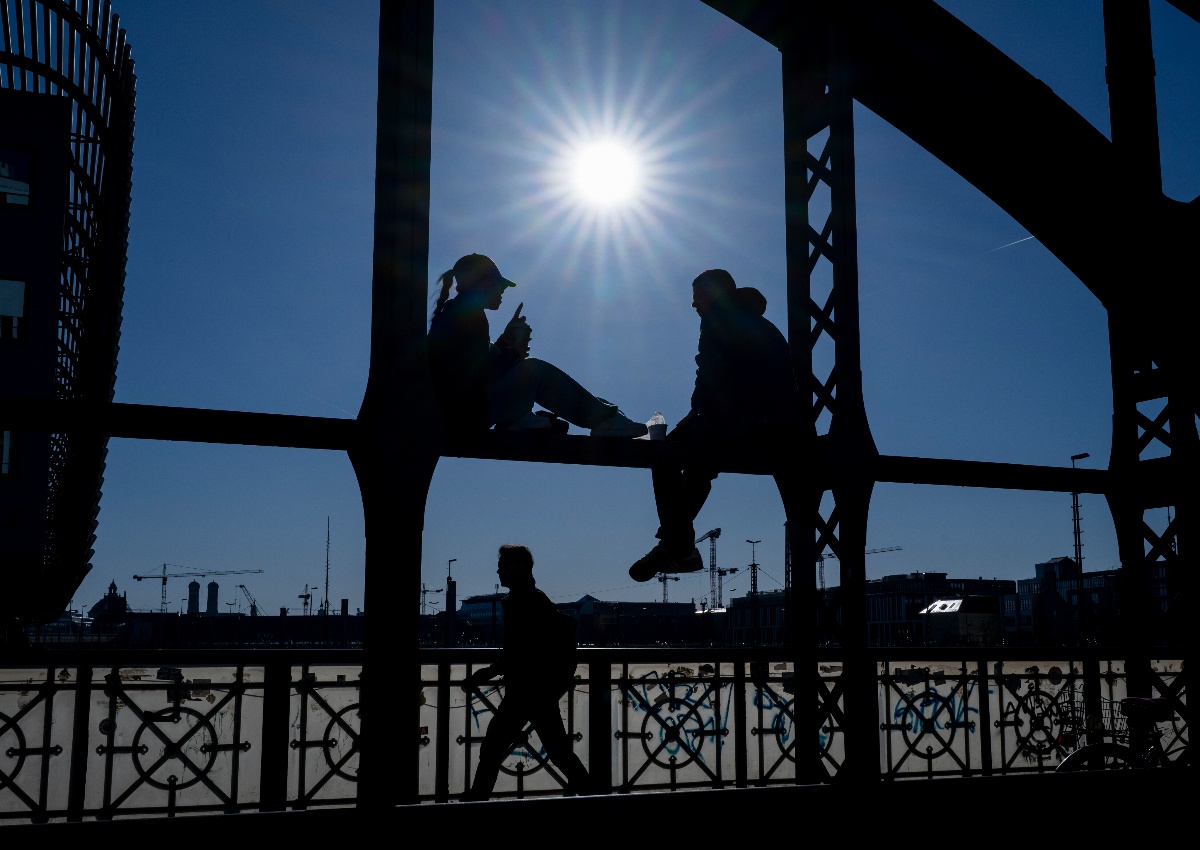
People on the Hackerbrücke in Munich enjoy the early morning sun. Photo: picture alliance/dpa | Peter Kneffel
A growing sense of division
Politics and social cohesion were another recurring concern.
For many respondents, the rise of the AfD was not simply a political issue but something they felt was affecting daily life.
Javier, 54, from the United States and living in Saarbrücken after 22 years in Germany, called it “the worst change”.
“Germany has lost widespread trust in its own institutions,” he said.
Richard, 46, in Frankfurt, said: “Germany has become less welcoming to foreigners.”
Tony, a British resident of Munich, described experiencing racial abuse. “The problem is the extremists are feeling much more emboldened,” he said.
READ ALSO: Ten of the best German cities for foreigners to retire
Others worried about a broader trend of political polarisation.
Rachel, 55, from the UK and living in Siegburg for 22 years, touched on a common sentiment when she described “the increasing split between left and right (and) the increasing animosity between the two.”
Several respondents also argued that rising costs, political polarisation and economic uncertainty were affecting much of Europe and the wider world, making it difficult to separate Germany’s problems from broader international trends.
Not everyone saw decline
Some respondents, including a few who have spent decades in Germany, felt the country had improved overall despite their concerns about current challenges.
Monica, an American who has lived in the Frankfurt area for more than two decades across two periods of residence, summed up her experience simply: “For the most part, I think things have changed for the better.”
Larry, who has lived mainly in Munich since 1979, was one of the survey’s most optimistic voices. “In Germany, times are changed for the better,” he said.
More recent arrivals also highlighted positive experiences. William, originally from New York and now living in Burgwedel after two-and-a-half years in Germany, offered perhaps the simplest assessment of all: “I feel at home.”
Digitalisation: One area where Germany won plaudits
Despite all the criticism, people repeatedly identified digitalisation as one area where Germany has improved.
For respondents who have spent decades dealing with German bureaucracy, these improvements were often keenly felt. Several pointed out that online banking, card payments and digital administration would have been almost unimaginable when they first arrived.
READ ALSO: Why so many people give up on Germany’s digital bureaucracy
Larry highlighted the declining importance of cash and cheques. Steve praised improvements in telecoms and banking. Vidhya, who has lived in Berlin for 14 years, said, “Technology and digitisation have improved a lot compared to earlier.”
The most enthusiastic response on the topic came from Tamy, originally from Mexico, who spent 35 years in England before moving to Berlin.
For years, she and her partner’s complicated UK-German tax situation required them to print and post more than 120 pages of documents and explanations every year. This year, by contrast, almost the entire process was handled digitally through Elster, including filing, correspondence with the Finanzamt and receiving their tax assessment.
“It has reduced the stress and frustration of submitting our tax returns (and) saved us time and money,” she said, even describing her most recent experience as “a dream come true.”
And perhaps that captures the broader picture emerging from these responses.
While many foreign residents believe Germany has become more expensive and more complicated than the country they first encountered, they also recognise genuine improvements – and many described Germany as home.
For all the concerns expressed, remarkably few readers said they wanted to leave. Instead, most respondents were doing what long-term residents do everywhere – pointing out issues because they care about the place where they live.
Disclaimer : This story is auto aggregated by a computer programme and has not been created or edited by DOWNTHENEWS. Publisher: thelocal.de