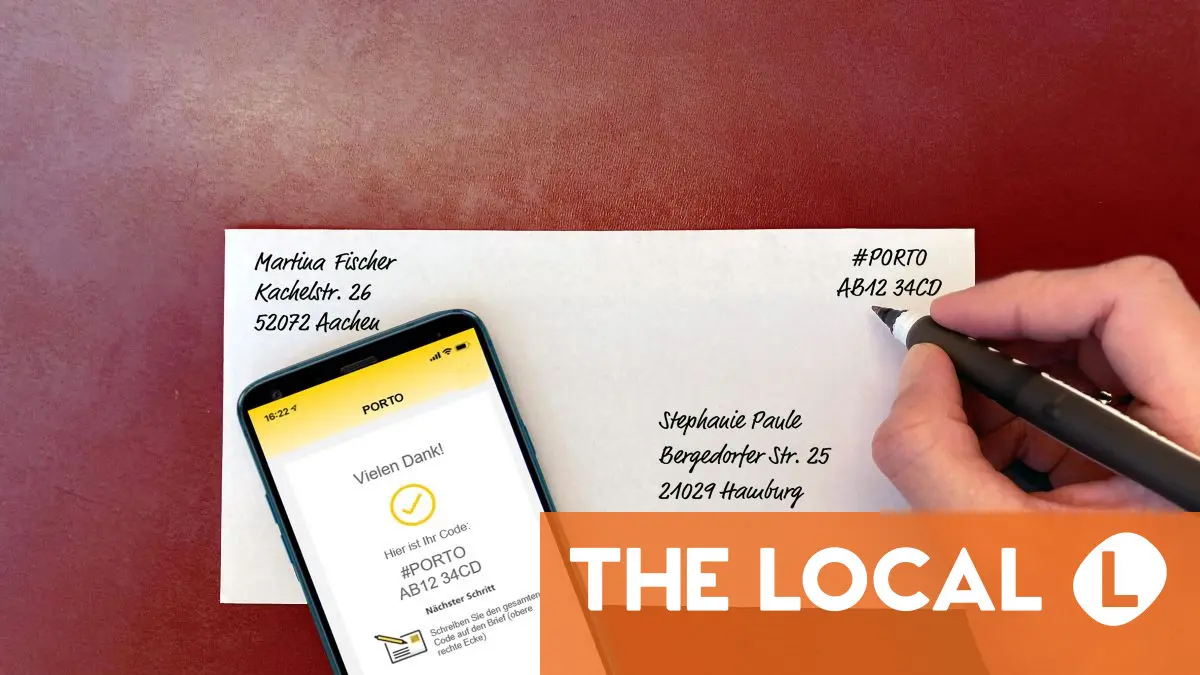
DHL’s Deutsche Post has been given the green light to significantly increase the price for delivering letters in Germany from 2027.
The price of sending a letter in the mail in Germany is set to rise by 20 percent from the start of 2027, according to a plan by the Federal Network Agency which controls price raises by Deutsche Post. The national regulator said the postage stamp price increase is justified given the sharp decline in the volume of letters sent.
The cost of sending a letter domestically in Germany would rise to €1.14, crossing the one-euro mark for the first time.
How prices are set
Postage rates could increase by 20.35 percent in January 2027, according to the Federal Network Agency’s plan.
Germany’s Federal Network Agency (Bundesnetzagentur) regulates prices for basic goods and services including electricity, gas, telecommunications, postal services and railways to ensure fair competition and affordable access to these networks.
Regarding postage rates, the regulator sets the “price increase margin”, or the amount by which Deutsche Post would be permitted to raise prices across the total volume of letters and postcards projected for 2027 and 2028.
In 2022, the average price increase was 4.6 percent. In 2025, a new peak was reached when prices jumped by 10.48 percent. At 20.35 percent that increase would be nearly doubled again in the coming year under the latest plan.
READ ALSO: Germany’s Deutschlandticket to cost €66.80 from 2027
The postal service is expected to implement this price increase in full, as it has always fully utilised the permitted leeway for price increases in the past.
The new postage price would apply for two years, during 2027 and 2028. The price to send parcels is also expected to become comparatively more expensive.
Postage prices have doubled since 2012
The exact cost of each letter type is to be determined by Deutsche Post, and announced later.
If the permitted price increase was immediately applied in full the cost to have a standard letter delivered domestically would rise to €1.14 starting in January.
Alternatively, the postal service could choose to increase its prices in 5-cent increments, resulting in costs of €1.10 or €1.15 for a standard letter – as well as price increases slightly more or less that 20 percent for other letter types as the average price jump allows.
Currently, mailing a standard letter weighing up to 20 grams costs 95 cents.
Deutsche Post, competitors, consumer protection organisations and other interested parties have been invited to submit comments on the proposed decision by October 30th. The final price increase is expected to be announced in November.
Since 2012, the postage for a standard letter has roughly doubled; back then it was 55 cents.
Compared to neighbouring European countries, sending letters is still relatively inexpensive. In Austria, the postage for a standard letter is one euro, and in the Netherlands it’s €1.40. In France, it’s €1.52 – and there it’s already confirmed that it will rise to €1.67 at the turn of the year.
READ ALSO:
Fewer letters
The volume of letters that Deutsche Post handles has been declining in the digital age.
While 16.9 billion letters were sent in Germany in 2005, this number had fallen to just under 9.4 billion by 2025.
Meanwhile, costs for sending mail in the post are rising, as Deutsche Post still needs to maintain a large number of mailboxes, branches and mail carriers.
Deutsche Post is by far the market leader in letters and parcels in Germany.
Smaller competitors in the letter sector include Citipost from Hanover, Pin Mail GmbH from Berlin, and BWPost from Stuttgart. However none of these operate nationwide, so they rely on Deutsche Post for nationwide delivery.
Parcel competitors include Hermes, DPD, GLS, and UPS.
Disclaimer : This story is auto aggregated by a computer programme and has not been created or edited by DOWNTHENEWS. Publisher: thelocal.de