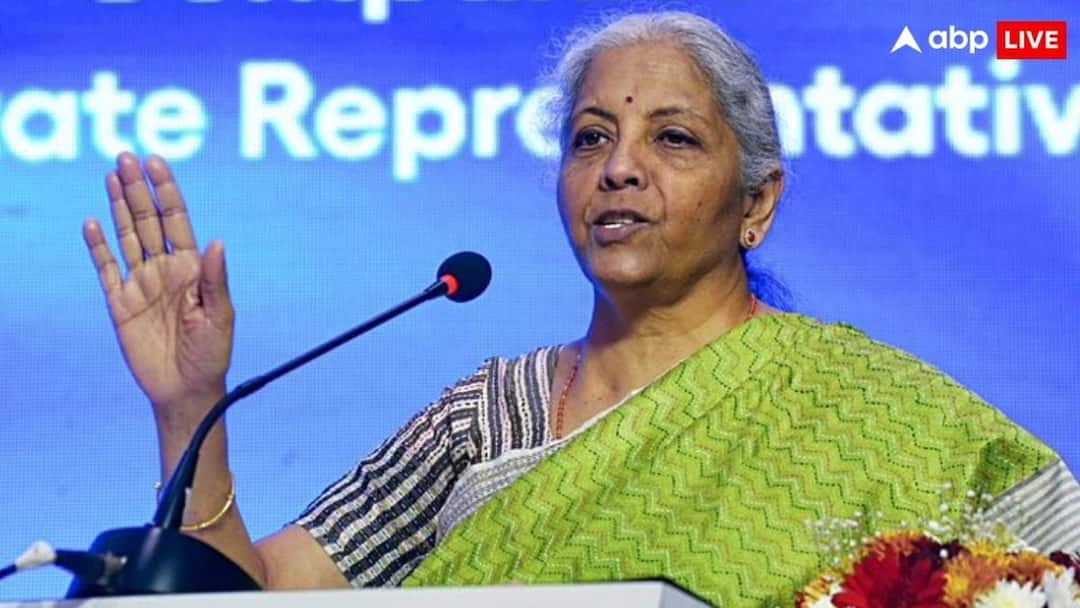
- Finance Minister open to investor debate on equity tax reforms.
- FPI withdrawals fuel debate; official stance: no LTCG scrap.
- Government exempted FPIs from tax on specified government securities.
Finance Minister Nirmala Sitharaman has signalled that investors’ views on the long-term capital gains (LTCG) tax will get a hearing during the upcoming Budget consultations, putting the taxation of equities back in the spotlight at a time when foreign portfolio investors (FPIs) continue to pull money out of Indian markets.
It is, however, a statement about listening rather than a promise to act. Nothing in her remarks amounts to an announcement that the government plans to abolish the levy, and a recent reply in Parliament points the other way.
Sitharaman on LTCG Tax: “Healthy to Have This Debate”
Speaking at the Bloomberg New Economy Forum in New Delhi on Tuesday, Sitharaman said the tax treatment of equity investments had become a talking point among both domestic and overseas investors. Questions were being raised not only on LTCG but also on the securities transaction tax (STT), and on whether different asset classes should be taxed in a similar way.
“LTCG, a lot of people are commenting on, both Indian and foreign investors,” she said. Describing the discussion around STT and uniform treatment of asset classes, she added: “It is healthy to have this debate.”
She said the government was open to hearing those differing perspectives as part of the Budget consultation process.
Also Read : Gold Silver Rate Today (Oct 13): Metals Fall, Check Latest Rates In Delhi, Mumbai, More
LTCG Tax vs STT: What’s Driving the Equity Tax Debate
The timing is hardly accidental. FPIs have been withdrawing funds from Indian markets, and calls for a rethink of equity taxation have grown louder. Among them is a proposal from SBI Research to do away with LTCG tax on equities altogether and lengthen the holding period to two or three years, with the aim of drawing in more durable capital inflows, reported Livemint.
For readers less familiar with the mechanics, the two taxes at the heart of the debate work differently. LTCG tax applies to qualifying gains on assets held beyond a prescribed period, while STT is charged on specified securities transactions. Any change to either, the discussion makes clear, would affect investors and the cost of taking part in financial markets.
No Proposal to Scrap LTCG Tax, Says Pankaj Chaudhary
Anyone reading Sitharaman’s comments as a hint of imminent relief for retail investors will want to look at what the government said in Parliament earlier this summer.
In a Lok Sabha reply on July 20, Minister of State for Finance Pankaj Chaudhary was asked whether removing the tax could lift market sentiment, protect domestic investors and level the playing field between Indian and foreign investors. His answer was brief: “At present, there is no such proposal under consideration.”
Chaudhary added that tax policy, including capital gains rates, is reviewed from time to time through the annual Budget and legislative amendments, with macroeconomic conditions taken into account. He also noted that the LTCG rate stands at 12.5% for domestic and retail investors, the same as the rate applicable to FPIs on returns from equity investments.
What It Means for Foreign Investors
Where the government has acted is in government securities. Through the Income-tax (Amendment) Ordinance, 2026, promulgated last month, specified FPI investments in government securities were exempted from income tax on both interest and capital gains. The exemption took effect on 1 April 2026 and covers interest or gains arising on or after that date.
According to Chaudhary, the change is meant to make India’s tax regime more competitive internationally and to attract stable, long-term foreign capital. The government expects it to draw institutions such as pension funds, insurers and sovereign wealth funds, and to bring the tax treatment of government securities closer to that in comparable jurisdictions.
The exemption is confined to government securities. It should not be read as a wider rollback of LTCG tax on equity investments.
Sitharaman on Private Capital, AI and Semiconductors
Sitharaman’s address at the forum also touched on the growing role of private capital in emerging sectors, including renewable energy and semiconductor manufacturing. “It is not just AI, but also semiconductors, the semiconductor chips and design and packaging. India is moving into areas which are going to enable AI,” she said.
LTCG Tax and Budget 2027: What to Expect
For now, the picture is one of an open consultation rather than a policy shift. Investors, domestic and foreign, will get to make their case on LTCG and STT when Budget discussions begin, but the government’s most recent formal position, as stated in Parliament, is that abolishing the tax for domestic and retail investors is not under consideration.
Disclaimer : This story is auto aggregated by a computer programme and has not been created or edited by DOWNTHENEWS. Publisher: abplive.com