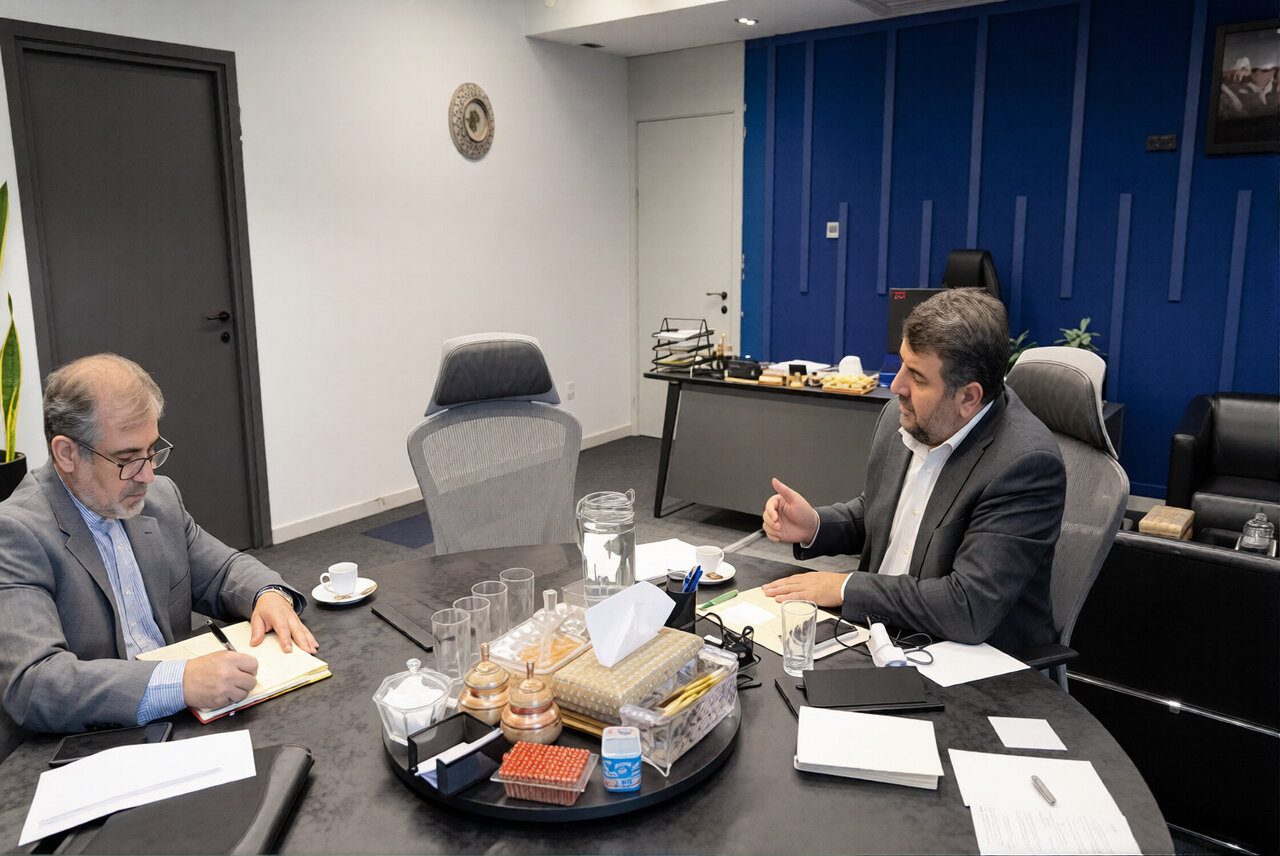
TEHRAN – Iranian officials have explored ways to strengthen scientific and technological cooperation with Senegal, positioning the West African country as a gateway for Iranian knowledge-based companies seeking to expand into African markets.
Hossein Roozbeh, head of the Organization for the Development of International Cooperation in Science and Technology, met with Hamid Moradkhani, Iran’s ambassador to Senegal, on Saturday to discuss avenues for expanding bilateral cooperation, IRNA reported.
The talks focused on boosting exports of knowledge-based products, transferring technical expertise for the production of agricultural drones, and finalizing a comprehensive memorandum of understanding (MoU) on technological cooperation between the two countries.
The officials also discussed ways to benefit from artificial intelligence (AI) capacities and technological infrastructures to develop bilateral economic relations.
Describing Senegal as a gateway for Iranian technology to the African continent, Roozbeh put forward several proposals to expand bilateral cooperation.
He noted that more than 11,000 knowledge-based companies operate in Iran, producing goods that meet international standards and compete with their global counterparts in both quality and price.
He also announced Iran’s readiness for joint manufacturing of products in agricultural, medical, petrochemical, and energy sectors.
His other suggestion focused on establishing and developing science and technology parks and Iranian innovation centers in Senegal.
Holding technological exhibitions, providing specialized content for media in Senegal, granting scholarships to Senegalese students, and hosting Senegalese technical delegations in the Iranian House of Innovation and Technology (iHiT) were among other points suggested by the official.
For his part, Moradkhani highlighted technology transfer and specialized training as the key pillars of the two countries’ collaborations, and called for the Vice Presidency for Science and Technology to play an active role in Iran-Africa joint commissions.
He also underscored the importance of establishing a network of experts and strengthening exchanges in the oil and energy sectors.
The official added that a draft memorandum of understanding (MoU) had been finalized and was expected to be signed during a visit to Tehran by senior Senegalese officials in January 2027.
Tehran hosts meeting of African envoys to boost science, health cooperation
On December 7, 2025, Iranian officials and the ambassadors of 19 African countries to Tehran discussed ways to enhance cooperation in the fields of science, education, research, and health.
Addressing the meeting, held in Tehran, Nader Tavakoli, the Chancellor of Iran University of Medical Sciences, said despite coercive sanctions, the country has managed to make great strides in the health sector, from education and treatment to technology and production of medicines, relying on committed and creative human resources, IRNA reported.
“Now, we are ready to share these achievements with Africans through establishing a strategic health alliance between Iran and African countries,” Tavakoli highlighted.
Elaborating on the core areas of the strategic alliance, he said that researchers will focus on addressing real-time illnesses, such as tropical and endemic diseases, drug shortages, and health service delivery in rural areas.
Admitting African students and developing joint educational courses, with dual accreditation, as well as dispatching professors for training of trainers, will be another part of the alliance.
Other main components of the strategic alliance will include sharing technical knowledge in fields such as manufacturing vaccines, biosimilar drugs, and medical equipment by establishing a collaborative production line in African countries, Tavakoli added.
The expansion of scientific interactions between Iranian and African scientists was the last point mentioned by the official. The strategic alliance will lay the basis for boosting scientific collaborations between over 60 universities and hundreds of top research centers across the country, he further noted.
On December 8, the ministries of health and foreign affairs, in a virtual meeting with Iranian ambassadors and attachés in Africa, discussed the potential for promoting cooperation with African countries in the health sector.
During the meeting, Alireza Biglari, the deputy health minister for international affairs, highlighted the country’s capabilities in areas related to health. Referring to the existing capacity as a valuable opportunity for the expansion of health diplomacy and the favorable condition for cooperation with African countries, the official announced the readiness of the health ministry to implement decisions and operational plans, IRNA reported.
For his part, Akbar Khosravi Nejad, Assistant to Iran’s Foreign Minister and Director General for Africa, underlined the importance of Africa in Iran’s foreign policy, and said that the country’s health system is one of the main sectors for enhancing collaborations with these countries.
Tavakoli, for his part, presented an account of the current activities and programs of the university in Africa, as well as future plans to meet African ambassadors in Tehran.
MT/MG
Disclaimer : This story is auto aggregated by a computer programme and has not been created or edited by DOWNTHENEWS. Publisher: tehrantimes.com